Pakistan Stock Market Crashes 3200 Points Amid Panic

Pakistan Stock Market Plunges Over 3200 Points Amid Escalating Tensions with India
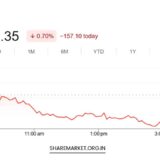
Karachi, April 30 — Pakistan’s financial markets were rocked on Wednesday as the Karachi Stock Exchange’s benchmark KSE-100 index plummeted by more than 3,200 points.
Growing fears of an imminent military conflict with India triggered panic among investors, leading to a massive sell-off across sectors and wiping out billions of rupees from the market capitalization.
This alarming market crash reflects the intense anxiety gripping Pakistan following official warnings of possible Indian military action within the next 24 to 36 hours.
A Market in Freefall
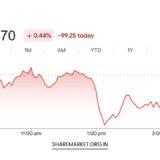
The day began ominously, with early signs of weakness as investors remained wary following unsettling overnight developments. At 9:53 a.m., the KSE-100 index had already dropped by 1,717.35 points or 1.5%, reaching 113,154.83 compared to the previous close of 114,872.18.
However, as trading continued, selling pressure intensified dramatically. By 1:50 p.m., the index had fallen by more than 3,255 points, marking a sharp 2.83% decline.
According to market analysts, the swift downturn reflected not just domestic economic concerns but also the acute geopolitical risks stemming from rapidly deteriorating relations with India.
“This is not a normal market correction. The scale and speed of today’s losses reflect widespread fear of what could happen next at the border,” said Yusuf M. Farooq, Director of Research at Chase Securities.
Warning of Imminent Conflict
Investor panic was sparked after Pakistan’s Information Minister, Ataullah Tarar, announced during a late Tuesday evening press conference that Islamabad had received “reliable intelligence” indicating a high probability of Indian military action within the next one to two days.
“The nature of the intelligence is serious, and preparations are underway at all levels to respond appropriately,” Tarar said, without elaborating further.
His statement, while aimed at reassuring the public about the government’s preparedness, instead triggered greater unease in financial and business circles.
Adding to the concerns, on Wednesday morning, Indian Prime Minister Narendra Modi held a meeting with top defense officials in New Delhi, where he reportedly gave the Indian military “a free hand” to decide the course, timing, and intensity of any retaliatory action.
Government sources quoted by Indian media suggested that Modi authorized a flexible and aggressive military response to the April 22 terrorist attack in Pahalgam, Jammu and Kashmir, which killed 26 civilians and injured dozens more.
Impact on Business and Investor Sentiment
The growing possibility of cross-border conflict has sent shockwaves beyond the stock market. Pakistan’s commercial centers have been eerily quiet, and consumer activity has slowed sharply.
Atiq Mir, President of the All Karachi Tajir Ittehad Association, painted a grim picture of the ground reality: “Business activity across Karachi has come to a standstill. Markets and shopping malls are witnessing thin crowds. People are more worried about personal safety and the future than about making purchases.”
Fatima Bucha, a senior analyst at AKD Securities, highlighted how investor sentiment collapsed following the government’s announcement. “Markets thrive on certainty. After the Information Minister’s press conference, uncertainty reached new heights, and fear completely overtook rational investment decisions,” she explained.
Brokers reported that institutional investors were offloading stocks to limit exposure, while retail investors scrambled to exit risky positions. Volume across key sectors, including banking, energy, and construction, fell significantly.
The Broader Context: Tense India-Pakistan Relations
The current financial turmoil cannot be understood without examining the sharp deterioration in India-Pakistan relations over the past week.
The terrorist attack in Pahalgam, which Indian authorities attribute to Pakistan-based militant groups, marked one of the deadliest in Jammu and Kashmir in recent years.
In response, India has not only withdrawn senior diplomatic staff from Islamabad but also revoked several key agreements symbolizing bilateral cooperation.
Most notably, New Delhi announced the suspension of the 1960 Indus Waters Treaty—a historic pact governing water-sharing rights between the two countries. Additionally, the Attari-Wagah land border crossing, a vital trade and transit point, has been closed indefinitely.
“These moves by India represent a complete freezing of diplomatic relations,” said Dr. Hassan Askari Rizvi, a prominent Pakistani political analyst. “In such an environment, even a minor miscalculation can lead to broader military engagement, which markets naturally fear.”
Expert Warnings and Economic Implications
Financial experts are warning that if tensions escalate further, Pakistan could face even deeper economic challenges.
“The current situation is a classic example of geopolitical risk impacting economic fundamentals. If a military confrontation materializes, the impact on Pakistan’s already fragile economy could be severe, with consequences for the rupee, inflation, foreign investment, and growth,” Yusuf M. Farooq noted.
Pakistan’s economy, already burdened by inflationary pressures, a weakening currency, and a large current account deficit, can ill afford additional shocks. Foreign investors, who have been cautiously returning to emerging markets post-COVID, may reconsider exposure to Pakistan if instability persists.
Calls for De-escalation
Meanwhile, calls for restraint are growing louder from international observers. Several global powers, including the United States, China, and the United Nations, have urged both India and Pakistan to exercise maximum restraint and to resolve issues through dialogue.
“There is no military solution to these tensions. Both nations must prioritize diplomatic engagement over escalation,” said Stéphane Dujarric, spokesperson for the UN Secretary-General.
However, with nationalist sentiments running high on both sides, prospects for immediate de-escalation appear slim.
Outlook: Turbulent Days Ahead
The crash of the KSE-100 index on April 30 may well be a precursor to further volatility in the days to come. With no resolution in sight and tensions escalating, Pakistan’s financial markets and broader economy remain extremely vulnerable.
Until clarity emerges regarding the military and diplomatic pathways chosen by India and Pakistan, markets are expected to stay on edge, with investors closely watching every political and security development.
For now, caution reigns supreme — and uncertainty remains the only certainty.