Sensex Down 182 Points, Nifty at 24,750; Nifty Prediction for Monday

Markets End Lower Amid Global Jitters: What to Expect on June 2
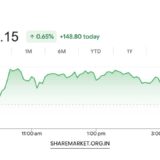
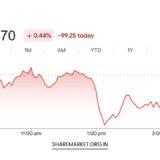
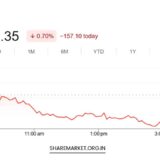
Indian equity markets ended Thursday, May 30, in the red, as caution prevailed ahead of key domestic data releases and amid lingering global uncertainties. The Sensex dropped 182.01 points, or 0.22%, to close at 81,451.01, while the Nifty slipped 82.90 points, or 0.33%, ending the session at 24,750.70.
This weak closing marked a subdued start to the June derivatives series, despite underlying optimism about domestic growth and continued foreign portfolio investment inflows.
Investor sentiment, which had been supported by a steady flow of foreign capital and robust expectations for India’s economic trajectory, was weighed down by external developments.
The most significant among these was a U.S. Federal Appeals Court decision to reinstate tariffs on foreign imports, originally introduced during former President Donald Trump’s administration.
This move reawakened fears of a renewed trade war, particularly impacting export-oriented sectors like information technology.
Market Breadth and Performance Snapshot
Market breadth tilted slightly negative on Thursday. Of the 4,000+ stocks traded on the BSE, 1,751 advanced, 2,087 declined, and 114 remained unchanged.
The broader markets delivered mixed signals. While smallcap stocks outperformed—driven largely by retail participation—midcap indices slipped into negative territory, showing some signs of fatigue following their recent strong rally.
Meanwhile, market volatility continued to ease. The India VIX, a measure of market volatility and investor risk perception, fell another 2%, suggesting that despite short-term concerns, overall investor anxiety may be declining.
Sectoral Trends: IT Leads Losses
Among the sectoral indices, Nifty IT emerged as the biggest laggard. Shares of major IT players such as Tata Consultancy Services (TCS), Infosys, and HCL Technologies lost up to 2% intraday.
The decline was largely attributed to the reinstatement of U.S. tariffs, which is expected to weigh on outsourcing demand and margins in the sector.
Analysts noted that any escalation in trade tensions could reduce IT spending by global clients, particularly in the U.S. market, which remains a key revenue driver for Indian tech firms.
Other sectors, including banking, FMCG, and auto, witnessed mixed performance. While heavyweight financials provided some cushion to the broader indices, gains were not sufficient to offset losses in the IT and midcap space.
Technical View: Range-Bound Movement Likely
Looking at the technical setup, Akshay Chinchalkar, Head of Research at Axis Securities, noted that the Nifty is likely to stay within a tight trading range in the short term.
According to Chinchalkar, immediate support for the Nifty lies at 24,677, while the resistance is pegged at 25,000. “Unless there is a strong domestic or global catalyst, the index may continue to consolidate within this range,” he stated.
He further added that traders should watch for a decisive move beyond these levels to determine the next directional trend.
In the absence of strong triggers, short-term traders may prefer to adopt a neutral to mildly bearish stance, using options strategies or hedged positions.
Fundamentals and Earnings Outlook
Echoing a similar cautious tone, Karthik Kumar, Fund Manager at Axis Mutual Fund, commented that while the Q4 earnings season began on a positive note, overall corporate results have mostly met, rather than exceeded, expectations. “The results have been decent but were largely in line with what the market had priced in due to already subdued expectations,” Kumar observed.
With market valuations once again nearing historical highs, further upward movement is likely to depend on the strength of forward earnings projections. “Valuations are not cheap. The market is back to where it was at its previous peak.
Any sustainable rally will now require clear visibility on earnings growth, especially for FY2025–26 and FY2026–27,” he said.
Global Factors and Economic Uncertainty
Global macroeconomic uncertainties also continue to play a critical role in shaping investor behavior. In addition to concerns around U.S. trade policy, investors are keeping a close watch on the trajectory of U.S. interest rates, inflation, and potential Federal Reserve actions.
Kumar noted that the reintroduction of tariffs by the U.S. has added another layer of complexity to an already uncertain global environment.
“Growth-oriented stocks, particularly those with significant global exposure, have come under pressure in recent months,” he said.
However, he remains optimistic about a potential turnaround. “If earnings estimates for FY26 and FY27 hold up and macro conditions stabilize, we could see a healthy recovery in growth stocks.”
Strategy Ahead: Focus on Quality and Long-Term Growth
In terms of investment strategy, both Chinchalkar and Kumar recommend a disciplined approach in the current environment.
While the market continues to digest macroeconomic headwinds and elevated valuations, there are still opportunities for long-term investors.
Kumar emphasized the importance of focusing on quality stocks with strong balance sheets, predictable earnings, and sustainable competitive advantages.
“Investors should avoid the temptation of chasing short-term momentum and instead concentrate on companies with proven fundamentals and long-term growth potential,” he advised.
From a portfolio perspective, sectors such as domestic manufacturing, capital goods, and consumption-oriented businesses may offer relatively better risk-reward ratios in the medium term, especially if government policy and economic momentum continue to support these themes.
Market Prediction for June 2 and Beyond
As markets prepare for the next trading session on June 2, the overall tone remains cautious yet hopeful. Technical levels suggest consolidation, while macro developments and forward earnings estimates will likely shape medium-term sentiment.
With the release of GDP data and other key indicators around the corner, investors are advised to stay vigilant and adopt a stock-specific approach.
Market experts believe that while immediate directional movement may be limited, the longer-term trend remains constructive—provided earnings momentum continues and global risks are kept in check.