Sensex Down 573 Points. Nifty at 24,718; Nifty Prediction for Monday

Market Overview: June 13 – A Weak Trend and Potential Movement on June 16
The Indian stock market ended June 13 with a clear bearish bias, with both the benchmark indices – the Sensex and Nifty – closing in the red. The Nifty index slipped below the 24,750 mark, reflecting widespread market weakness.
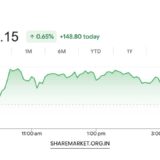
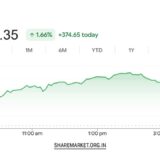
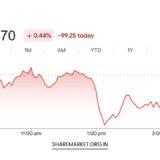
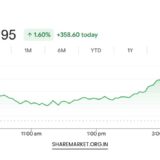
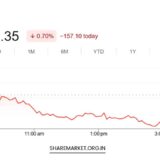
The Sensex closed at 81,118.60, down by 573.38 points, or 0.70%, while the Nifty fell by 169.60 points, or 0.68%, to close at 24,718.60.
The market breadth was negative, with 2,326 stocks declining, 1,520 stocks advancing, and 124 stocks remaining unchanged.
On a sectoral basis, all major indices except for Media and Realty ended in the red, signaling a broader market downturn.
The FMCG, PSU Banks, Oil & Gas, Power, and Telecom sectors faced losses between 0.5% and 1%, while the BSE Midcap and Smallcap indices also saw declines of approximately 0.3%.
Nifty’s Performance: A Technical Overview
The Nifty index saw a significant sell-off on June 13, breaching key support levels and signaling a cautious near-term outlook.
The 20-day Simple Moving Average (SMA) is currently acting as immediate support for the Nifty, and the index is testing the lower bounds of this critical support zone.
Technically, the formation of a bearish engulfing candlestick pattern suggests a potential short-term reversal, raising concerns about the sustainability of the current uptrend.
In terms of momentum indicators, the Relative Strength Index (RSI) has dropped from 60 to 55, indicating a reduction in bullish momentum and a shift toward bearish sentiment.
The RSI is a key tool used by traders to measure the strength of a trend. A dip below the 60 mark signals a potential weakening of upward momentum, suggesting that the index may face further downward pressure in the short term.
Additionally, the Average True Range (ATR), a measure of volatility, has slightly increased, indicating that intraday price movements could become more volatile as market participants react to macroeconomic and geopolitical news.
Immediate support for Nifty is pegged at 24,800, and a breach of this level could signal a deeper pullback toward the next support zone around 24,500.
On the upside, the Nifty faces significant resistance at 25,100, a level that has proven difficult to breach in recent trading sessions.
If the Nifty manages to break through this resistance zone, it could open up the potential for a rebound and a rally toward the 25,500 mark.
Geopolitical Risks and Oil Price Surge
An important external factor influencing market sentiment is the escalating geopolitical tension in the Middle East, particularly the ongoing conflict between Israel and Iran.
VK Vijayakumar, Chief Investment Strategist at Geojit Investments, highlighted that if the Israel-Iran conflict prolongs, it could have a severe impact on global economic conditions.
As of now, Brent Crude oil prices have surged by around 12%, reaching $78 per barrel. The potential for further disruptions to oil supplies is rising, especially if Iran retaliates by closing the Strait of Hormuz – a key maritime chokepoint for global oil shipments.
A sharp increase in oil prices could trigger inflationary pressures across the global economy, leading to increased costs for businesses and consumers alike.
This could have a cascading effect on the stock market, particularly on sectors that are sensitive to input costs, such as the Oil & Gas, Power, and FMCG sectors.
The market’s response to these geopolitical developments will depend on how long the conflict lasts. If tensions subside, oil prices may stabilize, which could ease market concerns.
However, if the conflict drags on or escalates, it could exacerbate volatility, creating further uncertainty for market participants.
In the short term, risk aversion is likely to dominate sentiment, making investors more cautious in their market positions.
Nifty Bank: A Technical Snapshot
Turning to the Nifty Bank index, Om Mehra, Technical Research Analyst at Samco Securities, pointed out that the sector saw mild profit booking on June 13.
The Nifty Bank index retraced toward its 20-day SMA, which is now acting as an immediate support level.
Despite the short-term pullback, the broader trend for the Nifty Bank remains bullish, as the index continues to trade well above its medium-term moving averages.
This suggests that the overall momentum for the banking sector is still positive, despite the occasional corrective phases.
The Nifty Bank is currently hovering near its previous breakout zone, which lies between the 56,000 and 56,200 levels.
This region represents a key area of resistance, as the index has struggled to sustain levels above this range in recent sessions.
On the downside, immediate support for the Nifty Bank is seen around 55,300, and if this level is breached, it could trigger a deeper pullback toward 54,800 or even 54,000.
However, if the Nifty Bank manages to maintain its position above 55,300 and shows signs of recovery, it could rally toward its next resistance level at 56,700.
A decisive break above this resistance could open the door for further upside potential, with targets in the 57,000-57,500 range.
Outlook for June 16 and Beyond
As we approach the trading session on June 16, the market outlook will largely hinge on two key factors: the geopolitical situation in the Middle East and the technical levels on the Nifty and Nifty Bank indices.
Geopolitically, any further escalation in tensions could exacerbate volatility and send oil prices higher, leading to risk aversion across global markets.
This could result in a broad-based sell-off in equities, particularly in sectors like Oil & Gas and Power, which are most exposed to rising oil prices.
On the technical front, investors will need to monitor the key support levels for both Nifty and Nifty Bank.
For Nifty, the 24,800 mark is a critical level to watch; a breakdown below this zone could trigger further declines.
Similarly, the Nifty Bank’s ability to hold above the 55,300 level will be crucial for determining the next move.
A failure to hold this level could lead to a more pronounced correction in the banking sector, while a rebound from here could see a push toward higher levels.
Key Takeaways:
- Market Weakness: The Indian stock market closed on a weak note on June 13, with both Nifty and Sensex posting notable declines.
- Geopolitical Risks: The ongoing Israel-Iran conflict is fueling oil price hikes and adding a layer of uncertainty to the global economic landscape. A sustained escalation could lead to further volatility in the markets.
- Technical Analysis: Both Nifty and Nifty Bank are showing cautionary signals, with important support and resistance levels in play. Traders will need to be alert to any breakouts or breakdowns in the coming days.
- Investor Caution: Given the geopolitical uncertainties and the technical outlook, investors should proceed with caution. A clear break below key support levels could trigger further downside risk, while a recovery above resistance zones could signal a potential rebound.
Final Thoughts:
The outlook for the Indian stock market on June 16 will depend on a combination of technical factors and external developments.
Market participants will need to remain nimble and reactive to shifts in sentiment, especially given the heightened volatility and uncertainty in the global environment.