Stock Market Crash: Sensex Drops 570 Points for Second Consecutive Day, Rs 2.10 Lakh Crore Lost
Stock Market Faces Major Setback: Investors Lose ₹2.10 Lakh Crore Amid Rising Global Tensions and Oil Price Surge
The Indian stock market endured another significant downturn on June 13, with both the BSE Sensex and NSE Nifty sinking sharply for the second consecutive day.
The market’s performance has left investors worried, as it continues to face headwinds from both global economic concerns and domestic challenges.
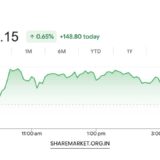
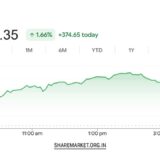
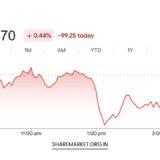
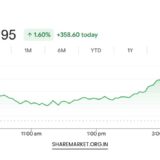
The Sensex closed the day down by 573.38 points (0.70%) at 81,118.60, while the Nifty dropped by 169.60 points (0.68%) to settle at 24,718.60.
These declines have compounded investors’ losses, with the market capitalization of companies listed on the Bombay Stock Exchange (BSE) plummeting by a massive ₹2.10 lakh crore in just one day.
Market Capitalization Takes a Big Hit: Investors Lose Over ₹2 Lakh Crore
One of the most striking figures from today’s market performance is the sharp drop in market capitalization.
The total market value of companies listed on the BSE fell from ₹449.58 lakh crore on June 12 to ₹447.48 lakh crore on June 13, representing a loss of ₹2.10 lakh crore.
This decrease in market cap is not just a number—it translates to real wealth lost by investors, many of whom are already struggling with the ongoing volatility.
The total wealth loss for investors in just two days now stands at a staggering ₹4 lakh crore, as the market has seen consistent pressure due to a mix of domestic and global factors.
The declining market capitalization paints a bleak picture for both retail and institutional investors who have been caught in the turmoil.
The situation reflects broader economic concerns that have undermined investor confidence and cast a shadow over market sentiment.
Geopolitical Risks and Rising Oil Prices: A Recipe for Market Instability
The most significant external factors contributing to the market’s downward spiral are the geopolitical risks in the Middle East and the rising global oil prices.
The Israel-Iran tensions have escalated, raising concerns over potential disruptions to oil supply and broader geopolitical stability.
This uncertainty has caused a ripple effect in global financial markets, with investors pulling back from riskier assets, including stocks.
Simultaneously, oil prices have surged, adding to concerns over inflation. The rising price of crude oil not only impacts the global economy but also affects Indian markets, as India is a major importer of crude oil.
Higher oil prices lead to increased inflation, which in turn puts pressure on consumer spending, increases production costs, and can result in tighter monetary policies by central banks worldwide.
Both these factors have created an environment where investors are increasingly risk-averse. The fear of further escalation in the Middle East, coupled with the possibility of higher inflation and interest rates, has prompted widespread sell-offs in the market, adding fuel to the fire of declining investor confidence.
Sectoral Indices: A Broad-Based Market Decline
The decline in market indices was not limited to just a few sectors but was widespread across the board.
Almost every major sectoral index on the BSE ended in the red, underlining the extent of the market’s weakness.
Both the BSE Midcap and BSE Smallcap indices posted losses of around 0.30% each, which shows that the pain is not just being felt by large-cap stocks but by smaller companies as well.
This broad-based selling indicates that there is significant caution in the market, with investors choosing to exit positions across various sectors.
The India Volatility Index (VIX), a gauge of market uncertainty, rose by more than 7% today, signaling an increase in investor nervousness.
A jump in the VIX typically indicates growing concerns about potential volatility, and today’s surge confirms that the fear of further market declines is palpable among investors.
Adani Ports Leads the Decliners: A Tough Day for Sensex Stocks
The BSE Sensex, which tracks the performance of the top 30 companies listed on the BSE, saw 26 out of its 30 constituent stocks close in the red today. This broad decline highlights the widespread pessimism that has gripped the market.
Among the hardest-hit was Adani Ports, which recorded a significant loss of 2.61%, making it the top loser on the Sensex. The Adani Group, in particular, has faced intense scrutiny and volatility in recent months, adding to the pressure on the stock.
Other notable decliners included ITC, IndusInd Bank, State Bank of India (SBI), and HDFC Bank, which each saw declines ranging from 1.15% to 1.67%.
These blue-chip stocks are usually considered bellwethers of the market, so their weakness indicates that even the most stable companies are not immune to the broader market pressures.
Selective Winners: A Few Stocks Buck the Trend
While the broader market was under pressure, a few stocks managed to escape the downturn and closed in the green.
Tech Mahindra, a key player in the Indian IT sector, was the best performer on the Sensex, rising by 1.02%.
Tech Mahindra’s strong performance may reflect continued optimism in the IT services sector, despite the overall market weakness.
Other stocks that closed higher included Tata Consultancy Services (TCS), Sun Pharma, and Maruti Suzuki, which saw gains ranging from 0.16% to 0.36%.
These stocks represent sectors such as technology, pharmaceuticals, and automobiles, which have been more resilient compared to others in the current market environment.
Broad Market Sentiment: A Struggling BSE
The broader market also mirrored the struggles of the major indices. Of the 4,122 stocks traded on the BSE today, 2,451 stocks ended lower, reflecting the widespread nature of the downturn.
Only 1,538 stocks saw gains, indicating that the majority of stocks on the exchange are currently underperforming.
Despite the heavy losses, there were 80 stocks that touched new 52-week highs, suggesting that there are pockets of strength in certain sectors or stocks.
On the flip side, 57 stocks hit new 52-week lows, which serves as a stark reminder of the extent to which the broader market has been under pressure.
Outlook: Navigating the Road Ahead
Looking ahead, the Indian stock market faces a challenging road. Geopolitical tensions and rising oil prices are likely to continue weighing on investor sentiment in the short term.
Additionally, domestic inflation concerns, along with monetary tightening by the Reserve Bank of India (RBI), could keep markets under pressure.
That being said, the stock market is cyclical, and there may still be opportunities for savvy investors who are able to identify undervalued stocks or sectors poised for recovery once the geopolitical and economic environment stabilizes.
However, caution is advised, and investors should be prepared for continued volatility and uncertainty in the near future.
In conclusion, today’s market performance highlights the growing nervousness among investors as global risks, particularly related to oil prices and geopolitical instability, continue to cast a shadow over the markets.
With market volatility expected to persist, investors should remain vigilant and consider a balanced approach to mitigate risks while navigating the current market environment.