Share Market Today: Sensex Falls 0.17%, Investors Lose Rs 1.72 Lakh Crore Amid Global Uncertainty

Stock Market Today: Sensex Falls for Second Consecutive Day; Investors Lose ₹1.72 Lakh Crore in Market Capitalization
June 18, 2025 – Indian stock markets witnessed a second consecutive day of decline, erasing investor wealth to the tune of ₹1.72 lakh crore.
Despite opening on a positive note, the markets turned volatile, closing in the red amid growing concerns over global uncertainties.
Both Sensex and Nifty saw notable losses by the end of the session, with the IT sector taking a significant hit.
Market Overview:
The Indian stock market experienced a volatile trading day on June 18, 2025, as both Sensex and Nifty entered the red zone after a strong opening.
The indices began the day with optimism, but as the day progressed, sentiment turned negative, reflecting investors’ concerns over a mix of domestic and global factors.
This marks the second consecutive session of losses, following a downtrend on June 17.
At the close of trading:
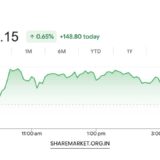
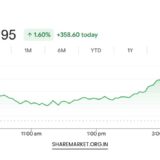
- Sensex ended the day at 81,444.66, down by 138.64 points or 0.17% from its previous close of 81,583.30.
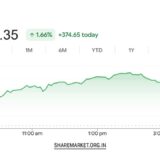
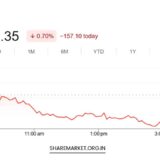
- Nifty also saw a decline, closing at 24,812.05, losing 41.35 points or 0.17% from its previous close of 24,853.40.
Sectoral Performance:
The broader market was weighed down by declines across multiple sectors, with the IT sector standing out as the worst performer.
The Metal and FMCG sectors also ended the day in the negative, dragging down the overall market sentiment.
- IT stocks saw some of the sharpest declines, led by Tata Consultancy Services (TCS), which witnessed a loss of 1.79%. Investors in the IT sector have been concerned about global growth prospects, particularly in key markets like the U.S. and Europe, where demand for IT services may see a slowdown due to tightening fiscal policies.
- The Metal index fell by 0.7%, as concerns over global commodity prices and slowing demand from China weighed heavily on investor confidence in the sector.
- The FMCG sector, considered a defensive one, saw a 0.4% decline. Stocks like Hindustan Unilever (HUL) and Nestle India were among the biggest losers in the sector.
- The Nifty Midcap 100 and Nifty Smallcap 100 indices also saw a decline of 0.4% each, indicating that market weakness extended across not just large-cap stocks but also mid-cap and small-cap stocks.
Despite this broad-based selling, there were some pockets of strength in the market. IndusInd Bank posted the largest gain among the Sensex stocks, rising by 5.12%, following strong earnings and positive growth outlook.
Similarly, Titan, Mahindra & Mahindra, Maruti Suzuki, and Asian Paints managed to close in the green, but their gains were modest compared to the losses seen elsewhere.
Global Influences and Investor Sentiment:
The market’s performance was influenced by several external factors, most notably the U.S. Federal Reserve’s upcoming monetary policy meeting.
With inflation in the U.S. showing signs of cooling but still above the Fed’s target range, investors are closely watching for signals regarding potential interest rate hikes or any indication of monetary tightening.
Any indication of rate hikes would likely put pressure on emerging market equities like those in India, as higher rates in the U.S. could lead to a stronger dollar and capital outflows from riskier assets.
Additionally, geopolitical tensions between Iran and Israel have escalated, and investors are growing increasingly concerned about the economic ramifications of the ongoing conflict.
While the direct impact on India may not be immediately clear, the broader market sentiment is being affected by the uncertainty surrounding oil prices, trade routes, and overall global economic stability.
As the crisis enters its sixth day, these uncertainties could continue to weigh on markets in the near term.
Moreover, news surrounding the imposition of new U.S. tariffs on Chinese imports has also added to investor apprehension.
Such trade policies could slow down global trade and adversely affect Indian companies that rely on exports. The global backdrop remains fraught with risks, which has heightened caution among investors.
Wealth Erosion: ₹1.72 Lakh Crore Lost in One Day
In terms of wealth erosion, the day was a significant one for investors. The market capitalization of companies listed on the Bombay Stock Exchange (BSE) fell sharply to ₹446.19 lakh crore on June 18, compared to ₹447.91 lakh crore on June 17.
This drop of ₹1.72 lakh crore reflects the overall market downturn and indicates a reduction in investor confidence.
The loss represents a sizeable chunk of wealth for retail and institutional investors alike, underscoring the volatile nature of the current market environment.
The decline in market cap is a reminder of how quickly investor sentiment can shift, especially in the face of global uncertainties.
The fact that two consecutive days of losses have resulted in such a steep fall in market value highlights the sensitivity of the stock market to both external and domestic factors.
Top Gainers and Losers:
While the overall market showed weakness, certain stocks managed to buck the trend and close higher:
Top 5 Gainers on Sensex:
- IndusInd Bank: +5.12%
- Titan: +1.99%
- Mahindra & Mahindra (M&M): +1.35%
- Maruti Suzuki: +0.97%
- Asian Paints: +0.74%
In contrast, the losers list was dominated by heavyweight stocks from the IT, FMCG, and Energy sectors:
Top 5 Losers on Sensex:
- Tata Consultancy Services (TCS): -1.79%
- Adani Ports: -1.55%
- Hindustan Unilever (HUL): -1.48%
- Nestle India: -1.16%
- Bajaj Finserv: -1.16%
Market Breadth:
The market breadth was significantly negative on June 18. Out of the 4,115 stocks traded on the Bombay Stock Exchange (BSE):
- 2,448 stocks ended the day lower.
- 1,531 stocks saw gains.
- 136 stocks closed flat, showing no price movement.
A positive note came in the form of 75 stocks that reached a new 52-week high, indicating that there are still some pockets of growth despite the broader market weakness.
On the downside, 61 stocks touched their 52-week low, underscoring the bearish sentiment gripping the market.
What Lies Ahead?
As the global and domestic factors continue to evolve, the Indian stock market remains at the mercy of both external and internal challenges.
The U.S. Federal Reserve’s decisions and developments regarding geopolitical tensions in the Middle East will likely continue to impact market sentiment.
Moreover, market participants will also keep an eye on corporate earnings in the coming weeks.
The results of Q1 FY2025 will provide further insights into the health of Indian businesses, and whether the global slowdown is starting to impact corporate profitability.
Given the current environment, investors are advised to stay cautious and remain agile in adjusting their portfolios, especially in light of global uncertainties and market volatility.
While the Indian economy shows resilience, the risks posed by international developments and the Fed’s policies cannot be ignored.