Sensex Down 247 Points, Nifty at 25,082; Nifty Prediction for Tomorrow
Market Wrap: Nifty Declines for Fourth Consecutive Session—What Lies Ahead for July 15?
Indian equity markets witnessed another session of declines on July 14, marking the fourth consecutive day of losses for the major indices.
The Nifty closed below the critical 25,100 mark, while the Sensex ended the day in the red, continuing its downward trajectory.
The market sentiment remained subdued amidst ongoing concerns over global tariff tensions and anticipation surrounding the release of retail inflation data from both India and the US.
Market Summary and Key Indices Performance
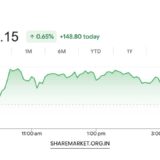
At the close of trading on July 14, the Sensex was down by 247.01 points, or 0.30%, settling at 82,253.46.
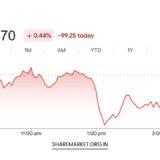
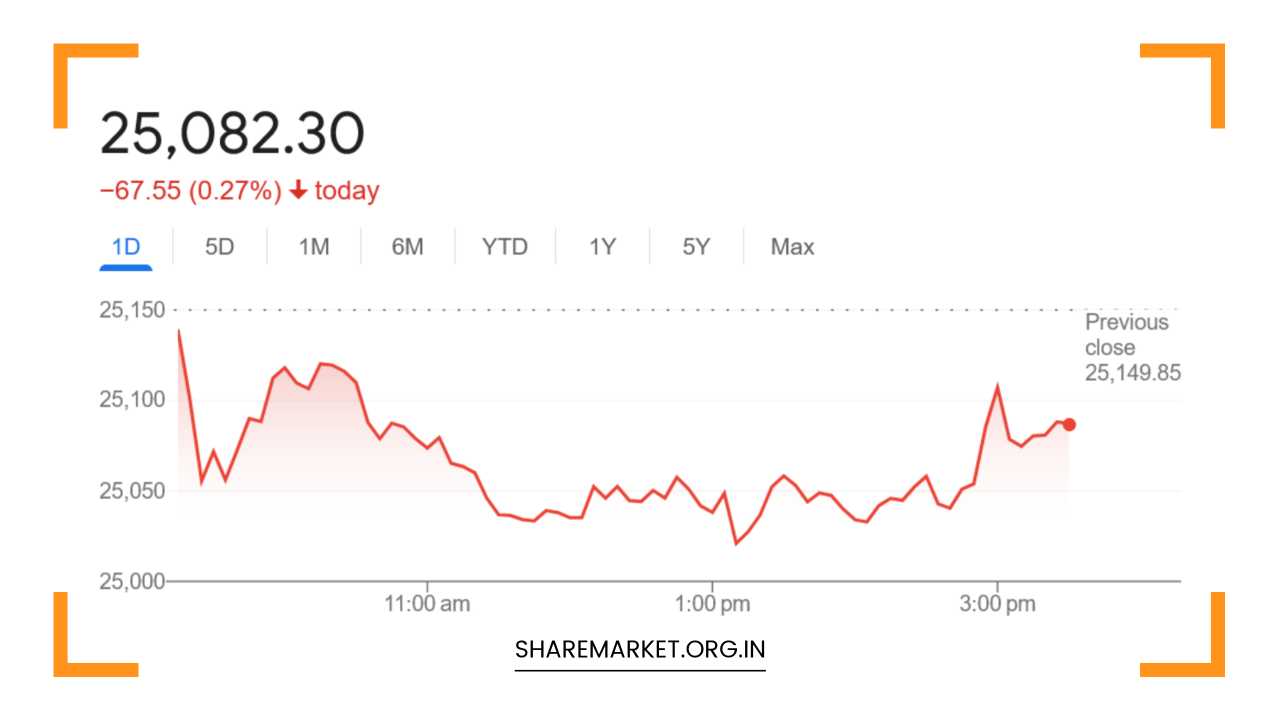
The Nifty, the benchmark index, lost 67.55 points, or 0.27%, to end at 25,082.30, dipping below the psychologically significant 25,100 level.
In terms of market breadth, there was a noticeable imbalance. 1,991 stocks advanced, but 2,020 stocks declined, reflecting a more cautious market environment. Meanwhile, 151 stocks remained unchanged throughout the day.
Among the top losers on the Nifty were Jio Financial, Bajaj Finance, Tech Mahindra, Wipro, and Asian Paints, all of which faced significant selling pressure.
Conversely, stocks such as Eternal, Titan Company, IndusInd Bank, ONGC, and SBI Life Insurance led the gainers list on the Nifty, providing some relief to the broader market.
Sectoral Performance: A Mixed Bag
When examining the performance of various sectors, there was a clear divide. The Nifty IT index was the hardest hit, falling by about 1% amid broader market concerns.
This decline in the IT sector reflects ongoing worries about global trade tensions, particularly as markets weigh the potential impacts of tariffs and other regulatory changes.
This was compounded by some weakness in global tech stocks, which acted as a drag on Indian IT stocks.
On the other hand, pharma, consumer durables, media, realty, and PSU banks witnessed more positive action, each gaining between 0.5% and 1%.
The realty and media sectors saw the most significant moves, indicating a shift in investor focus towards these segments, which often perform well when broader market volatility causes investors to seek out safe havens or more defensive stocks.
The broader markets were relatively stronger than the headline indices. The BSE Midcap index gained 0.7%, while the BSE Smallcap index rose by a robust 1.02%.
This outperformance of midcap and smallcap stocks highlights a renewed interest in smaller stocks, as investors appear to be positioning for a potential recovery in the near term.
Expert Opinions on Market Sentiment
According to Aditya Gaggar, Director of Progressive Shares, market sentiment was generally downbeat, with a palpable sense of disappointment among investors.
“The Nifty started the week on a weak note, and the market continued its downward movement, touching the psychological level of 25,000,” he observed.
Despite the prevailing negativity, Gaggar pointed out that a sharp recovery in the final trading hour helped the index pare back some of its losses.
The Nifty eventually closed at 25,082.30, still down by 67.55 points, but with a notable reduction in the overall decline.
“Barring IT, most sectors ended the day with positive returns, especially realty and media, which were the biggest gainers,” Gaggar explained.
Gaggar also noted the growing interest in small- and mid-cap stocks. These segments tend to outperform the large-cap indices during periods of market consolidation or recovery, as investors seek potential growth opportunities.
Technical Outlook: Bearish Candle but a Possible Trend Reversal
From a technical perspective, the daily chart of the Nifty suggests some caution. A bearish candle formed on the chart, indicating continued selling pressure in the market.
However, the Relative Strength Index (RSI) shows a hidden bullish divergence, which can often be an early signal of an impending trend reversal.
This is particularly notable as the Nifty has recently tested the 50-day moving average (DMA), a key technical support level that is widely watched by traders.
Despite the bearish price action on the Nifty, the RSI divergence could suggest that the recent decline may be running out of steam, and the index could potentially reverse direction in the coming days.
The presence of this divergence points to the possibility of a shift in momentum, especially if support levels hold.
The 50 DMA has historically acted as a key level for the Nifty, and traders will be looking closely at how the index behaves around this moving average.
The 24,970-25,000 range is expected to provide solid support in the short term. If the Nifty can hold above this zone, it could signal a potential rally back toward the 25,325 resistance level.
Key Technical Levels for July 15
- Support Level: 24,900-24,950
- Resistance Level: 25,325-25,350
- Technical Indicator to Watch: Hidden bullish divergence on RSI near the 50 DMA
Market Influencers to Watch
Apart from the technical indicators, there are other fundamental factors that are likely to influence market movements in the near term.
The retail inflation data from both India and the US is highly anticipated and could play a significant role in shaping investor sentiment.
A higher-than-expected inflation reading could lead to concerns about rising interest rates, which might dampen risk sentiment in the markets.
Global trade tensions also remain a key concern. As the US and other nations impose tariffs and trade restrictions, there is growing uncertainty over the impact on corporate profits and market valuations.
Any signs of escalating trade wars or disruptions in global supply chains could weigh heavily on the Indian market, particularly in export-driven sectors like IT.
Final Thoughts: What Lies Ahead for Nifty?
The market’s recent performance shows the challenges that investors face in the current environment, with multiple global and domestic factors weighing on sentiment.
While the Nifty ended lower on July 14, the technical setup suggests that a potential trend reversal could be in the works, particularly if support around the 24,900-25,000 range holds firm.
However, caution remains crucial, as the broader economic backdrop—particularly inflation and tariff issues—continues to cast a shadow over market performance.
For the Nifty to break its recent slump, it will need to decisively clear the 25,325-25,350 resistance range, accompanied by stronger momentum in global markets.
Investors will need to stay vigilant, monitoring both technical signals and macroeconomic data closely as the market prepares for the next phase of its journey.
Outlook for July 15
Traders should keep an eye on the 24,900-24,950 support range, as a bounce from these levels could lead to a recovery toward 25,325.
However, failure to hold these levels could open the door to deeper corrections. Investors should consider watching sectoral trends closely, especially in realty, media, and pharma, as these sectors have shown relative strength.