Share Market Today: Sensex, Nifty End Flat; Investors Lose Rs 1.39 Lakh Crore

Investors Lose ₹1.39 Lakh Crore as Sensex-Nifty Close Flat; All Sectoral Indices End in Red
Share Market Update — Tuesday, 22 July 2025
Indian equity markets faced a challenging and volatile session on Tuesday, 22 July, as investors grappled with uncertainty and mixed signals from both domestic and global fronts.
The benchmark indices, BSE Sensex and NSE Nifty-50, witnessed significant oscillations throughout the day but ultimately closed nearly flat, with minor losses.
However, a closer look at the broader market reveals widespread selling pressure, as all sectoral indices ended the day in the red — reflecting a cautious stance among market participants.
Market Summary: Sensex and Nifty Struggle for Direction
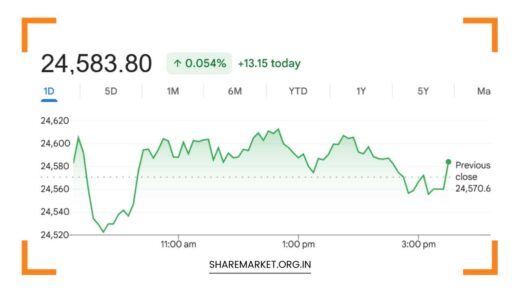
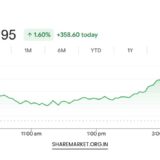
The Sensex, which tracks 30 of the largest and most actively traded stocks on the Bombay Stock Exchange, closed at 82,186.81, shedding a marginal 13.53 points or 0.02%.
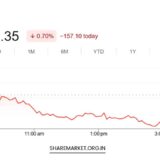
Similarly, the Nifty-50, the NSE’s benchmark index representing the top 50 stocks by market capitalization, ended at 25,060.90, down 29.80 points or 0.12%.
This muted movement masks a day of heightened volatility where both indices fluctuated between positive and negative territory multiple times.
The intraday swings highlighted a lack of conviction among investors, with neither bulls nor bears able to seize control amid an absence of strong domestic triggers and a wait-and-watch approach ahead of key global economic data releases later this week.
Sectoral Indices: Broad-Based Weakness Amplifies Selling Pressure
While headline indices appeared relatively stable, sectoral indices painted a more somber picture. All major sectors closed in the red on Tuesday, signaling widespread risk aversion. The sharpest losses were recorded in:
- Nifty Pharma: Down approximately 2%, pressured by profit booking and concerns over regulatory developments affecting drug prices.
- Nifty Media: Fell by nearly 2%, impacted by weak advertising revenue trends and concerns over slowing subscriber growth in key companies.
- Nifty Realty: Slipped about 2%, as rising interest rates and input costs weighed on sentiment in the real estate sector.
- Nifty PSU Bank: Also down around 2%, reflecting worries over asset quality and credit growth amid a slowing economic backdrop.
The weakness in these sectors exacerbated overall market pressure, overshadowing pockets of strength seen in select stocks.
The broader market, as measured by midcap and smallcap indices, also faced pressure. The Nifty Midcap 100 declined 0.6%, indicating risk aversion among mid-sized companies, while the Nifty Smallcap 100 experienced a smaller drop of 0.3%, suggesting relatively better resilience in smaller stocks.
India VIX: Volatility Index Falls, Indicating Diminishing Fear
Amid this volatile environment, the India Volatility Index (India VIX) — often described as the market’s fear gauge — eased by 3.5% to close at 10.82 on Tuesday.
A lower VIX typically signals that investors’ perceived risk and anxiety are waning, which may set the stage for more stable market conditions in the near term.
However, the current level of 10.82 still indicates moderate uncertainty, as investors remain cautious amid ongoing global macroeconomic concerns, geopolitical tensions, and domestic economic indicators.
Wealth Erosion: Investors Lose ₹1.39 Lakh Crore in a Single Session
The total market capitalization of companies listed on the BSE declined sharply, falling from ₹459.89 lakh crore on Monday, 21 July, to ₹458.50 lakh crore on Tuesday, 22 July — a contraction of ₹1.39 lakh crore.
This massive reduction in market value reflects the collective wealth erosion of Indian equity investors within just one trading day.
Such a sizable drop highlights the impact of persistent selling pressure and risk-off sentiment among market participants.
It also underscores the importance of monitoring global cues and domestic economic developments, which continue to sway investor confidence.
Top Performing Sensex Stocks: Bright Spots Amid Broad Weakness
Despite the overall negative trend, a handful of Sensex stocks bucked the selling tide and closed with notable gains:
- Eicher Motors led the rally, surging an impressive 10.56%. The company’s strong quarterly earnings and optimistic outlook for its flagship Royal Enfield motorcycle brand drove investor enthusiasm.
- Titan Company gained 1.08%, supported by robust demand in its jewellery and watches segments.
- Bharat Electronics Limited (BEL) rose approximately 1.05%, buoyed by new defense contract wins and strong order book visibility.
- Maruti Suzuki climbed 0.85%, as positive domestic sales data lifted investor sentiment in the automobile sector.
- Hindustan Unilever (HUL) added 0.65%, continuing its steady momentum on expectations of sustained volume growth and margin expansion.
These stocks helped cushion the overall market losses and reflected sector-specific strengths.
Sensex Losers: Heavyweights Drag Indices Lower
On the flip side, 17 Sensex constituents closed in negative territory, with several blue-chip stocks enduring significant declines:
- Tata Motors emerged as the top loser, slipping 2.04% amid concerns over slowing passenger vehicle sales and pressure on margins.
- Adani Ports and Special Economic Zone (APSEZ) declined 1.93%, affected by broader infrastructure sector caution and profit booking.
- State Bank of India (SBI) dropped 1.75%, weighed down by concerns over asset quality and credit growth.
- Reliance Industries (RIL) fell 1.50%, influenced by mixed earnings outlook and global energy price volatility.
- Larsen & Toubro (L&T) lost 1.07%, as investors took a cautious stance on large-cap infrastructure and capital goods companies.
These declines contributed significantly to the overall lackluster performance of the indices.
Market Breadth and Key Highlights
The breadth of the market reflected the cautious mood among investors:
- Total stocks traded on the BSE: 4,198
- Stocks advancing: 1,784
- Stocks declining: 2,236
- Stocks unchanged: 178
The fact that declining stocks outnumbered advancing ones by a significant margin points to broad-based selling pressure across market segments.
In terms of stock performance extremes, 150 stocks achieved new 52-week highs during the day, signaling pockets of strength and selective investor interest.
Meanwhile, 33 stocks hit fresh 52-week lows, illustrating the ongoing volatility and divergence in individual stock performance.
Global Cues and Domestic Factors Weigh on Market Sentiment
Several factors contributed to the choppy trading session:
- Global Macroeconomic Concerns: Investors remained cautious ahead of major economic data releases from the US and Europe later this week. Persistent inflationary pressures, central bank policies, and geopolitical developments have kept global markets on edge.
- Domestic Economic Indicators: Mixed signals from recent economic data, including slower-than-expected industrial production and inflation trends, tempered enthusiasm for aggressive buying.
- Corporate Earnings: While some companies have reported encouraging results, others have disappointed or provided cautious guidance, resulting in a stock-specific and sectoral divergence in performance.
Outlook: Navigating Uncertainty
With volatility likely to remain elevated in the near term, investors are advised to adopt a measured approach.
The decline in India VIX is a positive sign that fear is subsiding, but the absence of clear domestic or global catalysts means that market direction may continue to be range-bound.
Key upcoming events to watch include central bank policy decisions, quarterly corporate earnings, inflation data, and geopolitical developments.
These will play a crucial role in shaping market sentiment and potentially triggering the next meaningful move.
For investors, focusing on quality stocks with strong fundamentals and diversified sector exposure may help navigate the current uncertain landscape.
Meanwhile, traders should be prepared for continued volatility and rapid shifts in market mood.
In summary, Tuesday’s trading session was marked by a cautious stance and widespread selling across sectors, resulting in a significant erosion of investor wealth despite the headline indices closing almost flat. The market remains on tenterhooks as participants await fresh triggers to establish a sustained direction.