Sensex Down 166 Points, Nifty at 24,574; Nifty Prediction for Tomorrow
Markets End Lower for Second Straight Session – Key Levels to Watch on August 7
Indian equity markets closed in the red on August 6 for the second consecutive trading session, amid broad-based selling pressure and weak global cues.
Benchmark indices slipped below crucial technical levels, raising concerns about near-term market direction and the possibility of further consolidation.
The Nifty 50 ended the session below the psychologically significant 24,600 mark, while the Sensex lost over 160 points intraday.
Weakness in heavyweights from the IT, pharma, and banking sectors contributed significantly to the decline.
Analysts believe the market is currently at a crucial juncture, and upcoming sessions will be critical in determining the next directional move.
Closing Data – August 6, 2025
- BSE Sensex: 80,543.99, down 166.26 points or 0.21%
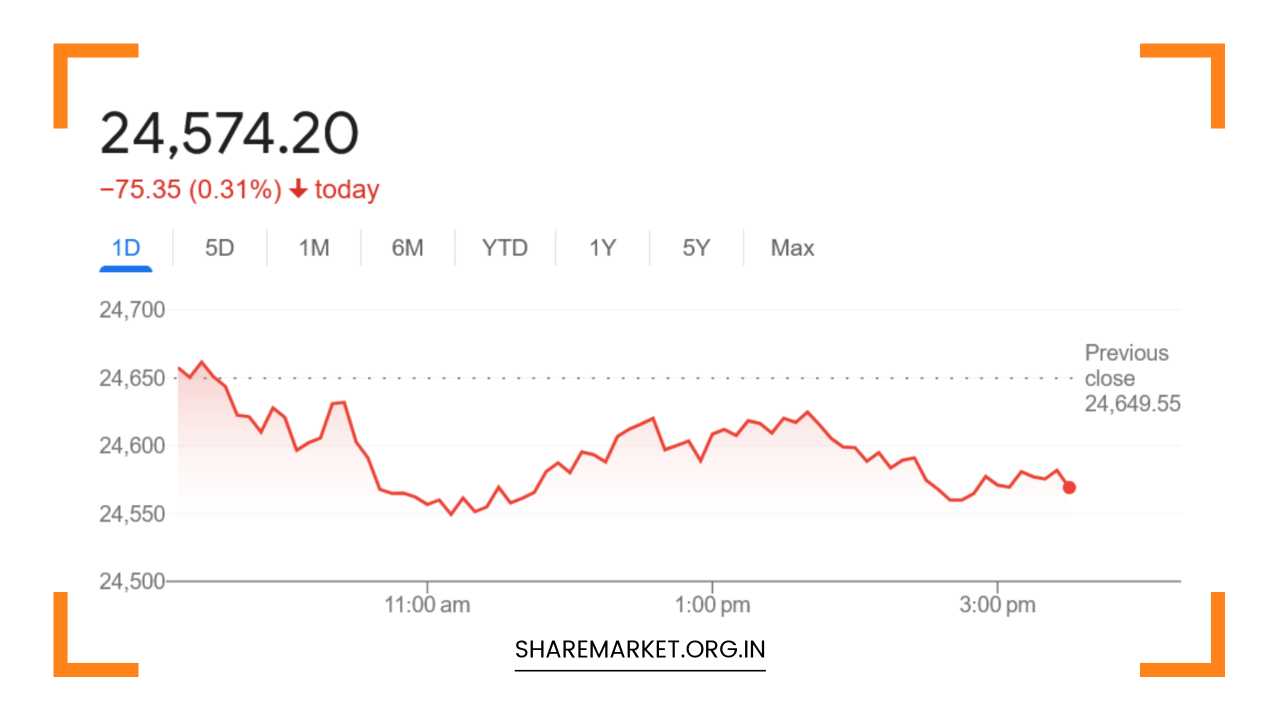
- NSE Nifty 50: 24,574.20, down 75.35 points or 0.31%
The broader market also remained under pressure:
- BSE Midcap Index: Down 1%
- BSE Smallcap Index: Down 1%
Market breadth was negative, with 1,292 stocks advancing, 2,594 declining, and 144 remaining unchanged, reflecting widespread weakness across sectors.
Top Movers – Nifty 50 Constituents
Major Losers:
Some of the biggest drags on the index were:
- Wipro: Pressured by weak global tech outlook and subdued earnings commentary
- Sun Pharma: Profit booking after recent gains
- Jio Financial Services: Continued volatility amid regulatory developments
- IndusInd Bank: Weak performance amid concerns over asset quality
- Tech Mahindra: IT stocks underperformed amid signs of slowing global tech demand
Top Gainers:
Amid the broad sell-off, a few stocks bucked the trend:
- Asian Paints: Gained on optimism around rural recovery and strong volume guidance
- HDFC Life: Supported by steady growth in premium collections
- Trent: Continued strong performance driven by positive retail sector momentum
- Adani Ports: Rose on improving trade volumes and easing debt concerns
- Bharat Electronics (BEL): Benefitted from defense sector optimism and order wins
Sectoral Performance
A look at sector-wise indices shows that the selling was widespread, sparing only one segment:
- PSU Bank Index: The lone gainer, up 0.6%, driven by investor confidence in government banking reforms and stable earnings
- IT Sector: Fell over 1.5% due to weak global tech spending and muted outlook from U.S. markets
- Pharma: Down nearly 2%, led by profit-taking in large caps
- FMCG, Realty, Media: Declined between 1% and 2%, reflecting weakness in consumer sentiment and concerns about urban demand
Technical Analysis – Nifty at a Tipping Point
The Nifty failed to reclaim the 24,700 resistance level, which has emerged as a key barrier in recent sessions.
Instead, the index spent most of the trading day consolidating around the 24,600 zone, signaling indecisiveness among market participants.
Key Technical Levels:
- Immediate resistance: 24,700
- Immediate support: 24,500
- Crucial downside level: 24,000
If Nifty breaks below 24,500 on a closing basis, it could lead to a sharper correction toward 24,000 in the short term.
On the flip side, a decisive breakout above 24,700–24,750 could revive bullish momentum and push the index toward new highs.
Market sentiment remains cautious, with traders advised to watch these levels closely before initiating large positions.
Expert Commentary
According to VK Vijayakumar, Chief Investment Strategist at Geojit Financial Services, geopolitical developments and trade tensions could pose additional challenges for the markets in the near term.
“President Trump’s aggressive rhetoric and potential trade policy shifts are likely to have a ripple effect on global markets. While India has so far maintained a measured response, it is now beginning to assert a stronger and more balanced stance,” he said.
He further noted that if the U.S. places unreasonable trade demands, especially around tariffs or technology access, India may resist them — which could impact exports and market sentiment in the short term.
Macro Factors Influencing the Market
Beyond technicals and stock-specific action, several macroeconomic and geopolitical factors are currently influencing investor sentiment:
1. Global Market Cues
U.S. equity indices have shown signs of fatigue after a strong run in July. Rising bond yields, concerns about interest rate cuts, and renewed inflation fears are making global investors cautious.
2. FII/DII Activity
Foreign Institutional Investors (FIIs) were net sellers for the second consecutive session, a key contributor to the pressure on benchmark indices. Domestic Institutional Investors (DIIs) tried to absorb some of the selling but could not fully offset the outflows.
3. Earnings Season
The earnings season has been mixed so far. While some frontline companies have posted strong results, others — particularly in the tech and consumer discretionary sectors — have delivered lukewarm numbers. This has added to market volatility.
4. Monsoon and Rural Demand
The performance of the monsoon remains a critical variable, particularly for FMCG and agri-related sectors. Any delay or shortfall could affect rural consumption, inflation, and the overall economic outlook.
What to Watch on August 7
Looking ahead, here are the key indicators and triggers to monitor:
- Movement in global indices, especially Nasdaq and Dow Futures
- Crude oil and commodity prices, which could influence inflationary expectations
- FII/DII activity, especially in mid and small caps
- Rupee-dollar exchange rate, as a weaker rupee could affect import-heavy sectors
- Technical levels: Watch Nifty’s ability to hold above 24,500 or reclaim 24,700
Final Thoughts
The Indian stock market appears to be entering a phase of consolidation after its recent rally. With the Nifty stuck in a narrow range and failing to sustain above key resistance levels, the short-term trend looks uncertain.
A break below 24,500 could lead to further downside toward 24,000, while a move above 24,700 would be needed to resume the uptrend.
Investors should adopt a cautious, stock-specific approach, focusing on fundamentally strong companies while closely tracking global and domestic cues.
As uncertainty continues to weigh on sentiment, August 7 may bring further clues on where the market is headed next.