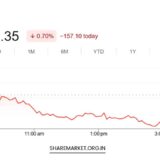
Sensex Gain 320 Points, Nifty at 25,423; Tomorrow Nifty Prediction

Indian Markets Wrap & What to Watch for September 19
On September 18, Indian equities closed on a positive note, with gains across major indices and select sectors, reflecting cautious optimism among investors.
As the market transitions into September 19, several technical levels, macroeconomic indicators, and global cues will likely shape direction.
Below, we recap the day’s developments, analyze key players, and outline what might unfold next.
Key Numbers & Market Breadth
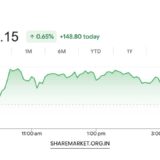
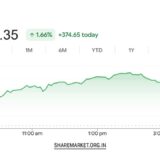
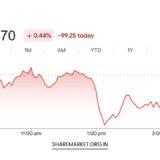
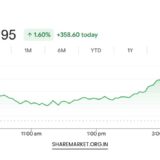
- The Nifty 50 closed at 25,423.60, up by 93.35 points or 0.37%, comfortably above the psychologically important 25,400 level.
- The Sensex ended the session at 83,013.96, gaining 320.25 points or 0.39%.
- Market breadth was essentially neutral‐to‐positive: 2,019 stocks advanced, 1,962 declined, and 158 were unchanged—indicating fragmentation, but with a mild tilt toward upside momentum.
Sectoral Dynamics & Top Movers
Advancers
- Pharmaceuticals were the biggest winners among sectors, climbing roughly 1.5%. Buying interest in Cipla and Sun Pharma drove much of this rise, possibly reflecting strength in export orders or favorable regulatory news (domestic or international).
- The IT sector advanced by about 0.8%, helped by strong gains in large‐cap names like Infosys, buoyed by global hiring momentum and perhaps cues from strong U.S./European corporate demand or a weaker USD.
- Metals and private banks also posted modest gains (0.3%‐0.4%), suggesting selective strength in cyclicals and financials.
Laggers
- On the downside, media and capital goods sectors fell about 0.3% each. These sectors are often more sentiment‐sensitive or react to soft domestic demand outlooks, which could explain their underperformance.
- Among individual laggards: Coal India, Bajaj Finance, Trent, Tata Motors, and UltraTech Cement faced selling pressure. Some of this may stem from supply‐side concerns, demand worry in automobile and consumer discretionary, or profit‐taking after recent runs.
Notable Stocks
- Gainers: In addition to Cipla and Sun Pharma, HDFC Life, Infosys, and Eternal stood out. Insurance and financial service names (HDFC Life) often respond to interest‐rate expectations, whereas tech/IT names are more reactive to global demand and currency trends.
- Decliners: Companies like UltraTech Cement and Tata Motors may have seen profit taking; Bajaj Finance’s dip may reflect concerns around credit growth or regulatory/regional policy headwinds.
Technical & Sentiment Outlook
Two analysts offered useful insights:
- Rupak Dey (LKP Securities) noted that despite a gap‐up open—likely driven by dovish signals from the U.S. Federal Reserve—volatility persisted throughout the session. The key technical takeaway is that Nifty remains above its major moving averages, which generally supports a bullish bias. He pointed to a bullish crossover in the daily RSI (Relative Strength Index) that is rising beyond the previous swing high—a sign of increasing momentum.
- Shrikant Chauhan (Kotak Securities) emphasized support around 25,300. According to him, this level is crucial for short‐term/day traders: as long as Nifty holds above this, the bullish trend can continue. On the upside, Chauhan sees 25,500 as a key resistance; breaking above that could open the door to 25,600‐25,625. If Nifty slips below 25,300, however, some of the bullish conviction may erode, exposing the index to downside risks.
Macro & Global Backdrop
Understanding what’s happening globally is essential to gauge where Indian markets might head next:
- U.S. Federal Reserve’s stance: Recent dovish rhetoric—lowering or stabilizing interest rate expectations—helps emerging markets by easing pressure on currencies and borrowing costs. Any new Fed statements or economic data (inflation, employment) in the lead‐up to Sep 19 may either reinforce or contradict current market optimism.
- Global macro indicators: Reports on U.S./EU GDP growth, inflation trends in major economies, China’s industrial output—each will influence U.S. and Asian markets, thereby affecting flows into Indian equities.
- Domestic data: Indian inflation numbers, industrial production, PMI, banking/credit growth, and policy announcements (e.g., by RBI or Ministry of Finance) could act as catalysts for movement. For instance, if inflation surprises high, yields may rise, potentially hurting rate‐sensitive sectors.
- Currency movements: A weakening rupee can hurt importing sectors or companies with large foreign‐currency debt, but can help exporters and IT names. With global rates possibly easing, currency trends may favor INR stability or modest appreciation, which would be a tailwind.
Possible Scenarios for September 19
Based on current technicals, macro factors, and sectoral action, here are a few plausible paths:
- Bullish Breakout Scenario
- If Nifty surpasses 25,500 with conviction—strong volume, positive global cues (e.g. dovish Fed, softer U.S. inflation)—we may see a run toward 25,600‐25,625, and possibly test levels closer to 26,000 in the coming days.
- Key sectors in this scenario: IT, Pharma, Private Banks, Consumer Discretionary.
- Range‐Bound/Consolidation
- The market may oscillate between 25,300 (support) and 25,500 (resistance), especially if global cues are mixed, or if domestic economic data is neutral or weak.
- Under this scenario, we might see intermittent rallies followed by profit‐taking; small caps may underperform versus mid and large caps.
- Bearish Pullback Scenario
- Should Nifty dip below 25,300, especially on heavy volumes or negative global news (e.g., hawkish Fed, USD strengthening), we might see further downside toward 25,150, or even lower.
- Sectors likely to suffer first: rate‐sensitive names, media and capital goods, or cyclical stocks with weak demand outlooks.
Strategy Guidance
Given the backdrop, here are some strategy suggestions for different types of market participants:
- Short-term traders: Keep keen watch on intraday support and resistance (25,300 & 25,500). Trades around breakouts or breakdowns from these levels could be profitable. Tight risk management is essential; stop‐losses should be placed just below support when going long, or above resistance when taking short positions.
- Swing traders / medium‐term investors: May look to accumulate on dips, particularly in sectors that benefit from global demand (IT, Pharma), or in export‐oriented names. Also, value may be found in private banks and financials if credit growth remains stable. Focus on companies with strong balance sheets and limited exposure to foreign currency risk.
- Long‐term investors: Key will be macro stability—inflation, interest rates, fiscal discipline. Favor companies with consistent earnings growth, market dominance, and strong corporate governance. The current environment seems to offer selective opportunities, but sticking to quality will help ride out volatility.
Key Levels to Monitor
| Level | Significance | What to Watch For |
|---|---|---|
| 25,500 | Immediate resistance | Break above with volume = momentum toward 25,600+ |
| 25,300 | Critical support | Holds → bullish; fails → risk of pullback |
| 25,150 | Lower support zone | Possible target on deeper correction |
| 26,000 | Psychological resistance / target if bullish breakout sustains |
Final Thoughts
India’s equity market closed September 18 with modest gains, reflecting cautious optimism amid global macro uncertainty.
While bulls retain the technical upper hand—particularly if Nifty stays above moving averages and key support zones—there are headwinds to monitor: Fed policy, inflation trends, domestic demand, and sector‐specific risks.
For September 19, traders and investors alike should remain vigilant. A breakout above 25,500 could spark a fresh leg higher.
Conversely, breach of 25,300 may shift sentiment toward consolidation or correction. For now, a “buy‐on‐dip” posture—favoring sectors with resilient fundamentals—looks like the most pragmatic approach, but with risk controls firmly in place.