Sensex Down 153 Points, Nifty at 25,046; Tomorrow Nifty Prediction
Markets Close in the Red Ahead of Q2 Earnings: What to Expect on October 9
On October 8, the Indian equity markets ended the trading session on a weak note, as investors adopted a cautious stance ahead of the Q2 earnings season and amid global uncertainty. The benchmark indices, Sensex and Nifty, both slipped into negative territory, extending their losses for the second consecutive session. Market sentiment remained fragile, impacted by subdued global cues, profit-booking in key sectors, and heightened geopolitical risks.
Market Recap – October 8 Performance
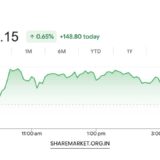
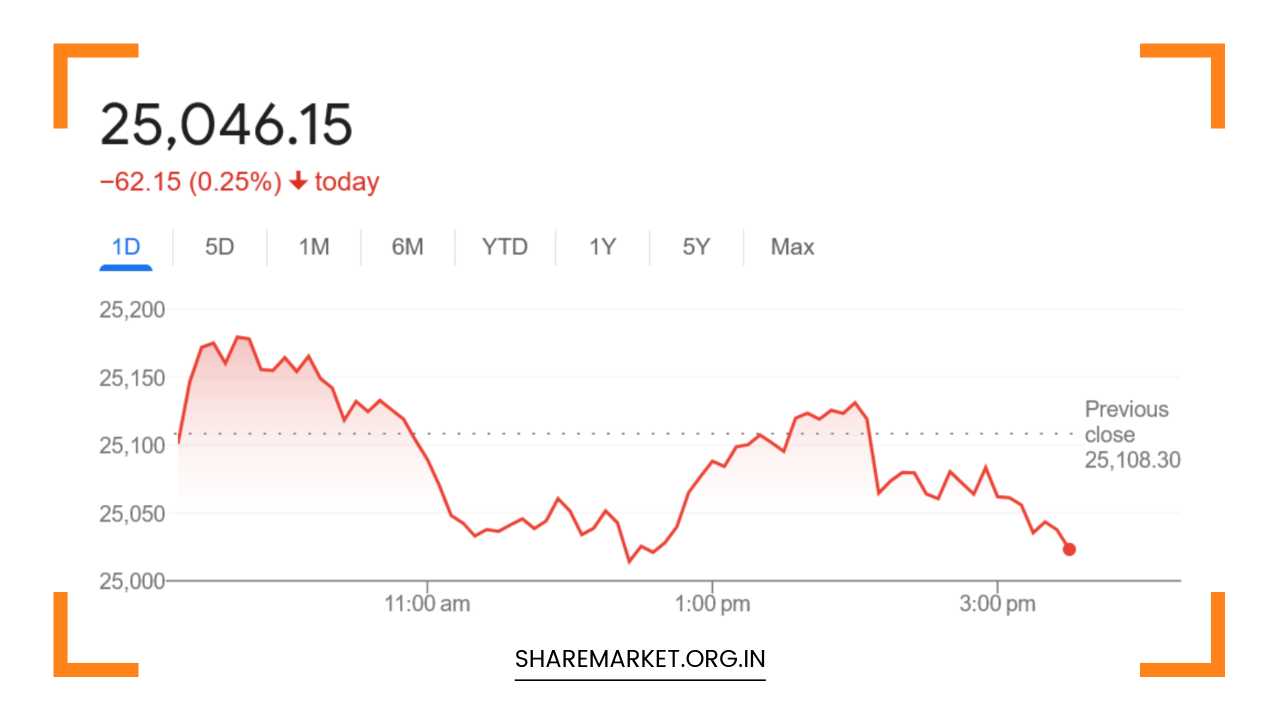
At close, the BSE Sensex declined by 153.09 points, or 0.19%, to settle at 81,773.66. Meanwhile, the NSE Nifty dropped 62.15 points, or 0.25%, to finish at 25,046.15, slipping below the psychological 25,050 mark. The broader market also remained under pressure. The BSE Midcap index fell by 0.7%, and the Smallcap index lost 0.4%, reflecting broader weakness across sectors.
Market breadth was negative, with 2,297 stocks declining, 1,697 advancing, and 138 remaining unchanged on the BSE. This indicates that the sell-off was widespread, impacting a large number of stocks beyond just the index heavyweights.
Sectoral Trends: Broad-Based Selling, IT Shines
Almost all sectoral indices ended the day in the red, barring consumer durables and IT, which managed to buck the trend. Sectors such as realty, telecom, pharmaceuticals, oil & gas, media, PSU banks, and automobiles were the worst performers, falling in the range of 0.3% to 2%. The realty index led the decline, reflecting investor concerns over interest rate trends and possible pressure on homebuyer sentiment.
Among the Nifty losers were names like Tata Motors, UltraTech Cement, Jio Financial Services, ONGC, and Trent, which dragged the index lower. These stocks faced selling pressure largely due to sectoral rotation and weak global cues.
On the upside, IT stocks provided some relief. Infosys, TCS, Tech Mahindra, and Titan Company (under the consumer durables category) were among the top gainers. Their performance was supported by positive investor sentiment around the IT sector’s stable earnings outlook, improving demand from global clients, and attractive valuations following recent corrections.
What’s Driving the Market Weakness?
According to Vinod Nair, Head of Research at Geojit Financial Services, Monday’s session was marked by high volatility. “The market witnessed an initial up-move, but it was quickly followed by profit-booking as traders opted to remain cautious ahead of the second quarter earnings,” Nair said.
He added that valuations are still rich in many pockets of the market, and investors are closely tracking upcoming corporate earnings for cues on the sustainability of earnings growth. “IT stocks outperformed owing to improved global sentiment and attractive valuations, while auto, banking, and FMCG stocks faced selling pressure due to concerns over margin pressure and demand slowdown,” he added.
Abhinav Tiwari, Research Analyst at Bonanza Portfolio, echoed similar views. He pointed to global macro headwinds as key reasons for the weakness in the domestic markets. “The Indian markets tracked weak global cues. Rising inflation in developed markets, particularly the US and Europe, along with ongoing geopolitical tensions in the Middle East, have increased investor nervousness,” he said.
Tiwari emphasized that while the broader market trend remains bullish, it is tempered by caution. “Investors are selectively looking at sectors with strong fundamentals and consistent growth. IT, consumer durables, and certain financials are expected to do well. However, underperforming sectors like PSU banks and realty may remain under pressure in the near term.”
Global Factors at Play
On the international front, market sentiment remains under stress due to several macroeconomic and geopolitical concerns. The potential for a prolonged US government shutdown, hawkish tones from the US Federal Reserve, and continuing tensions in the Middle East have all contributed to a rise in global risk aversion.
In response, gold prices have surged to historic highs, reflecting a classic flight-to-safety trade. This trend is expected to continue until more clarity emerges around the Fed’s policy stance and the geopolitical situation stabilizes.
Investors will closely monitor the release of the US Federal Reserve’s September FOMC meeting minutes later this week. These minutes could provide insights into the Fed’s thinking on inflation, interest rates, and the broader economic outlook. Any indication of further tightening or delayed rate cuts could further pressure global equity markets.
What to Expect on October 9
Looking ahead to October 9, the Indian markets are likely to open cautiously, with direction dictated by both domestic and global cues. Key factors that will influence market sentiment include:
- Second Quarter Earnings: The Q2 FY25 results season will officially kick off, with IT majors and large-cap financials set to report their numbers. Any deviation from expected earnings could lead to sector-specific volatility.
- US FOMC Minutes: Investors will watch closely for language that indicates whether the Fed is leaning toward further tightening or maintaining its current stance.
- Crude Oil Prices: With crude prices remaining elevated due to geopolitical uncertainties, sectors such as oil & gas, aviation, and logistics could witness movement based on any fresh updates.
- Festive Season Demand: On the domestic front, early trends in festive season sales could offer insight into consumer sentiment and spending behavior, which is vital for FMCG and consumer durable sectors.
Strategy for Investors
In this environment, a cautious yet selective investment approach is advisable. Sectors such as IT, healthcare, and consumer durables, which are expected to post stable earnings and have favorable demand outlooks, may offer relatively safer investment avenues. On the other hand, sectors facing margin pressures, regulatory hurdles, or valuation concerns—such as PSU banks and real estate—should be approached with care.
Market participants are also advised to keep an eye on macroeconomic data, including inflation and IIP numbers, which are due later in the week and may influence investor sentiment.
Final Thoughts
The Indian stock market appears to be entering a consolidation phase, weighed down by global concerns and the anticipation of Q2 results. While the broader trend remains optimistic, near-term volatility is likely. Investors should stay informed, focus on quality stocks, and be prepared for short-term fluctuations as the market navigates through this critical period.