Sensex Down 592 Points, Nifty at 25,877; Tomorrow Nifty Prediction
Sensex Falls 592 Points, Nifty Closes Below 25,900: What to Expect on October 31
Stock Market Today: The Indian equity market extended its volatile streak on Thursday, October 30, as benchmark indices witnessed sharp declines amid weak global cues and dampened investor sentiment. Persistent uncertainty surrounding U.S. monetary policy and profit-booking at higher levels dragged key indices lower, while mid- and small-cap stocks offered relative resilience.
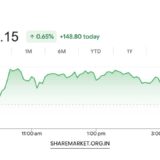
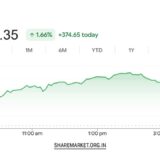
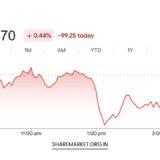
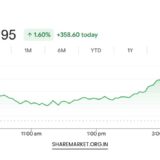
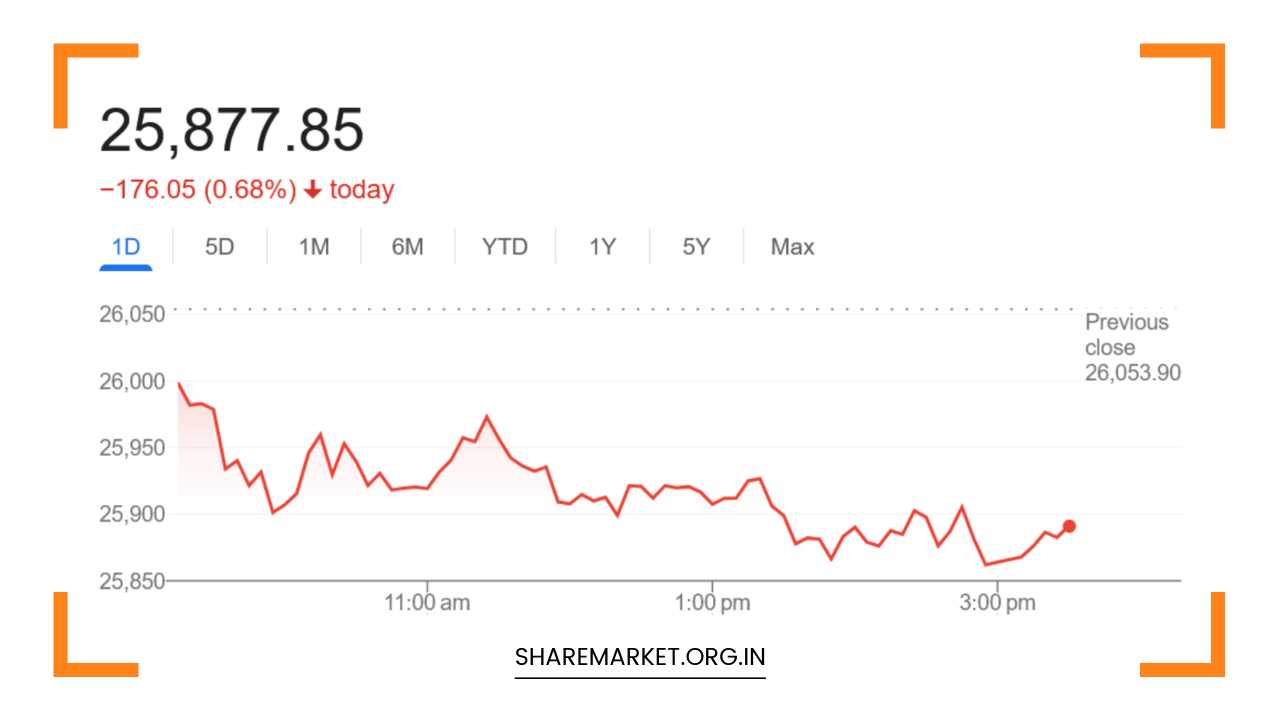
The BSE Sensex closed 593 points lower, or 0.70%, at 84,404, while the NSE Nifty 50 fell 176 points, or 0.68%, to end the day at 25,878. Market participants remained cautious ahead of the U.S. Federal Reserve’s next policy direction, as diminishing expectations of an aggressive rate-cut cycle weighed on global equity sentiment.
Global Weakness Spills Over to Domestic Markets
Asian and European markets traded mixed, reflecting investor unease after the U.S. Federal Reserve, in its latest policy statement, maintained a cautious stance on future rate cuts despite a modest 25-basis-point reduction. The Fed hinted at further easing later this year but refrained from offering clear guidance, leaving traders uncertain about the timing and magnitude of additional cuts.
This ambiguity led to a mild risk-off sentiment across global markets, prompting foreign investors to pare exposure to emerging market equities, including India. The U.S. dollar index strengthened slightly, and Treasury yields rose marginally—both indicators of tightening global liquidity conditions. These developments exerted downward pressure on Indian equities, particularly in rate-sensitive sectors such as banking and real estate.
Sectoral Performance: Broad-Based Decline
Most sectoral indices closed in the red, reflecting widespread selling across major segments. The Nifty Private Bank index was among the top losers, slipping 0.7%, followed by Nifty Pharma, Nifty IT, and Nifty Bank, all of which declined around 0.6%. The weakness in IT stocks was largely driven by renewed concerns over a slowdown in U.S. tech spending, while banking counters remained under pressure due to narrowing interest margins and fears of slower credit growth in the coming quarters.
Other key sectors such as Nifty Metal, PSU Bank, Auto, and FMCG also ended lower, each shedding around 0.5%. Profit-booking was visible in frontline names that had rallied in the previous week amid quarterly earnings optimism.
In contrast, broader market indices showed resilience. The BSE Midcap Index remained nearly flat, while the BSE Smallcap Index declined by just 0.06%, suggesting that retail investors continued to find value in select mid- and small-sized companies despite volatility in the large-cap space.
Market Breadth and Technical Indicators
According to Sudeep Shah, Head of Technical and Derivative Research at SBI Securities, the market breadth was clearly negative. Out of the Nifty 500 stocks, 328 ended in the red, highlighting a cautious mood across the board. He noted that the advance-decline ratio continues to signal subdued sentiment, even as certain defensive sectors attempt to stabilize.
From a technical standpoint, the Nifty 50 has established key support around the 25,800–25,750 zone, while resistance is seen near 26,030–26,050. “A decisive move above 26,050 could trigger a short-covering rally toward 26,200 and eventually 26,350,” Shah said. “However, failure to sustain above 25,900 might invite further selling pressure in the near term.”
In the derivatives segment, as of 2:30 pm, 48 stocks were trading with gains and 167 with losses, underscoring the day’s negative bias. Analysts suggest that traders are increasingly adopting a defensive stance, trimming leveraged positions amid uncertainty in global cues.
Chart Patterns and Short-Term Outlook
Ponmudi R, CEO of Enrich Money, observed that the Nifty once again struggled to sustain above the crucial resistance zone of 26,050–26,100, leading to the formation of a mild double-top pattern on the daily chart—a technical indicator that often signals hesitation or potential reversal at higher levels.
“This pattern, combined with lower highs in successive trading sessions, suggests that the index is encountering persistent selling pressure whenever it approaches resistance,” Ponmudi explained. “The support zone between 25,900 and 25,800 will be critical going forward. If this level holds, the Nifty could attempt another rebound toward 26,050–26,100. However, a breakdown below 25,800 may trigger further weakness toward 25,666—the previous breakout zone.”
Expert Views on Market Sentiment
Ashika Stock Broking offered a similar technical perspective, noting that while short-term momentum remains muted, the market could see selective buying in defensive sectors such as FMCG and pharma if global conditions stabilize. “Traders should closely monitor global bond yields and the dollar index,” the brokerage said. “Sustained weakness in global equities could lead to more profit-booking in domestic markets.”
Fundamentally, analysts are also monitoring the domestic earnings season, where mixed results from large-cap IT and banking names have failed to instill confidence. Foreign portfolio investors (FPIs) turned net sellers for the third consecutive session, while domestic institutional investors (DIIs) provided some cushion by absorbing part of the selling pressure.
Outlook for October 31: Key Levels to Watch
Heading into the next session on October 31, market experts expect continued volatility but within a defined range. Technical analysts believe that 25,800 remains the immediate support level to watch, with 25,666 acting as a deeper cushion. On the upside, any sustained move above 26,000–26,050 could attract short-term buying and push the index toward 26,200.
However, traders are advised to remain cautious and avoid aggressive long positions until the index breaks convincingly above resistance levels. The focus will likely remain on global cues—especially any fresh statements from U.S. Federal Reserve officials—and the movement of crude oil prices and the rupee.
Sector rotation could also play a key role. Defensive sectors such as FMCG, healthcare, and utilities may outperform if volatility persists, while cyclical sectors like metals, banks, and autos might remain under pressure due to weak global demand trends.
Final Thoughts
In summary, the Indian stock market remains caught in a delicate balance between global macroeconomic uncertainty and domestic growth optimism. Thursday’s selloff underscores investors’ cautious stance amid mixed global signals and fading hopes of aggressive monetary easing in the U.S.
For traders and investors, the near-term outlook hinges on whether the Nifty can sustain above its immediate support levels around 25,800. A rebound from these levels could spark a short-term recovery toward 26,100, while a break below may open the gates for deeper corrections.
As October draws to a close, markets are likely to remain range-bound, awaiting clearer direction from both global central banks and domestic earnings cues. In the meantime, disciplined risk management and selective stock picking will remain crucial strategies for navigating this period of heightened volatility.