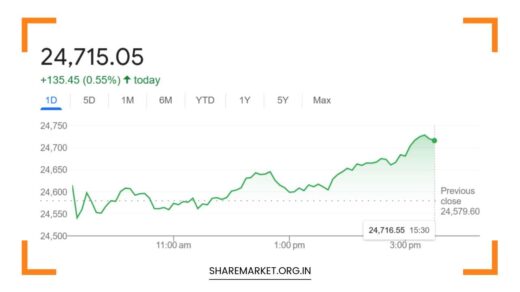
Sensex Down 519 Points, Nifty at 25,597; Nifty Prediction for Tomorrow
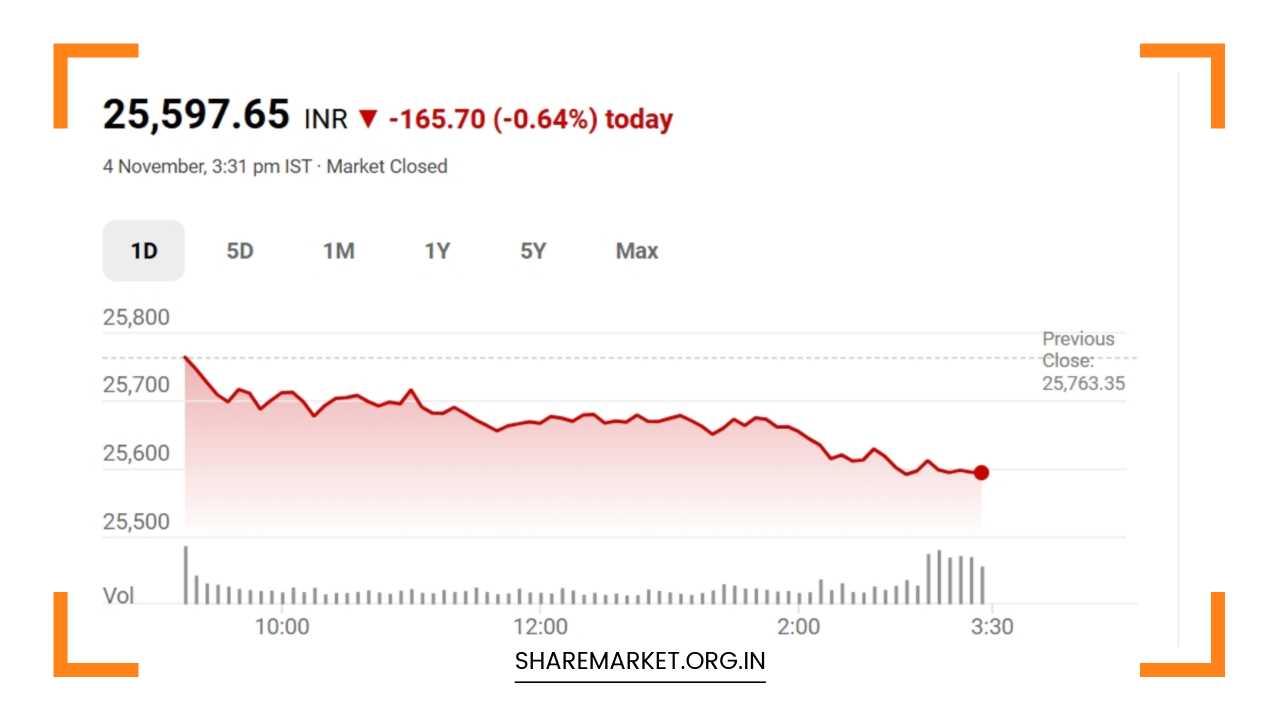
Market Outlook: IT Nears Value Zone, Banks Show Strength
The current market environment reflects a phase of consolidation after a prolonged period of strength. Despite the optimism witnessed earlier this year, the market seems to be struggling to maintain its upward momentum. According to Anirudh Garg, Partner and Research Head at INVASSET PMS, several technical indicators have been signaling weakness for some time, suggesting that a near-term correction may be inevitable.
Garg explains, “Technical indicators have been showing weakness for quite some time. This is why we are trading in cash again. We are not receiving as many positive signals from the market as we had hoped.” His comments underline a cautious yet strategic approach—an indication that professional investors are prioritizing capital preservation over aggressive positioning at this stage of the market cycle.
When comparing the Indian markets to global peers such as Kospi, Dow Jones, and Nasdaq, Garg notes that the divergence is becoming more pronounced. While the Nifty 50 continues to display relative resilience, broader indices in India are struggling to keep pace. Mid-cap and small-cap stocks, which had delivered strong gains earlier, are now showing signs of fatigue. This weakening breadth suggests that the rally lacks the broad-based participation necessary to sustain higher levels for long.
“The market has lost momentum and is unable to sustain it,” Garg said. “This lack of momentum creates room for a correction. I believe it is better to buy during dips in the market.”
A Time for Selective Accumulation
While many investors may view a market correction with apprehension, seasoned professionals like Garg see it as an opportunity to accumulate quality stocks at attractive valuations. His view is that markets are entering a phase where patience and selectivity will be key. Rather than chasing short-term rallies, investors should focus on identifying fundamentally sound sectors and companies that are well-positioned for the next growth cycle.
Historically, markets tend to oscillate between periods of exuberance and consolidation. During times of consolidation, valuations often become more reasonable, allowing long-term investors to build positions at lower prices. Garg’s approach reflects this philosophy—he emphasizes the importance of waiting for the right entry points rather than investing impulsively.
At present, INVASSET PMS has chosen to remain in cash, signaling a defensive stance. However, this does not imply pessimism; rather, it reflects discipline. By holding cash, the firm is preserving liquidity, allowing it to deploy funds strategically when valuations become more favorable. Garg’s comments suggest that he expects such opportunities to arise soon, particularly in sectors like IT and banking.
Banking Sector: Stability Amid Uncertainty
Turning to the banking sector, Garg expresses a more optimistic outlook. He believes that both private and public sector banks are positioned for sustainable growth in the medium to long term. “The private banking sector is not bad. You can invest in whichever sector you find promising with a 1.5 to 2-year horizon, as sectoral corrections are underway,” he stated.
The Indian banking sector has undergone significant structural improvements over the past few years. Asset quality has strengthened, credit growth is picking up, and balance sheets are far healthier than they were in the previous decade. With improving macroeconomic conditions and the Reserve Bank of India maintaining a balanced monetary policy stance, banks are likely to benefit from expanding loan books and declining non-performing assets.
Garg emphasizes that both public sector banks (PSBs) and private sector banks offer promising opportunities. PSBs, which have traditionally underperformed due to governance issues and weak balance sheets, are now showing renewed strength, supported by government recapitalization efforts and improving profitability. Meanwhile, private banks continue to maintain their leadership in retail lending and digital banking innovation.
He adds that investors with a long-term perspective—roughly 1.5 to 2 years—can consider accumulating quality names in the banking and real estate sectors. Real estate, closely linked with banking performance, is benefiting from rising urban demand, favorable financing rates, and the ongoing infrastructure push by the government.
IT Sector: Approaching the Value Zone
Perhaps the most interesting part of Garg’s outlook concerns the Information Technology (IT) sector. After a phase of underperformance due to global macroeconomic headwinds and concerns about slowing demand from Western markets, Indian IT stocks are once again coming into focus. Garg believes that the IT sector is nearing what he calls the “value zone.”
“If IT corrects further from its current levels, it will enter the value zone. All the bad news has already been discounted,” he explained. This perspective suggests that while short-term weakness may persist, the long-term fundamentals of the sector remain intact.
Over the past two years, the IT industry has faced multiple challenges—rising wage costs, slowing deal flow from the US and Europe, and pressure on margins. However, most of these negatives are now well known and largely priced into current valuations. As digital transformation remains a global megatrend, the long-term demand for cloud computing, cybersecurity, and AI-driven solutions will continue to provide growth opportunities for leading Indian IT firms.
Garg clarified that while INVASSET PMS currently holds no positions in the IT sector, it remains on their radar. “We are once again 100% cash-based. However, if IT moves further into the value zone, we will definitely invest in the sector,” he said.
This approach reflects a disciplined value-investing mindset—waiting for high-quality stocks to reach levels where the risk-reward balance becomes compelling. Investors who share this philosophy might consider monitoring leading IT names with strong order books, diversified client bases, and consistent dividend payouts.
Final Thoughts: Patience and Prudence Will Pay Off
In summary, the current market appears to be entering a phase of short-term weakness after an extended rally. The loss of momentum across broader indices suggests that a correction is not only possible but healthy for the market’s long-term sustainability. Investors should view such phases as opportunities to realign their portfolios and accumulate high-quality stocks at better valuations.
Anirudh Garg’s overall stance is one of cautious optimism. While maintaining liquidity and avoiding overexposure in uncertain times, he remains confident in India’s long-term growth story. His emphasis on the banking, real estate, and IT sectors underscores a focus on areas with strong structural tailwinds and improving fundamentals.
As he aptly summarizes through his strategic positioning: holding cash today can be the smartest move if it allows one to buy value tomorrow.