AI Stock Bubble Wipes Out Rs 44.4 Lakh Crore: Global Markets Reel as Experts Warn

AI Bubble: ₹44.4 Lakh Crore Wiped Out as Panic Spreads from US to Asian Markets; Experts Warn of Overheating
Global markets experienced sharp turbulence this week as fears of an AI-driven stock bubble sent investors scrambling. The sell-off has wiped out over $50 billion (₹44.4 lakh crore) in market capitalization, with panic spreading from the United States to major Asian markets. Analysts say the turmoil highlights growing concerns about sky-high valuations, particularly in semiconductor and AI-related companies.
Global Market Selling Amid AI Frenzy
Investor enthusiasm for artificial intelligence and chip-related stocks has surged throughout 2025, driving shares of companies involved in AI technologies and semiconductor manufacturing to unprecedented highs. But the rapid rise in valuations has sparked worries about an impending correction. On Tuesday, the US market began a sharp sell-off in AI-focused stocks, triggering a ripple effect across global markets.
Investors in semiconductor companies, which are critical to AI infrastructure, began profit-booking amid fears that stock prices had detached from fundamentals. The Philadelphia Semiconductor Index (PHLX Semiconductor Sector), which tracks the 30 largest chip companies in the US, experienced significant declines. The index’s weakness dragged down global market capitalization for chipmakers by more than $50 billion, highlighting the far-reaching consequences of investor panic.
Taiwan Semiconductor Manufacturing Company (TSMC), the world’s largest contract chip manufacturer, fell over 3% in early trading, reflecting concerns over overvaluation and slowing demand for high-end chips. The sell-off has reignited debates about whether the current AI boom mirrors the tech bubble of the late 1990s.
Asian Markets Bear the Brunt
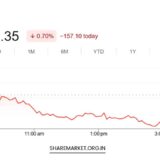
Asian markets were not spared from the turbulence. South Korea’s KOSPI equity benchmark index posted one of the largest declines, falling more than 3% on Wednesday, November 5th. Heavy losses in major chipmakers such as Samsung Electronics and SK Hynix drove the decline, with both companies’ shares dropping over 6%. These companies had experienced extraordinary growth this year, with Samsung gaining roughly 80% and SK Hynix surging more than 200% year-to-date, making their sudden decline all the more striking.
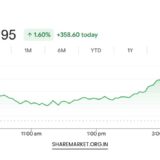
Japan also experienced sharp losses, with Advantest Corp., a key player in semiconductor testing equipment, falling more than 10%. The decline exerted downward pressure on the Nikkei 225, Japan’s premier equity index, which slid over 3%. Other Asian markets, including Taiwan and Singapore, also reflected the global unease, with technology-heavy indices seeing notable pullbacks.
US Market Volatility and AI Hype
In the United States, AI-related stocks have been at the forefront of the market rally. Companies leveraging AI technologies enjoyed a meteoric rise throughout the year, even as concerns over high valuations and elevated interest rates loomed. But optimism turned fragile following disappointing results from major players.
The sell-off began with Palantir Technologies, a leading AI-driven data analytics company, which fell more than 8% despite reporting strong earnings. The stock, which has gained over 175% in 2025, now trades at more than 80 times its one-year forward earnings, making it the most expensive company in the S&P 500. The sharp decline in Palantir’s stock triggered widespread concern among investors about whether the broader AI stock rally was sustainable.
Adding to investor anxiety, AMD—a major rival of Nvidia in the chip space—issued a cautious outlook that fell short of market expectations. The combination of stretched valuations and mixed earnings reports has created a volatile environment in which any negative news can trigger outsized selling.
Expert Analysis and Warnings
Market experts are weighing in on the turmoil, emphasizing that the correction could continue before stability returns. Chris Weston, Head of Research at Pepperstone Group, warned that “the global market panic could persist for some time. There’s no compelling reason to buy into the market at current levels.” Weston highlighted that while AI stocks have captured investor imagination, the rapid rise in valuations leaves little margin for error.
Meanwhile, Xin-Yao Ng, a fund manager at Aberdeen Investments, offered a more nuanced perspective. “This is a necessary and healthy correction,” Ng said. “The AI sector has experienced meteoric growth, and some consolidation was inevitable. There is a bubble forming in certain AI stocks, but it hasn’t fully burst yet. Continued selling in this segment could trigger a broader market adjustment.”
Financial analysts point out that the current environment reflects a classic scenario of profit-booking after a period of rapid gains. In the case of South Korean chipmakers, for instance, investors have been locking in profits after stellar year-to-date performance. Similar trends are evident in the US and Japan, where AI and semiconductor stocks had outpaced broader market growth.
What This Means for Investors
The sell-off underscores the risks inherent in chasing high-growth sectors without regard to valuation. While AI technology is widely expected to transform industries ranging from healthcare to finance, investor exuberance has led to extreme stock price inflation. Companies that were trading at modest multiples a year ago are now commanding valuations that some experts consider unsustainable.
The current turbulence also highlights the interconnectedness of global markets. Weakness in one sector or region can quickly spill over to other markets, creating synchronized declines. For investors, this serves as a reminder to diversify portfolios and manage exposure to high-flying sectors.
Despite the recent downturn, some analysts remain optimistic about the long-term potential of AI. The sector’s growth prospects are still substantial, with demand for AI chips, cloud infrastructure, and data analytics solutions expected to increase dramatically in the coming years. However, short-term volatility is likely to remain a defining feature of these markets.
Looking Ahead
As markets continue to digest recent earnings reports and assess valuation risks, volatility is expected to persist. Investors may witness further short-term declines in AI and semiconductor stocks before the market stabilizes. The correction could serve as a reality check for investors who had bet heavily on continued, unbroken growth in AI-related equities.
In conclusion, the recent sell-off has wiped out ₹44.4 lakh crore in global market capitalization, sending shockwaves from Wall Street to Asian markets. High valuations, profit-booking, and cautious earnings guidance have combined to create a perfect storm for investors. While the AI sector remains promising in the long term, experts caution that the current period may be a critical juncture for risk management and careful portfolio positioning.