Sensex Down 64 Points, Nifty at 26,175; Nifty Prediction for Tomorrow

Sensex and Nifty Close Flat; Decoding the Market Trajectory for December 2nd
The Indian benchmark indices, the Sensex and the Nifty 50, concluded the trading session on December 1st in a state of near-flatness, retreating from earlier record highs as market volatility surged. This pause in the multi-day rally suggests a period of consolidation and reassessment among investors, influenced by a confluence of domestic economic data and global cues.
The indecisive close sets a cautious tone for the opening session of December 2nd, with market participants keenly watching key support and resistance levels.
Market Recap: A Day of Consolidation and Mixed Cues
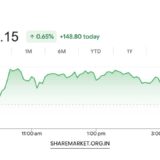
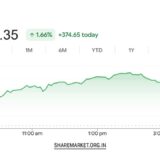
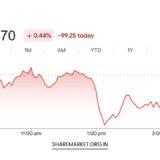
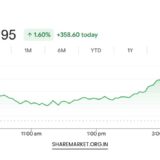
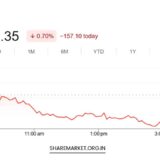
The day’s trading was characterized by a tug-of-war between profit-booking at elevated levels and continued buying interest in specific sectors. At the closing bell, the S&P BSE Sensex registered a marginal decline of 64.77 points, or 0.08%, to settle at 85,641.90. Similarly, the NSE Nifty 50 slipped 27.20 points, or 0.10%, closing at 26,175.75.
The broader market reflected this mixed sentiment, although declines slightly outnumbered advances. The market breadth indicated 1,783 stocks advancing, 2,288 declining, and 183 remaining unchanged on the BSE. This negative skew in the advance-decline ratio, despite the headline indices being largely flat, points to significant profit booking in mid- and small-cap segments after their recent strong run. Both the BSE Midcap and BSE Smallcap indices also concluded the day with a flat closing, hovering around their recent peaks.
Nifty 50 Movers:
-
Top Losers included stocks like InterGlobe Aviation, Bajaj Finance, Max Healthcare, Sun Pharma, and Trent, suggesting profit-taking in high-flying consumer-facing, healthcare, and financial stocks.
-
Top Gainers were Adani Ports, Kotak Mahindra Bank, Tata Motors PV, and Eicher Motors. The strong performance of auto and specific banking/financial stocks provided a floor for the indices.
Sectoral Performance:
-
Sectors that displayed resilience and closed in the green were Auto, IT, PSU Banks, and Metals, each gaining between 0.3% and 0.5%. The Auto index, in particular, was buoyed by positive sales figures and seasonal demand.
-
The laggards for the session were led by the Realty index, which fell by 1%. The Consumer Durables and Pharma indices also faced pressure, declining 0.5% each.
Economic and Fundamental Undercurrents
Market experts pointed to several domestic factors that contributed to the day’s cautious trading.
Vinod Nair, Head of Research at Geojit Investments, highlighted that the market’s movement into a range-bound pattern post-record highs was a natural reaction. A significant factor influencing sentiment was the dampened expectation for a Reserve Bank of India (RBI) rate cut in the upcoming policy meeting, primarily due to the better-than-expected Q2 GDP growth figures. The robust economic expansion reduces the urgency for the central bank to ease its monetary policy.
Furthermore, the sharp depreciation of the Indian Rupee against the dollar reflected broader capital market concerns and added a layer of caution. Concerns about government revenues also arose, as lower GST collections in November, attributed to rate reductions, led to a slightly cautious sentiment regarding fiscal health.
On a positive note, the auto sector’s strong performance was fundamentally supported by:
-
Robust vehicle sales reported for November.
-
The recent GST rate cut.
-
Controlled inflation levels.
-
Strong consumer demand driven by the wedding season.
Technical Outlook for December 2nd: Key Levels to Watch
The technical analysis provides a roadmap for the potential trajectory of the Nifty and Bank Nifty in the coming session.
Nifty 50 Technical View
Sudip Shah, Head of Technical and Derivatives Research at SBI Securities, emphasizes the critical nature of the $26,300-26,330$ zone.
-
Resistance: A sustained break above $26,330$ is crucial to trigger a sharp short-term rally, potentially targeting the $26,500$ level.
-
Support: The key support zone is identified between $26,090$ and $26,060$. A breach of this level could signal deeper profit-booking.
Echoing this constructive view, Anand James, Chief Market Strategist at Geojit Financial Services, believes the overarching uptrend remains intact despite the day’s pause.
-
He expects a possible downtrend or flat opening to be short-lived.
-
The initial upside targets are set at $26,460–26,550$, with the next ambitious targets being $26,900–27,200$.
-
On the downside, a definitive drop below $26,090$ could expose lower levels at $25,860/25,700$ or even $25,300$.
Ajit Mishra of Religare Broking views the recent pause as a “healthy consolidation phase.”
-
He advises traders to maintain a positive outlook.
-
Key consolidation support is expected near the $26,100$ zone.
-
The $20$-Day Exponential Moving Average (DEMA), currently near $25,950$, is seen as a significant support buffer.
-
A decisive break above $26,300$ is projected to open the doors for the $26,500+$ zone.
Bank Nifty Technical View
The banking benchmark index, Bank Nifty, hit a fresh all-time high on December 1st before succumbing to profit booking.
Sudip Shah outlined the critical levels for the banking index:
-
Resistance: The $60,000-60,100$ zone is the major hurdle. A sustained move above $60,100$ could propel the index sharply toward the $60,600$ mark.
-
Support: Key support is situated in the $59,300-59,200$ range.
Strategic Recommendation for December 2nd
Given the market’s current consolidation phase near record highs, a stock-specific trading approach is highly recommended. The underlying bullish trend remains resilient, but volatility may persist as the market digests recent gains and awaits fresh triggers.
Investors and traders should focus on sectors showing fundamental strength and positive technical momentum. Banking, Auto, and Metal stocks are the preferred sectors, while a more selective approach is advised in other indices until a clear directional trend emerges for the Nifty above the $26,330$ resistance. The technical support levels identified by experts will be critical to monitor for any sign of a deeper correction.