Share Market Today: Sensex Drops from Highs, Auto Rises; Investors Net Rs 13,000 Cr

Indian Share Markets Conclude Volatile Session in the Red Despite Investor Wealth Gains
The Indian stock market experienced a day of intense volatility and eventual profit-booking on Monday, resulting in both the benchmark Sensex and Nifty closing in negative territory. This subdued finish came despite an earlier surge that had propelled both indices to fresh, impressive all-time highs. The session underscored the current tension between sustained bullish momentum and the urge for investors to lock in recent profits, particularly after significant rallies witnessed in the preceding weeks.
A Day of Records and Reversals
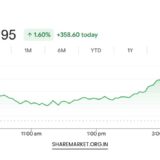
The trading day began on a strongly positive note, reflecting optimism from global cues and robust buying interest in select heavyweights. The bellwether Nifty 50 index, in particular, demonstrated significant upward thrust, peaking at an intra-day high of 26,325. Similarly, the BSE Sensex also crossed a major psychological and technical barrier, establishing a new record.
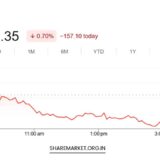
However, this early rally proved unsustainable. As the market approached the mid-session, a wave of aggressive profit-booking emerged, primarily in banking, pharmaceuticals, and oil & gas stocks. This selling pressure quickly eroded all the morning’s gains, pushing the indices firmly into the red.
By the time the closing bell rang, the Nifty had pared its losses to finish at 26,176, marking a decline of 27 points or approximately 0.10%. The broader Sensex ended the day lower by 65 points or about 0.08%, settling at 85,642. The market’s inability to hold onto the record highs signals a cautionary sentiment among traders, suggesting that valuations in certain segments might be stretched and prone to corrections.
Mixed Performance Across Market Segments
While the main indices closed lower, the performance across the market segments was varied. The midcap index displayed resilience, managing to stabilize and hold onto its gains, closing at 61,043. This relative stability in the midcap segment suggests continued appetite for high-growth potential stocks outside the frontline heavyweights.
In stark contrast, the crucial Nifty Bank index underperformed significantly, declining by 71 points to close at 59,681. The weakness in the banking sector—often a key driver of index movement—was a major contributing factor to the overall negative close for the Nifty and Sensex.
Sectoral indices painted a picture of divergence. The Auto index was the undisputed leader of the day, surging by 1%. This stellar performance was fueled by positive news flow regarding November sales figures, which largely surpassed analyst expectations. Specifically, reports from major players like Tata Motors Passenger Vehicles (TMPV) and Maruti Suzuki demonstrated stronger-than-anticipated sales momentum, leading to strong stock price appreciation. Eicher Motors also closed in the green, though it witnessed some selling pressure later in the day after its sales figures, while positive, fell short of the market’s highest expectations. Conversely, other key sectors like pharmaceuticals and capital goods saw significant pressure and closed lower, contributing to the broader market decline.
Investor Wealth Rises Despite Index Fall
In a somewhat paradoxical outcome, investors’ overall wealth increased for the day, even with the Sensex and Nifty closing in the red. This phenomenon is often attributed to the market breadth—the number of advancing vs. declining stocks—and the performance of the non-index constituents, particularly in the midcap and smallcap space.
The total market capitalization (m-cap) of all BSE-listed companies registered an increase, rising to ₹474.48 lakh crore from the previous trading day’s m-cap of ₹474.35 lakh crore. This increase translates to an approximate gain of ₹13,000 crore in the total wealth of investors. This highlights that while the high-weightage stocks driving the Sensex and Nifty may have corrected due to profit-booking, strong performance in the broader market, including mid and small-cap segments, provided a net positive uplift to the aggregate market capitalization.
Top Performers and Major Laggards
A look at the Sensex basket showed a balanced outcome, with 16 out of the 30 index constituents closing in the green, while the remaining 14 ended lower.
Leading the charge for the gainers was Tata Motors Passenger Vehicles (TMPV), which closed with an impressive gain of 1.93%, directly benefitting from the positive sales data. Other key Sensex stocks that recorded notable gains included:
-
Maruti Suzuki: Up 1.37%
-
Bharat Electronics: Up 1.15%
-
Kotak Mahindra Bank: Up 1.02%
-
HCL Technologies: Up 0.95%
These gains were primarily supported by favorable sectoral news and continuous institutional interest in the IT and select private banking space.
On the losing side, the selling pressure was most pronounced in finance and pharma stocks. Bajaj Finance was the top Sensex loser, tumbling by 1.65%. This steep fall was likely due to investor caution following recent regulatory updates and high valuations. The other major Sensex laggards included:
-
Sun Pharma: Down 1.28%
-
Trent: Down 1.05%
-
State Bank of India (SBI): Down 0.88%
-
Bajaj Finserv: Down 0.55%
Breadth of the Market: More Declines Than Advances
A deeper analysis of the overall market activity on the Bombay Stock Exchange (BSE) indicated a cautious mood, reflected in the market breadth. A total of 4,455 shares were traded on the exchange during the day.
The statistics for the day showed:
-
Advance: 1,842 shares closed with gains.
-
Decline: 2,401 shares closed with losses.
-
Unchanged: 212 shares closed flat.
The clear majority of declining stocks over advancing ones reinforces the narrative of a weak market breadth, where underlying selling pressure was more widespread despite the overall m-cap increase. Furthermore, the market action revealed significant trading intensity at the extremes: 151 shares hit a new 52-week high, indicating strong, focused buying in certain stocks, while 197 shares touched a new 52-week low, suggesting deep, continued selling pressure in others.
The market outlook remains one of careful optimism. While the core indices faced profit-booking, the strong performance of the auto sector, the resilience in the midcap space, and the net increase in overall investor wealth suggest that underlying fundamental strength and liquidity remain robust. The coming sessions will be crucial to determine if the indices can break out of this consolidation phase and sustain the earlier record-setting momentum.