Share Market Today: Sensex Falls 367 Points, Nifty Below 26,150; Investors Lose Rs 1.06 Lakh Crore
Indian Equities Under Pressure: Investors Lose ₹1 Lakh Crore as Sensex and Nifty Slide
The Indian equity markets faced a challenging session on December 26, 2025, marking the second consecutive day of declines. A combination of persistent foreign fund outflows, a weakening rupee, and rising energy costs created a “perfect storm” that dampened investor sentiment. By the end of the trading day, the benchmark indices had retreated from their recent highs, resulting in a significant erosion of shareholder wealth.
Market Performance Breakdown
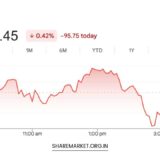
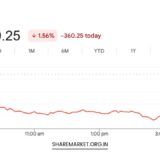
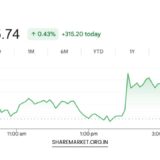
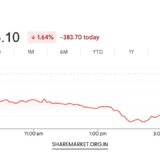
The BSE Sensex concluded the day at 85,041.45, shedding 367.25 points, or 0.43%. Throughout the session, the index struggled to find footing as selling pressure intensified in heavyweights across the IT and financial sectors. Similarly, the Nifty 50 failed to sustain key psychological levels, closing below the 26,150 mark at 26,042.30, down 99.80 points or 0.38%.
The broader market reflected this cautious mood. While mid-cap and small-cap stocks often decouple from the main indices, they were not immune to the sell-off today:
-
BSE Midcap Index: Slipped by 0.18%.
-
BSE Smallcap Index: Declined by 0.34%.
This widespread weakness suggests that the downturn was not limited to a few specific stocks but was a broader reaction to macroeconomic headwinds.
The ₹1.06 Lakh Crore Wealth Erosion
The impact of the market dip is most visible in the total market capitalization of all BSE-listed companies. At the start of the trading day, the combined valuation stood at ₹475.00 lakh crore. By the closing bell, this figure had shrunk to ₹473.94 lakh crore.
In a single trading session, investors saw approximately ₹1.06 lakh crore of notional wealth wiped out. This sharp decline highlights the vulnerability of the current market valuations to external shocks and shifting global capital flows.
Key Market Triggers: Why the Slide?
Several fundamental factors converged to pull the indices lower:
-
Persistent FII Selling: Foreign Institutional Investors (FIIs) have remained net sellers in the Indian market over recent weeks. As global interest rate projections shift, capital is being redirected toward safer havens or markets with more attractive valuations, putting the Indian “bull run” to the test.
-
Currency Volatility: The Indian Rupee (INR) has been under sustained pressure against the US Dollar. A weaker rupee increases the cost of imports—particularly oil—and can lead to imported inflation, which bothers both the central bank and equity investors.
-
Surge in Crude Oil Prices: As a major importer of oil, India’s fiscal health is sensitive to global crude prices. Recent spikes in oil prices have raised concerns about rising logistics costs and potential hits to corporate margins.
-
Profit Booking: After a period of robust growth, many institutional players chose to lock in gains, particularly in high-valuation sectors like Information Technology and Automobiles.
Sectoral Analysis: Winners and Losers
The market landscape today was predominantly red, with only a few sectors managing to buck the trend.
The Laggards
-
IT & Telecom: These sectors were the biggest drags on the indices. Giants like TCS and HCL Tech faced selling pressure as concerns over global tech spending persisted.
-
Automobiles: High interest rates and rising input costs led to a decline in major auto stocks.
-
Banking & Pharma: These traditionally defensive sectors also remained under pressure, failing to provide the usual cushion to the falling Sensex.
The Gainers
-
Metals & Commodities: These were the lone bright spots in the sectoral landscape, supported by a slight recovery in global commodity prices.
-
Defense & Railways: Buoyed by positive government policy outlooks and order book expectations, stocks in these niche sectors saw active buying interest despite the broader market gloom.
Stock-Specific Action: Movers and Shakers
Within the 30-stock Sensex pack, the disparity between the gainers and losers was stark. Only 6 stocks managed to close in the green, while 24 stocks ended the day in the red.
| Top Sensex Gainers | Change (%) | Top Sensex Losers | Change (%) |
| Titan | +2.13% | Bajaj Finance | -1.48% |
| NTPC | +0.45% | HCL Tech | -1.41% |
| Axis Bank | +0.32% | TCS | -1.35% |
| UltraTech Cement | +0.28% | Asian Paints | -1.12% |
| Hindustan Unilever | +0.12% | Eternal | -1.05% |
Titan emerged as the clear outlier, gaining over 2% likely due to seasonal demand expectations. Conversely, Bajaj Finance led the losers’ list, reflecting the broader cautious sentiment regarding the NBFC and lending space.
Market Breadth and Volatility
The overall market breadth remained weak, providing a clear picture of the bearish sentiment. Out of the 4,379 shares traded on the BSE:
-
1,745 shares advanced.
-
2,455 shares declined.
-
179 shares remained unchanged.
Interestingly, despite the volatility, 112 shares managed to hit their 52-week highs, indicating that pocketed opportunities still exist for discerning investors. On the flip side, 120 shares touched their 52-week lows, signaling deep distress in certain pockets of the market.
The Outlook for Investors
The current market environment is one of “wait and watch.” While the long-term structural story of the Indian economy remains intact, the short-term outlook is clouded by global macro uncertainties and domestic valuation concerns.
Analysts suggest that the Nifty finding support near the 26,000 level will be crucial for the sessions ahead. If the index breaks below this support, further downside toward 25,800 could be on the cards. Conversely, a stabilization of the rupee and a pause in FII selling could provide the necessary fuel for a relief rally.
For retail investors, this period of volatility emphasizes the importance of a diversified portfolio. While sectors like Defense and Railways are showing resilience, the weakness in IT and Banking suggests that a “bottom-up” stock-picking approach may be more effective than broad-market indexing in the current climate.