Share Market Crash: Investors Lose Rs 5.28 Lakh Cr; Sensex at 11-Month Low

Black Wednesday: Indian Markets Shaken as Sensex Plummets to 11-Month Low
The Indian equity markets faced a brutal onslaught on March 11, 2026, as a tidal wave of selling pressure wiped out massive chunks of investor wealth. In what is being described as one of the most volatile sessions in recent memory, the benchmark indices—Sensex and Nifty 50—crumbled under the weight of global headwinds and domestic jitters, eventually settling at levels not seen in nearly a year.
By the time the closing bell rang, the carnage was undeniable: investors were poorer by a staggering ₹5.28 lakh crore. The sheer velocity of the decline caught many off guard, transforming a weak opening into a full-blown rout as the trading day progressed.
The Anatomy of the Crash: Numbers at a Glance
The day began with a tentative start, influenced by lackluster cues from Wall Street and Asian peers. However, as institutional selling intensified during the afternoon session, the floor dropped out.
-
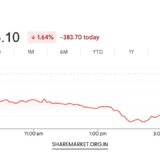
BSE Sensex: The 30-share gauge plummeted by 1,342.27 points, or 1.72%, to finish at 76,863.71.
-
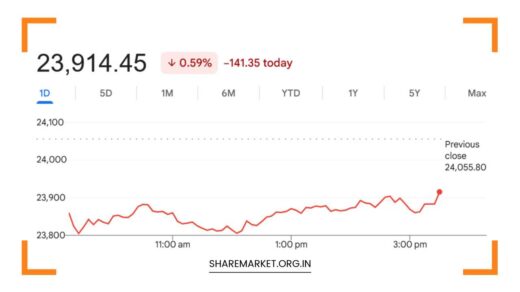
NSE Nifty 50: The broader index mirrored this pain, shedding 394.75 points, or 1.63%, to close at 23,866.85.
Crucially, the Nifty breached the psychological support level of 23,850 during intraday trading. This breach triggered technical sell-offs, as “stop-loss” orders were hit across various high-frequency trading platforms, compounding the downward momentum.
Massive Erosion of Investor Wealth
The most painful metric of the day was the impact on the Market Capitalization (M-Cap). The total valuation of all BSE-listed companies slid from ₹447.04 lakh crore in the previous session to ₹441.76 lakh crore.
This ₹5.28 lakh crore evaporation of wealth reflects a deep-seated anxiety among both retail and institutional investors. While the “paper loss” is significant, the psychological impact on the market often leads to a period of “risk-off” sentiment, where investors move away from equities toward safer havens like gold or sovereign bonds.
Sectoral Analysis: No Place to Hide
The sell-off was democratic in its destruction, sparing very few corners of the market. Most major sectors finished deep in the red, with losses ranging from 1% to 3%.
1. The Laggards: Banking and Auto
The Bank Nifty and Financial Services sectors were the primary anchors dragging the market down. PSU Banks and Private Banks faced intense pressure due to concerns over credit growth and tightening margins. High-ticket sectors like Auto and Consumer Durables also saw heavy trimming, as investors feared that persistent inflation might dampen discretionary spending.
2. The Tech Slump
The IT sector, which has been grappling with global spending concerns, fell further as signals from the U.S. markets suggested a “higher-for-longer” interest rate environment, which traditionally devalues growth-oriented tech stocks.
3. The Defensive Holdouts
In a sea of red, the Oil & Gas and Pharmaceutical sectors acted as the only lifeboats. While their gains were modest, they provided a thin layer of insulation. Sun Pharma and NTPC were the only bright spots in the Sensex, reflecting a shift toward “defensive” plays—companies that provide essential services and are less sensitive to immediate economic cycles.
Winners and Losers: Sensex Performance
The breadth of the market was overwhelmingly negative. Out of the 30 elite stocks that comprise the Sensex, a whopping 28 ended the day with losses.
| Stock | Performance | Change (%) |
| Bajaj Finance | Top Loser | -5.01% |
| Axis Bank | Decline | -4.26% |
| Maruti Suzuki | Decline | -3.50% |
| M&M | Decline | -3.10% |
| NTPC | Top Gainer | +0.72% |
| Sun Pharma | Gainer | +0.66% |
The steep fall in Bajaj Finance and Axis Bank underscores a lack of confidence in the short-term liquidity and interest rate trajectory, while the decline in Maruti and M&M highlights fears regarding rising input costs and cooling demand in the rural sector.
Mid-caps and Small-caps: A Silver Lining?
Interestingly, while the “Blue Chip” giants were being hammered, the mid-cap and small-cap segments showed relatively more resilience.
-
The Nifty Midcap Index fell by 1.2%.
-
The Smallcap Index dipped by a mere 0.36%.
This divergence suggests that the current sell-off is largely driven by Foreign Institutional Investors (FIIs), who typically trade in large-cap stocks. Retail investors and Domestic Institutional Investors (DIIs), who are more active in the small and mid-cap space, seem to be holding their ground or “buying the dip” in smaller companies, preventing a total collapse of the broader market.
Market Breadth and Technical Indicators
The statistics from the Bombay Stock Exchange (BSE) paint a picture of a market in distress:
-
Total Shares Traded: 4,414
-
Declining Shares: 2,383
-
Advancing Shares: 1,877
-
New 52-Week Lows: 200
-
New 52-Week Highs: 74
With 200 stocks hitting their yearly lows, the technical outlook for the market remains “Bearish” in the short term. The Relative Strength Index (RSI) for the Nifty is approaching the “oversold” zone, which might trigger a temporary relief rally in the coming days, but the underlying sentiment remains cautious.
Why Did the Market Crash? (The Catalysts)
Several factors converged to create this “perfect storm” on March 11th:
-
Global Macroeconomic Cues: Stubborn inflation data from the U.S. has led to speculation that the Federal Reserve might delay rate cuts. This strengthens the Dollar, leading to capital outflows from emerging markets like India.
-
Geopolitical Tensions: Ongoing uncertainty in the Middle East and Eastern Europe continues to keep energy prices volatile, directly impacting India’s import bill.
-
Valuation Concerns: After a prolonged period of growth, many analysts have pointed out that Indian stocks are trading at “expensive” valuations. Today’s drop is seen by some as a necessary correction to bring prices back in line with actual earnings.
-
FII Selling Spree: Foreign investors have been net sellers over the past week, liquidating positions in heavyweights like HDFC Bank and Reliance to reallocate funds to cheaper markets or safer assets.
The Road Ahead: What Should Investors Do?
The crash to an 11-month low is undoubtedly rattling, especially for those who entered the market during the recent bull run. However, seasoned analysts suggest that such corrections are part of the market’s natural breathing cycle.
-
For Long-term Investors: This may represent a “Value Buying” opportunity. Fundamental strengths of the Indian economy—such as robust GDP growth and infrastructure spending—remain intact despite the stock market’s volatility.
-
For Short-term Traders: Caution is the name of the game. With the Nifty closing near its lows, the next major support level is seen around 23,500. Any bounce-back should be viewed with skepticism unless the indices can reclaim their 50-day moving averages.
As the dust settles on this ₹5.28 lakh crore wipeout, all eyes will be on the global markets tonight and the opening bell tomorrow. Whether this is the bottom of the pit or just a ledge on the way down remains to be seen.