Sukanya Samriddhi Yojana: Early Withdrawal Rules & Process
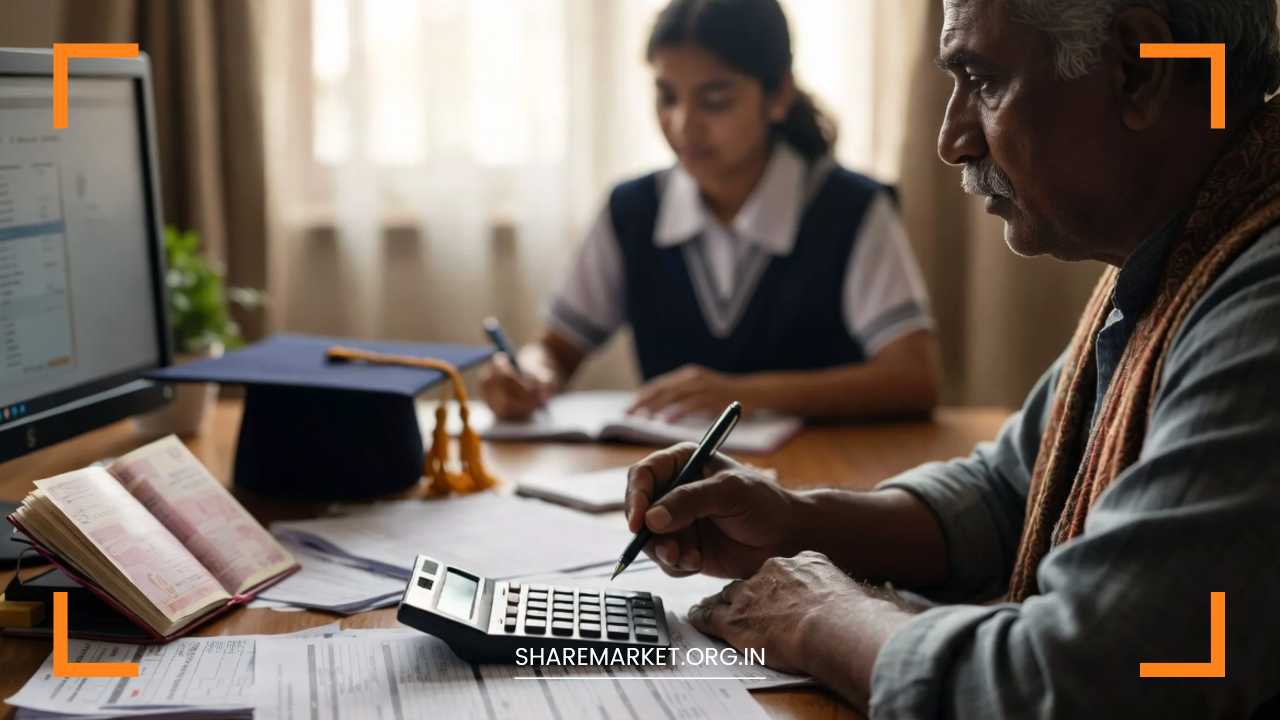
Sukanya Samriddhi Yojana: Navigating Early Withdrawals and Strategic Financial Planning
The Sukanya Samriddhi Yojana (SSY), launched under the “Beti Bachao, Beti Padhao” campaign, has emerged as one of the most powerful savings instruments for parents in India. While its primary allure lies in high interest rates and significant tax benefits under Section 80C, the “lock-in” period of 21 years often creates a sense of hesitation. Parents frequently ask: What if we need the money sooner? Is my capital trapped until she turns 21?
The short answer is no. While the scheme is structured to ensure long-term wealth creation, the government has integrated specific “safety valves” that allow for partial withdrawals and premature closure under certain life milestones. Understanding these nuances is the difference between simply saving and strategic financial engineering.
1. The Threshold: When Does the Door Open?
The SSY is not a standard savings account where you can ATM-withdraw funds for a summer vacation. It is a purpose-driven vessel. Consequently, the “lock” only begins to turn when your daughter reaches specific developmental or age-related milestones.
The Age and Education Milestone
You can initiate a partial withdrawal only when the account holder (your daughter) meets one of the following two criteria:
-
She attains the age of 18 years.
-
She completes the 10th Standard (Matriculation).
Whichever happens first triggers the eligibility for partial withdrawal. This is a crucial distinction—if your daughter completes her 10th grade at age 16, the account technically becomes accessible for educational expenses, even though she is still a minor.
2. The Golden Rule: The 50% Limit
Even after reaching the eligibility threshold, you cannot empty the account. The scheme allows for a maximum withdrawal of 50% of the balance.
Important Calculation Note: The 50% limit is not calculated based on the balance on the day you apply. It is determined by the balance available at the end of the preceding financial year.
For example, if you apply for a withdrawal in October 2026, the bank will look at the balance as of March 31, 2026. If the balance was ₹10 Lakh, you are eligible for up to ₹5 Lakh, regardless of how much interest or further deposits were added between April and October.
3. Withdrawal for Higher Education: The Specifics
The primary intent of early access is to fund the skyrocketing costs of higher education. However, this isn’t a “no-questions-asked” process. To prevent misuse of the tax-free corpus, the following rules apply:
-
Documentary Evidence: You must provide a formal offer of admission or a fee demand letter from an educational institution.
-
The “Actual Cost” Clause: The withdrawal is capped at either 50% of the balance or the actual fee/expenses required for the course, whichever is lower.
-
Installment vs. Lump Sum: You have the flexibility to take the money in one go or spread it over five years in annual installments. If you choose installments, you can only make one withdrawal per year.
4. Premature Closure: When the Account Ends Early
While partial withdrawal keeps the account active, there are circumstances where the SSY account can be closed entirely before the 21-year maturity period.
Marriage After Age 18
If your daughter is getting married, the account can be closed prematurely. However, there is a specific window for this:
-
The application for closure must be made one month before the marriage date or three months after the marriage date.
-
The daughter must be 18 years of age at the time of marriage (as per legal requirements).
-
Documentation proving the marriage (such as an invitation card or certificate) and age proof are mandatory.
Extreme Compassionate Grounds
Life is unpredictable, and the SSY rules account for hardships:
-
Death of the Account Holder: In the unfortunate event of the daughter’s demise, the account is closed immediately, and the balance (including interest) is paid to the guardian.
-
Death of the Guardian: If the person funding the account passes away and the family faces extreme financial stress, the account can be closed early.
-
Life-Threatening Illness: If the girl child requires treatment for life-threatening diseases, the authorities may permit premature closure after the account has completed five years.
5. Step-by-Step: The Withdrawal Process
Navigating the bureaucracy of a bank or post office requires preparation. Follow these steps to ensure a smooth transaction:
| Step | Action | Details |
| 1 | Verify Eligibility | Ensure she is 18+ or has passed 10th grade. |
| 2 | Update Passbook | Ensure all interest up to the last financial year is credited and reflected. |
| 3 | Gather Proof | Admission letters, fee structures, or identity proofs (Aadhaar). |
| 4 | Fill Form-3 | This is the specific application form for SSY withdrawals/closure. |
| 5 | Submit & Process | Submit at the original branch. Verification usually takes 7–10 business days. |
6. Strategic Planning: How to Maximize the Benefit
Many parents make the mistake of withdrawing the maximum 50% just because they can. From a wealth-generation perspective, this may not be the wisest move.
The SSY offers a compounded interest rate that is usually higher than PPF or Fixed Deposits. If you withdraw ₹5 Lakh today, you aren’t just losing that ₹5 Lakh; you are losing the compounded growth that amount would have earned over the remaining years until maturity.
Pro-Tip: Only withdraw the amount absolutely necessary for fees. If you have other sources of income or lower-interest savings, use those first and let the SSY corpus continue to earn its high, tax-free interest for as long as possible.
7. Common Misconceptions and Clarifications
“Can I withdraw money if I move abroad?”
If the daughter changes her citizenship or becomes a non-resident (NRI), the account must be closed. It will stop earning interest from the date the status changes. You must inform the bank/post office within a month of the status change.
“What if I stop making deposits?”
If you don’t deposit the minimum ₹250 per year, the account becomes “Defaulted.” You can still withdraw for education/marriage, but you will have to pay a small penalty (₹50 per year of default) to regularize the account first.
“Is the withdrawn amount taxable?”
No. One of the greatest “Superpowers” of the SSY is its EEE (Exempt-Exempt-Exempt) status. The investment is tax-deductible, the interest is tax-free, and the final withdrawal (even partial) is completely tax-exempt.
Final Thoughts: A Foundation for Dreams
The Sukanya Samriddhi Yojana is more than a savings scheme; it is a dedicated financial fortress for a daughter’s future. While the 21-year maturity might seem daunting, the flexibility to access 50% of the funds for education ensures that her career path is never blocked by a lack of liquidity.
By understanding these rules, you transition from being a passive saver to a proactive financial guardian. You ensure that when she is ready to take on the world—whether through a university degree or starting a new life—the funds you meticulously saved are ready to support her, exactly when they are needed most.