Aureate Tradde IPO Listing: Stock Lists at 0% Premium on BSE SME

Aureate Tradde IPO Listing: Portfolio Fails to Gain Momentum; Flat Debut at ₹70 Price Point Delivers a Sharp Setback to Investors
A Disappointing Debut on the Bourses
The highly anticipated public market debut of chemical trading and clean-energy materials provider, Aureate Tradde Limited, turned into a somber affair for market participants today. Despite operating in high-growth verticals like electric vehicle (EV) charging infrastructure and advanced battery cells, the company’s shares failed to ignite any fireworks on the BSE SME platform.
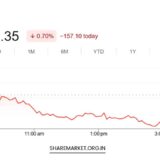
Issuing shares at a fixed price of ₹70 per share during its public book-building process, the stock managed only a completely flat opening at exactly its issue price. The lack of institutional momentum quickly triggered a wave of retail panic selling in early trade. Within hours, the stock plummeted to its daily lower circuit limit, leaving initial allotment winners staring at immediate paper losses and raising critical questions about the pricing and timing of Small and Medium Enterprise (SME) initial public offerings in the current market cycle.
The Listing Day Debacle: Flat Open to Lower Circuit
Aureate Tradde’s ₹27 crore initial public offering (IPO), which concluded its bidding cycle earlier this week, listed today with high expectations from retail backers but zero premium. Market analysts had already predicted a muted opening given the lackluster grey market premium (GMP) trends leading up to the bell, but the reality on the trading floor proved even tougher.
Opening Tick and Intraday Movement
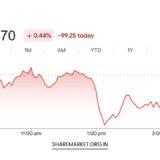
The stock opened for trading at ₹70.00, exactly matching the upper band of its IPO issue price. While a flat opening is not inherently a failure, the complete absence of buying depth at the open signaled trouble. Without institutional market makers or non-institutional high-net-worth individuals (HNIs) stepping in to support the liquidity pools, retail investors rushed for the exit.
The selling pressure quickly overwhelmed the order book, dragging the stock down by 5% to hit the lower price band circuit of ₹66.50. The stock remained locked at this lower circuit for the remainder of the session, closing the first day of trade with heavy sell orders left unexecuted.
Key Listing Metrics
-
IPO Issue Price: ₹70.00
-
Listing Price (BSE SME): ₹70.00 (0.00% Gain/Loss)
-
Intraday Low / Closing Price: ₹66.50 (-5.00% from Issue Price)
-
Day 1 Investor Status: 5% Capital Erosion
Key Takeaway for Investors: The lack of listing gains underscores a growing divergence between retail enthusiasm and institutional skepticism in the SME segment. Investors who bid solely for short-term listing flips are now locked into a negative-yielding position with limited exit liquidity.
Subscription Blueprint: Retail Enthusiasm vs. HNI Apathy
The underwhelming market debut mirrors the fractured response the IPO received during its subscription window, which ran from May 29 to June 2. While the issue managed to sail through to full subscription, a granular look at the subscription data highlights structural weaknesses in investor demand.
The issue was subscribed a modest 1.43 times overall, a figure that pales in comparison to recent SME public offers that routinely see oversubscription rates climbing into the double or triple digits.
-
Retail Individual Investors (RII): This segment was the primary engine behind the IPO’s rescue, subscribing 2.42 times. Small retail investors were likely attracted by the company’s exposure to the green energy ecosystem (EV chargers and lithium cells).
-
Non-Institutional Investors (NII / HNIs): In stark contrast, the HNI quota underperformed dramatically, reaching only 0.45 times subscription. This undersubscription by wealthy individual investors served as an early warning sign that sophisticated market participants found the valuation steep or preferred to sit out due to the company’s leveraged balance sheet.
The capitalization structure for the issue involved the fresh issuance of 38.98 lakh equity shares possessing a face value of ₹10 each, diluting the promoter stake to pave the way for public expansion.
Capital Deployment: Where Will the ₹27 Crore Go?
Management has laid out a clear roadmap for utilizing the net proceeds of the ₹27 crore fundraise. The allocation strategy targets structural financial cleanup alongside operational fuel, which could help turn the business around in the medium term despite the poor stock market debut.
Budget Allocation Breakdowns
-
Debt Reduction and Repayment: ₹9.93 crore (36.8% of total funds)
-
Working Capital Incremental Requirements: ₹10.00 crore (37.0% of total funds)
-
General Corporate Purposes and Issue Expenses: ₹7.07 crore (26.2% of total funds)
1. Balance Sheet Deleveraging
A significant chunk of the capital is earmarked for debt reduction. High interest-bearing liabilities have historically weighed down the company’s net margins. Paying off nearly ₹10 crore in debt will immediately reduce finance costs, flowing straight down to boost the net profit margins in the coming quarters.
2. Working Capital Fuel
As a trading business handling heavy physical commodities like industrial polymers and specialized electronics, liquidity is king. The allocation of ₹10 crore ensures that Aureate Tradde can maintain healthy inventory cycles and offer competitive credit terms to its Business-to-Business (B2B) clientele without relying on expensive short-term bank loans.
Inside Aureate Tradde: Business Framework and Product Footprint
Founded in 2018, Aureate Tradde has evolved from a pure-play chemical trading counter into an intermediate supplier sitting at the intersection of traditional manufacturing and modern green technology. The company segments its operational revenue through three distinct strategic business verticals:
Polymers and Petrochemicals
This represents the foundational legacy business of the firm. Aureate acts as a bulk procurement and distribution partner for core industrial raw materials, including:
-
Polyethylene grades (both Low-Density Polyethylene – LDPE, and High-Density Polyethylene – HDPE).
-
PVC Resins and PET Resins, which feed into the packaging, construction, consumer goods, and automotive parts manufacturing sectors.
Next-Generation Energy Storage
Recognizing the shifting macroeconomic environment toward domestic clean-energy ecosystems, the company entered the supply chain for battery components. It acts as an intermediate supplier of:
-
Lithium-ion cells for consumer tech and standard EVs.
-
Sodium-ion cells, an emerging, cost-effective alternative targeted at stationary energy storage systems and low-speed electric mobility.
EV Charging Infrastructure
This is the only vertical where the company breaks out of its traditional B2B mold into the B2C consumer marketplace. Aureate trades, distributes, and installs:
-
Lithium and lead-acid battery chargers.
-
Commercial and residential Electric Vehicle (EV) charging stations.
Financial Analysis: Improving Profitability Meets Volatile Revenues
A corporate deep dive into Aureate Tradde’s financial performance presents a complex narrative of strong bottom-line optimization offset by choppy top-line revenue generation.
Profitability Trajectory
The company’s net profit trajectory shows exceptional growth. In FY2023, net profit stood at a modest ₹1.13 crore. This ticked up to ₹1.45 crore in FY2024, before accelerating to ₹2.57 crore by the close of FY2025. This bottom-line momentum has continued into the current cycle; during the nine-month period from April to December 2025, the company reported a stellar net profit of ₹4.36 crore, showcasing a sharp jump in operating efficiencies.
Revenue Volatility and Debt Concerns
However, the top-line income tells a different story, exhibiting clear signs of cyclical trading pressures. Total income fell from ₹211.60 crore in FY2023 to ₹172.19 crore in FY2024, before experiencing a minor recovery to ₹176.62 crore in FY2025. For the first nine months of the ongoing fiscal frame ending December 2025, revenues sat at ₹102.79 crore.
Additionally, the balance sheet as of December 2025 revealed an uncomfortable leverage profile:
-
Total Outstanding Debt: ₹38.07 crore.
-
Reserves and Surplus: Just ₹8.16 crore.
This high debt-to-equity setup explains why institutional bidders shied away from the IPO, forcing management to use more than a third of the IPO capital to clean up its books rather than deploying it entirely for aggressive revenue-generating expansions.
The Road Ahead for Investors
While Day 1 has delivered a reality check to stakeholders, Aureate Tradde’s future performance will heavily depend on how effectively it uses its new capital to scale down its high debt load and capture market share in the EV component trading sector. For now, the stock serves as a textbook example of the volatility and liquidity risks inherent within the SME public markets.