Acetech E-Commerce IPO Listing: Stock Lists at 0% Premium on NSE SME

Acetech E-Commerce IPO Listing: Resilience Amidst Global Volatility
The financial landscape experienced a tremor today as geopolitical tensions between Iran and the United States sent shockwaves through global equity markets. Investors, already wary of inflationary pressures, were met with a wave of “risk-off” sentiment that saw major indices worldwide trading in the red. It was against this tumultuous backdrop that Acetech E-Commerce made its debut on the NSE SME platform.
While many expected the debut to be dampened by the prevailing market panic, the stock demonstrated a surprising level of internal strength. Despite a flat opening, the day concluded on a high note, offering a glimmer of optimism for SME investors.
Listing Day Performance: From Stagnation to Strength
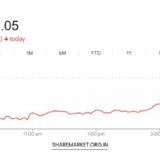
Acetech E-Commerce’s journey on the secondary market began with a sense of caution. The shares were issued at a fixed price of ₹112, and the opening bell saw the stock land exactly at that mark—₹112.00. For initial IPO investors, this signaled a “flat entry,” meaning there was zero immediate listing gain, a rarity in an era where SME IPOs often debut with massive premiums.
However, the narrative shifted rapidly during the trading session. As the market stabilized, buying interest surged, pushing the stock toward its upper circuit limit.
-
Opening Price: ₹112.00
-
Intraday High: ₹117.80 (Upper Circuit)
-
Closing Price: ₹117.80
-
Day 1 Gain: 5.00%
By hitting the upper circuit, Acetech managed to defy the broader market gloom, rewarding those who held through the morning volatility with a respectable 5% profit by the closing bell.
Subscription Breakdown: A Measured Response
The IPO, which sought to raise ₹49 crore, saw a subscription rate that could be described as “steady but cautious.” Unlike some high-momentum SME issues that see hundred-fold subscriptions, Acetech’s demand was more aligned with its fundamental valuation.
The issue was open from February 27 to March 4, 2026, and recorded an overall subscription of 1.14 times. The breakdown of investor interest provides insight into market sentiment:
| Investor Category | Subscription Rate |
| Qualified Institutional Buyers (QIBs) | 1.00x (Excluding Anchor) |
| Non-Institutional Investors (NIIs) | 1.57x |
| Retail Individual Investors | 1.16x |
The NII category showed the most enthusiasm, suggesting that high-net-worth individuals saw value in the company’s niche e-commerce model despite the geopolitical headwinds.
Strategic Utilization of IPO Proceeds
Transparency regarding the “Use of Proceeds” is a critical metric for long-term investors. Acetech E-Commerce issued 43,70,400 new shares (face value of ₹10 each) to fuel its next phase of growth. The management has outlined a clear roadmap for the ₹49 crore raised:
-
Marketing and Advertising (₹1.70 crore): In the competitive e-commerce landscape, brand visibility is paramount. These funds will be directed toward digital marketing and customer acquisition strategies to increase platform traffic.
-
Working Capital Requirements (₹7.00 crore): Scaling a dropshipping and cross-border business requires significant liquidity to manage inventory cycles and logistics.
-
Acquisitions and General Corporate Purposes (Remaining Balance): The lion’s share of the funds is earmarked for inorganic growth. Acetech is eyeing strategic acquisitions that could integrate vertically into its supply chain or expand its international footprint.
Business Model: The Power of Modern Retailing
Founded in 2014, Acetech E-Commerce has evolved from a local player into a multifaceted digital retailer. Its business model is built on three core pillars:
-
Dropshipping: A lean inventory model that allows the company to sell products directly from suppliers to consumers, minimizing overhead and storage risks.
-
Teleshopping: Leveraging traditional media reaches a demographic that is often underserved by standard web-based e-commerce.
-
Cross-Border Selling: Identifying high-demand trends in one region and sourcing products globally to meet that demand.
The company operates through two key subsidiaries: Conceptive Brains Private Limited in India and Acetech Ventures Inc. in the USA. This dual-presence allows Acetech to act as a bridge for products moving between the East and West, capturing margins in diverse currencies.
Financial Health: A Growth Story in Numbers
The most compelling argument for Acetech’s long-term potential lies in its financial trajectory. Over the last three fiscal years, the company has demonstrated an ability to scale both its top and bottom lines effectively.
Profitability Trends
The net profit growth has been particularly aggressive:
-
FY 2023: ₹1.52 crore
-
FY 2024: ₹4.02 crore
-
FY 2025: ₹6.88 crore
This represents a significant upward curve, showcasing improved operational efficiency. For the first half of FY 2026 (April–September 2025), the company has already clocked a profit of ₹5.74 crore, suggesting it is well on its way to surpassing its FY 2025 performance.
Revenue and Solvency
The company’s total income grew at a CAGR of over 15%, hitting ₹70.41 crore in FY 2025. In the first half of FY 2026, revenue stood at ₹40.44 crore.
Perhaps the most impressive figure is the company’s balance sheet strength. As of September 2025, Acetech maintains a very lean debt profile:
-
Total Debt: ₹43 lakh (Exceedingly low for a company of this scale)
-
Reserves and Surplus: ₹10.11 crore
With such low leverage, the company is well-positioned to take on strategic debt if needed for future expansion, or simply continue its path as a cash-flow-positive entity.
Investor Outlook: Opportunity or Risk?
Investing in SME stocks during a period of international conflict requires a balanced perspective. On one hand, Acetech’s “flat listing” removed the immediate “froth” from the stock, potentially offering a more grounded entry point for new buyers. The fact that it closed at the upper circuit indicates that there is “pent-up” demand that the initial subscription didn’t fully capture.
However, the e-commerce sector is sensitive to supply chain disruptions. If the Iran-US conflict escalates, shipping costs and cross-border logistics—the very heart of Acetech’s business—could face headwinds.
Key Takeaways for New Buyers:
-
Strong Fundamentals: The low debt-to-equity ratio and rising PAT (Profit After Tax) are excellent signs.
-
Geopolitical Risk: Monitor international logistics and shipping rates, as these impact the “dropshipping” margins.
-
SME Liquidity: Remember that SME stocks often have lower liquidity than mainboard stocks, leading to higher volatility.
As Acetech E-Commerce embarks on its journey as a listed entity, its ability to navigate global chaos while maintaining its impressive growth CAGR will be the ultimate test for management. Today’s 5% recovery from a flat start suggests that, for now, the market believes in the “Ace” up their sleeve.