BlueStone Jewellery IPO Listing: Stock Listed at 1.5% Discount on BSE

BlueStone Jewellery IPO Listing: Loss-Making D2C Brand Makes Sluggish Market Debut, Shares Recover to End 5.6% Higher
Mumbai, August 19, 2025 — Direct-to-consumer (D2C) jewellery brand BlueStone Jewellery & Lifestyle Ltd made a muted debut on the Indian stock exchanges today following its ₹1,540.65 crore initial public offering (IPO).
Despite strong top-line growth and aggressive offline expansion, concerns about mounting losses and surging debt cast a shadow over investor sentiment.
After listing at a discount, the stock saw a partial rebound during trading hours, closing modestly above its issue price and offering some relief to IPO investors.
Listing Day Performance: A Volatile Start
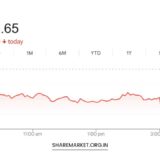
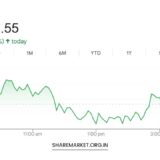
BlueStone shares were listed at ₹508.80 on the Bombay Stock Exchange (BSE) and ₹510.00 on the National Stock Exchange (NSE), compared to the IPO issue price of ₹517 — a discount of roughly 1.5%.
This underwhelming opening meant IPO allottees faced immediate notional losses. However, investor sentiment improved as the session progressed, with the stock touching an intraday high of ₹564 on BSE before settling at ₹546 by the close of trading.
At the day’s close, investors saw a 5.61% gain over the issue price — a surprising turnaround from the lackluster start, though still modest compared to other recent high-profile listings.
IPO Subscription Details: Mixed Investor Interest
BlueStone’s IPO was open for subscription from August 11 to 13 and raised a total of ₹1,540.65 crore through a combination of fresh equity and an Offer for Sale (OFS).
Despite the brand recognition and strong growth story, the IPO received a mixed response from investors, indicating a cautious approach toward loss-making startups.
Here’s how the subscriptions broke down:
- Qualified Institutional Buyers (QIBs): 4.25 times subscribed
- Retail Individual Investors (RIIs): 1.38 times subscribed
- Non-Institutional Investors (NIIs): Just 0.57 times subscribed
- Overall Subscription: 2.72 times
While institutional interest was reasonably strong, tepid demand from high-net-worth individuals and retail participants highlighted broader skepticism around BlueStone’s profitability and financial sustainability.
IPO Structure: Where the Funds Will Go
The IPO comprised two key components:
- Fresh Issue of Shares: ₹820 crore
- Offer for Sale (OFS): 1.39 crore equity shares with a face value of ₹1 each
The proceeds from the OFS were directed to existing shareholders, including early-stage investors and promoters who chose to pare their stakes.
In contrast, the fresh issue proceeds will be utilized primarily to address the company’s rising operational costs and working capital requirements.
According to the company’s prospectus:
- ₹750 crore will go toward meeting working capital needs
- The remaining funds will be deployed for general corporate purposes, including expansion, marketing, and technology investments
Company Overview: A D2C Pioneer in Jewellery Retail
BlueStone Jewellery & Lifestyle Ltd operates under the BlueStone brand and offers a wide array of jewellery, including gold, diamond, platinum, and studded designs.
The company’s portfolio spans 91 distinct collections, with product categories ranging from rings and necklaces to solitaires, bangles, and bracelets.
Since its inception, BlueStone has positioned itself as an omnichannel brand, blending online convenience with offline touchpoints. As of March 2025, the company had:
- 275 stores across 117 cities
- Presence in 26 states and union territories
- 200 company-owned outlets and 75 franchise stores
- A service footprint across 12,500+ pin codes
This aggressive retail expansion is a key part of BlueStone’s growth strategy, aimed at capturing India’s evolving jewellery-buying behavior — particularly among younger, urban consumers looking for personalized, tech-enabled shopping experiences.
Financial Performance: Strong Revenue, Widening Losses
BlueStone’s revenue growth over the past three years has been impressive, but its bottom line remains under pressure.
The company’s total income grew at a compound annual growth rate (CAGR) of over 52%, reaching ₹1,830.04 crore in FY25, up from ₹793.5 crore in FY23.
However, profitability has proven elusive:
- FY23 Net Loss: ₹167.24 crore
- FY24 Net Loss: ₹142.24 crore (slightly reduced)
- FY25 Net Loss: Widened again to ₹221.84 crore
The recurring losses raise questions about the scalability and long-term viability of BlueStone’s business model, especially in a capital-intensive sector like jewellery retail.
Debt Profile: Rising Leverage a Growing Concern
In tandem with expanding operations and top-line growth, BlueStone’s debt levels have surged:
- FY23 Debt: ₹228.42 crore
- FY24 Debt: ₹430.43 crore
- FY25 Debt: ₹728.62 crore
This sharp increase — more than tripling in just two years — reflects the company’s dependence on external financing to fuel growth.
While leveraging is common during the expansion phase, the combination of heavy losses and growing debt raises red flags for conservative investors.
Market Outlook: Will BlueStone Shine in the Long Run?
BlueStone’s public listing comes amid increasing scrutiny of new-age, loss-making startups entering public markets.
While some investors remain optimistic about its revenue trajectory, brand equity, and expansion potential, others are concerned about its ability to achieve profitability and manage its ballooning debt.
Analysts suggest the company must now prove it can convert growth into sustainable earnings, manage costs more efficiently, and reduce reliance on debt to finance operations.
Moreover, with increased competition from traditional jewellers like Tanishq and CaratLane — as well as smaller digital-first brands — maintaining market share will be another challenge.
Final Thoughts
BlueStone’s IPO journey reflects a broader trend in Indian equity markets: investors are becoming more selective, especially when evaluating startups with high valuations but negative earnings.
The company’s first-day stock performance — from a weak listing to a modest gain — mirrors this cautious optimism.
For now, investors will be watching BlueStone’s quarterly performance closely, seeking signs of improved profitability, better debt management, and evidence that the brand can thrive in a competitive and margin-sensitive market.
Disclaimer: This article is for informational purposes only and should not be considered financial advice. Investors are advised to consult a certified financial advisor before making investment decisions.