Brokerage Picks: Top 5 Stocks with 18–32% Potential Returns in 2026
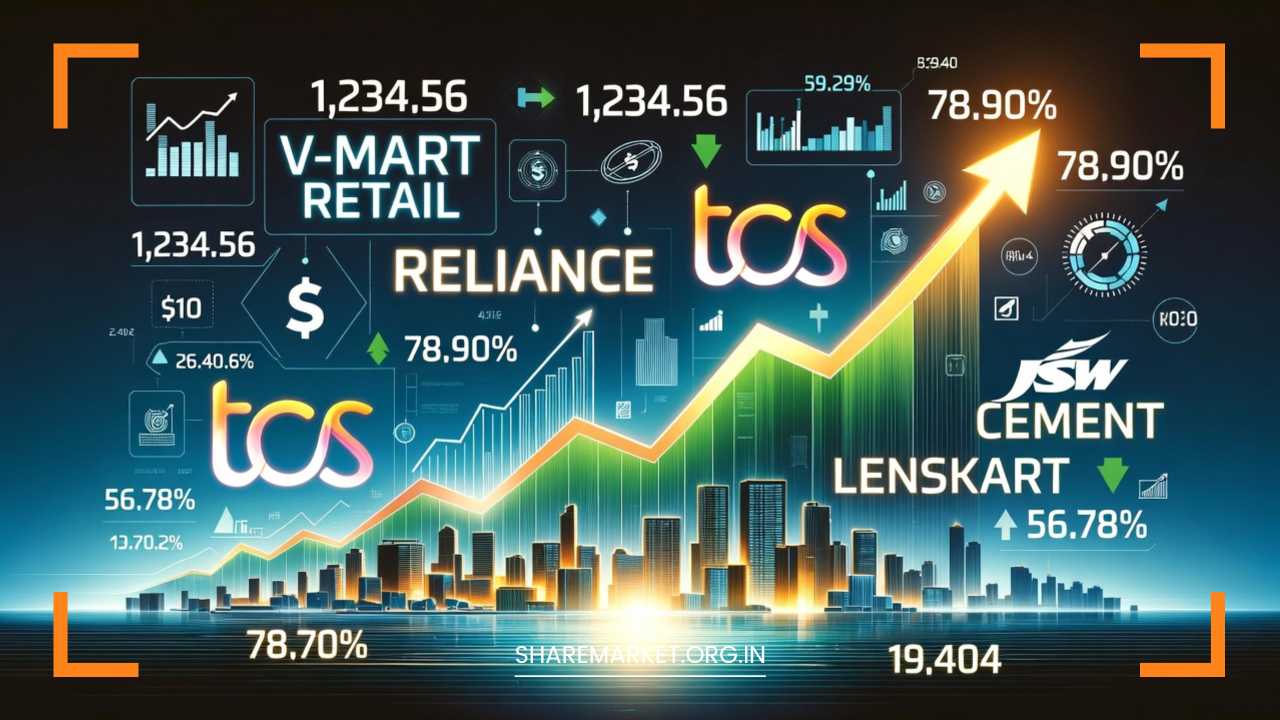
High-Growth Stocks to Buy: V-Mart, Reliance, TCS, Lenskart & JSW Cement Insights
The equity market is currently navigating a landscape defined by shifting interest rate cycles, evolving consumer behavior, and a massive pivot toward digital transformation. While volatility remains a constant companion for investors, it often creates entry points for high-quality stocks. Several leading brokerages have identified five specific picks across the retail, energy, IT, and manufacturing sectors that are positioned to outperform, with projected returns ranging from 18% to 32%.
By analyzing the underlying fundamentals—from AI partnerships to massive infrastructure investments—we can see why these five companies are capturing the attention of institutional analysts.
1. V-Mart Retail: Tapping into the “Bharat” Growth Story
Brokerage: Axis Direct
Rating: Buy
Target Price: ₹760
Potential Upside: ~31%
Axis Direct has labeled V-Mart Retail as its “top conviction” pick within the retail space. The investment thesis here is simple but powerful: the “Value Retail” segment is the primary beneficiary of India’s rising middle-class aspirations in Tier-2, Tier-3, and Tier-4 cities.
While the organized retail market in metropolitan areas is becoming saturated, the vast majority of India’s retail landscape remains unorganized. V-Mart’s strength lies in its deep penetration into these emerging markets. By offering aspirational fashion at affordable price points, the company has built significant brand loyalty among consumers transitioning from local markets to organized stores.
Growth Catalysts:
-
Expansion Strategy: Aggressive store openings in under-penetrated clusters.
-
Operating Leverage: As footfalls recover to pre-volatility levels, the company’s fixed-cost model allows for rapid margin expansion.
-
Inventory Management: Improved supply chain efficiencies are helping V-Mart compete effectively against regional players.
2. Reliance Industries: The $110 Billion Transformation
Brokerage: Morgan Stanley
Rating: Overweight
Target Price: ₹1,803
Potential Upside: ~28%
Reliance Industries (RIL) is no longer just an oil-to-chemicals (O2C) giant; it is a technology and green energy powerhouse in the making. Morgan Stanley’s “Top Pick” status for RIL is backed by a massive capital expenditure plan: ₹10 lakh crore ($110 billion) over the next seven years.
This investment isn’t just about maintenance; it’s about a complete structural pivot. RIL is betting heavily on the convergence of Artificial Intelligence (AI), digital infrastructure (via Jio), and a clean energy supply chain.
Strategic Moats:
-
The AI Revolution: By integrating AI across its retail and telecom platforms, Reliance aims to hyper-personalize consumer experiences and optimize its vast logistics network.
-
Green Energy Ecosystem: The company is building a fully integrated end-to-end renewable energy value chain, from solar panels to green hydrogen.
-
Jio’s Dominance: As data consumption continues to skyrocket, Jio’s digital ecosystem acts as a recurring revenue engine that funds the company’s more capital-intensive bets.
3. Tata Consultancy Services (TCS): The New Era of AI and Infrastructure
Brokerage: Morgan Stanley
Rating: Overweight
Target Price: ₹3,540
Potential Upside: ~32%
The IT sector has faced headwinds recently, but TCS is emerging as a leader in the “Next-Gen” tech cycle. Morgan Stanley highlights the company’s strategic partnership with OpenAI as a pivotal moment, comparing it to the early days of the cloud revolution.
TCS isn’t just “using” AI; it is building the infrastructure that allows global enterprises to deploy AI at scale. Furthermore, the company’s foray into the data center business is proving to be a masterstroke.
Key Drivers:
-
The OpenAI Advantage: Helping clients integrate Large Language Models (LLMs) into their business workflows creates high-margin consulting opportunities.
-
Hyperscale Data Centers: Through partnerships and investments (like the 100 MW facility for OpenAI, expandable to 1 GW), TCS is securing its place as the backbone of the digital economy.
-
Order Book Strength: TCS continues to win “mega-deals” that provide long-term revenue visibility, even in a softening global macro environment.
4. Lenskart: High Valuation Meets Hyper-Growth
Brokerage: Motilal Oswal
Rating: Buy
Target Price: ₹600
Potential Upside: ~27%
While Lenskart is often criticized for its premium valuation, analysts at Motilal Oswal argue that the company’s trajectory justifies the price tag. With a market cap exceeding ₹83,000 crore, Lenskart has moved beyond being a simple eyewear retailer to becoming a vertically integrated fashion-tech leader.
Lenskart’s “omnichannel” approach—where the online and offline experiences are perfectly synced—has become the gold standard for Indian startups.
Why the Premium is Justified:
-
Market Leadership: Lenskart dominates the organized eyewear market, which still has a massive runway as eye health awareness increases.
-
Technological Integration: From virtual 3D try-ons to advanced manufacturing that reduces costs, technology is at the core of their high gross margins.
-
International Footprint: Successful expansion into Southeast Asia and the Middle East proves that the Lenskart model is globally scalable.
5. JSW Cement: The ESG-Led Infrastructure Play
Brokerage: Investec
Rating: Buy
Target Price: ₹146
Potential Upside: ~18.5%
The cement sector is the direct beneficiary of India’s infrastructure push. JSW Cement, however, offers a unique value proposition. Investec has initiated coverage with a “Buy” rating, citing the company’s operational efficiency and its focus on blended cement.
JSW Cement is positioning itself as the “greenest” player in a traditionally carbon-heavy industry. By using slag (a byproduct of steel manufacturing from JSW Steel), the company reduces its environmental footprint while lowering production costs.
Investment Highlights:
-
Group Synergies: Access to raw materials and logistics through the JSW Group provides a significant cost advantage over standalone competitors.
-
Capacity Expansion: The company is on a fast track to becoming one of India’s top 5 cement producers by FY30.
-
ESG Leadership: As institutional investors increasingly mandate ESG (Environmental, Social, and Governance) compliance, JSW Cement’s green credentials make it a highly attractive long-term holding.
Comparative Summary Table
| Stock Name | Brokerage | Target Price | Potential Upside | Key Theme |
| V-Mart Retail | Axis Direct | ₹760 | 31% | Value Retail/Tier-2 Growth |
| Reliance Industries | Morgan Stanley | ₹1,803 | 28% | AI & Clean Energy Pivot |
| TCS | Morgan Stanley | ₹3,540 | 32% | AI Infrastructure & Data Centers |
| Lenskart | Motilal Oswal | ₹600 | 27% | Omnichannel Tech-Retail |
| JSW Cement | Investec | ₹146 | 18.5% | ESG-focused Infra Growth |
Final Thoughts
The common thread among these five stocks is innovation and scale. Whether it is Reliance’s $110 billion bet on the future, TCS’s infrastructure for the AI age, or Lenskart’s dominance of the eyewear market, these companies are not just participants in their industries—they are the ones defining them.
While the potential for 18% to 32% returns is compelling, investors should always consider their own risk tolerance and maintain a diversified portfolio. The strength of these brokerage recommendations lies in the fundamental shift these companies are making toward a more digital, efficient, and sustainable future.