JBM Auto Q4 Results: 18% Profit Growth, 11% Revenue Increase, Final Dividend Declared

JBM Auto Q4 FY25 Results: Net Profit Soars 18%, Revenue Grows 11%, Final Dividend Declared
Gurugram-based JBM Auto Ltd., a prominent manufacturer of electric buses and auto components, has delivered strong financial results for the fourth quarter of the fiscal year 2024-25 (Q4 FY25), reflecting solid growth in profitability, operational efficiency, and revenue.
The company’s consistent performance in a competitive market has positioned it well for further expansion, particularly as demand for electric vehicles (EVs) continues to surge globally.
Key Financial Performance:
For the fourth quarter ended March 31, 2025, JBM Auto reported a net profit of ₹66 crore, marking a significant 18% year-on-year increase compared to ₹56 crore in Q4 FY24.
This impressive growth underscores the company’s ability to generate strong returns despite a challenging macroeconomic environment, with inflationary pressures and global supply chain disruptions impacting many industries.
Revenue Growth:
Revenue from operations during Q4 FY25 reached ₹1,645.70 crore, reflecting an 11% increase from ₹1,486 crore in the same period last year.
This growth was driven by higher sales in both the electric bus segment, which continues to gain momentum in India and international markets, as well as robust demand for auto components.
The revenue boost comes amid an ongoing shift towards electric mobility, with governments in India and abroad stepping up investments in sustainable transportation infrastructure. The company’s ability to capitalize on these trends helped deliver another strong quarter.
EBITDA and Margin Performance:
JBM Auto’s earnings before interest, taxes, depreciation, and amortization (EBITDA) for Q4 FY25 amounted to ₹196.99 crore, reflecting a healthy 14.5% year-on-year increase from ₹172.20 crore in Q4 FY24.
This solid performance indicates that the company is maintaining operational efficiency and effectively managing costs even amid industry-wide inflationary pressures.
The EBITDA margin for the quarter improved by 40 basis points to 11.97%, compared to 11.57% in the same period last year, further showcasing the company’s enhanced operational leverage.
The expansion of JBM Auto’s EBITDA margin is particularly noteworthy as it suggests that the company is benefiting from economies of scale. As demand for electric buses and components grows, JBM Auto has likely been able to optimize its production processes, reduce unit costs, and improve profit margins.
This is essential for long-term sustainability, especially as competition intensifies in the EV sector.
Final Dividend Declaration:
In line with its positive financial performance, the Board of Directors has recommended a final dividend of ₹0.85 per share for FY25.
This marks a continuation of JBM Auto’s commitment to returning value to shareholders, which is likely to be well-received by investors.
The final dividend follows an interim dividend announced earlier in the year, bringing the total payout for FY25 to ₹1.20 per share.
This represents a strong dividend policy for a company that is investing heavily in growth and innovation.
Full-Year Financial Overview:
For the entire fiscal year 2024-25 (FY25), JBM Auto delivered a net profit of ₹202 crore, representing a 13% increase from ₹179 crore in FY24.
This consistent profitability growth reflects the company’s ability to scale operations, optimize cost structures, and leverage its strong presence in the EV and auto components markets.
Despite global challenges like semiconductor shortages and rising raw material costs, JBM Auto has shown resilience by focusing on innovation and cost control.
Revenue for FY25 amounted to ₹6,400 crore, up from ₹5,760 crore in FY24, marking a 12% year-on-year increase.
This growth was largely driven by the company’s expanding footprint in the electric mobility space and the sustained demand for high-quality auto components from OEMs (original equipment manufacturers).
The company’s forward-thinking investments, particularly in electric buses, are also beginning to pay off, reflecting long-term strategic planning.
Subsidiary Performance:
JBM Auto’s consolidated financial results also include the unaudited performance of three subsidiaries.
As of March 31, 2025, the total assets of these subsidiaries stood at ₹12.80 crore, contributing to the Group’s revenue share of ₹12.55 crore for Q4 and ₹13.09 crore for FY25.
The subsidiaries contributed a net profit after tax (PAT) of ₹0.84 crore in Q4 FY25 and ₹0.59 crore for the full fiscal year.
While the subsidiaries’ contributions were relatively modest in comparison to the parent company’s operations, their performance is a sign of the growing diversification within the JBM Group.
As these subsidiaries continue to develop, they may play an increasingly important role in JBM Auto’s long-term growth strategy.
Market Response and Investor Sentiment:
Following the announcement of its Q4 FY25 results, JBM Auto’s stock showed some volatility.
Shares fluctuated between gains and losses throughout the trading session, reflecting mixed investor sentiment.
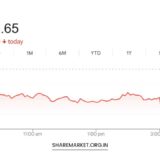
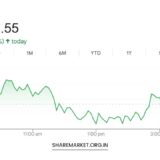
As of 2:40 PM on May 6, the stock was trading 0.38% higher at ₹694.65 per share. Despite the small uptick, the company’s stock outperformed the broader BSE500 index, which was down by 1% at the time.
This mixed market reaction may reflect the broader economic conditions, which have kept investors cautious, as well as the ongoing uncertainties in the auto industry.
However, the company’s solid earnings and dividend payout may help instill confidence among long-term investors.
Strategic Outlook and Market Prospects:
Looking forward, JBM Auto is well-positioned to capitalize on the rapid growth of the electric vehicle market, both domestically and internationally.
With an increasing number of government policies pushing for electrification in public transport and stricter environmental regulations, the demand for electric buses and EV components is set to rise.
The company’s ability to expand its footprint in the electric mobility space, especially through its electric bus offerings, positions it as a key player in India’s push toward cleaner transportation.
Additionally, JBM Auto is focusing on diversifying its product portfolio and entering new markets, which should provide a hedge against potential industry downturns.
Moreover, with rising awareness about environmental sustainability, electric mobility is expected to be a significant growth driver for years to come.
JBM Auto’s long-term strategy appears to be aligned with these macro trends, positioning the company to benefit from the global shift towards greener alternatives in transportation.
Final Thoughts:
JBM Auto’s Q4 FY25 results demonstrate strong operational performance, profitability growth, and a commitment to returning value to shareholders through dividends.
The company’s diversified portfolio, strategic investments in electric mobility, and efficient operational management are expected to fuel further growth in the coming years.
As demand for electric vehicles accelerates, JBM Auto is poised to leverage its position as a leader in the EV and auto components sectors, ensuring sustained success and shareholder value in the future.