Sensex Down 693 Points, Nifty at 24,870; Nifty Prediction for Monday
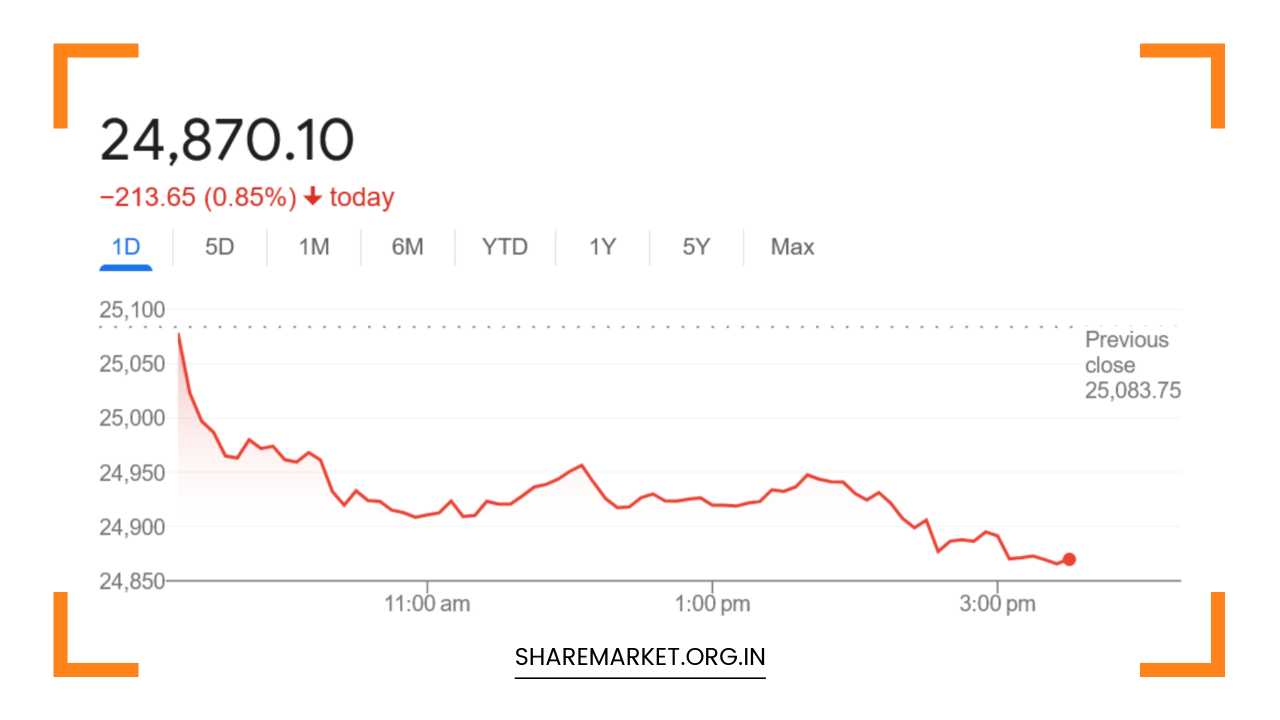
Markets Snap Six-Day Rally with Broad-Based Sell-Off: What Lies Ahead on August 25
Indian equity markets ended their six-day winning streak on Friday, August 22, with a sharp and broad-based decline across key indices.
Investor sentiment turned cautious following weak global cues, concerns over potential U.S. tariffs, and profit booking near key technical resistance levels. Both the Sensex and Nifty fell nearly 0.9%, led by selling in banking, metal, FMCG, and energy stocks.
Key Indices End Deep in the Red
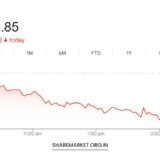
At the close of trade, the BSE Sensex was down 694 points or 0.85%, ending the session at 81,307.
The NSE Nifty 50 dropped 214 points or 0.85%, settling at 24,870. The Nifty Bank index, a key barometer of banking sector performance, declined sharply by 606 points to close at 55,149, marking a drop of 1.09%.
The broader market also showed signs of weakness, albeit more muted. The Nifty Midcap 100 index ended 79 points lower at 57,630, while the Smallcap index traded flat to mildly negative, showing some resilience amid the sell-off in large-cap names.
Market Breadth and Sectoral Snapshot
The sell-off was widespread across sectors and broader indices, indicating broad-based profit booking and cautious sentiment:
- 42 of the 50 Nifty stocks ended in the red.
- 23 out of 30 Sensex stocks declined.
- Notably, all 12 constituents of the Nifty Bank index closed lower, reflecting weakness in financials.
Sectoral Performance
- Banking stocks were the biggest drag on the market, with frontline private and public sector banks facing strong selling pressure.
- Metals, FMCG, oil & gas, realty, IT, and energy stocks also witnessed declines.
- The pharma sector bucked the trend and managed to end in positive territory, aided by selective buying in defensive counters.
- Auto stocks saw mixed action, while the media and PSU indices remained relatively stable.
Currency Watch
On the currency front, the Indian Rupee weakened by 26 paise, settling at ₹87.53 per US dollar, amid rising dollar strength globally and outflows from domestic equities.
Global Headwinds: Trump’s Tariff Comments Spark Jitters
Global cues played a key role in Friday’s decline. Dr. VK Vijayakumar, Chief Investment Strategist at Geojit Financial Services, attributed the negative sentiment to global trade tensions.
He pointed out that the market reacted to reports indicating former U.S. President Donald Trump‘s proposal of a 25% punitive tariff, which could potentially be enforced in August.
According to Vijayakumar, “The mere prospect of such protectionist measures has raised concerns about global trade and its impact on export-driven economies like India.
The rally that extended over the past six sessions paused today, reflecting these uncertainties.”
If such a tariff move materializes, it could dampen India’s export prospects, weigh on corporate earnings in certain sectors, and disrupt investor sentiment, particularly in industries with significant global exposure such as IT, manufacturing, and auto.
Technical Take: Key Resistance Halts the Rally
From a technical perspective, market experts highlighted that the Nifty faced stiff resistance at the 25,153 level, triggering profit booking and halting the recent bullish momentum.
Anand James, Chief Market Strategist at Geojit Financial Services, noted, “The market rally ran into resistance at a crucial level.
Directional indicators have not turned bullish, and there are early signs of fatigue. While no major downside is anticipated immediately, volatility is expected to persist in the near term.”
James also identified immediate support for the Nifty in the 25,033–24,977 zone, suggesting that traders should watch these levels for signs of a reversal or further correction.
Nagaraj Shetti, Technical Research Analyst at HDFC Securities, observed that the formation of a long bearish candle on the daily chart is a strong indication of short-term weakness.
“The Nifty slipped sharply after a brief consolidation near 25,200. Profit booking dominated the session, and recovery attempts in the mid-session failed,” he added.
Shetti believes that the index may test its previous gap-up support zone from August 18, which lies in the 24,700–24,800 range.
A bounce from these levels could lead to renewed upside, but any breakdown below this band could signal extended weakness.
Investor Outlook: Navigating the Volatile Landscape
Despite the recent decline, most analysts believe that the market remains structurally strong over the medium term. However, in the short run, heightened volatility and global uncertainties could keep the markets on edge.
Key triggers that investors should watch going forward:
- Global developments, especially around U.S. trade policy and upcoming economic data from major economies.
- Crude oil price movements, which impact inflation and fiscal stability in India.
- FII activity, as foreign investors have been key drivers of recent market momentum.
- Domestic macro data, including GDP and inflation prints in the coming weeks.
- Technical support zones, particularly in Nifty (24,700–24,800) and Bank Nifty (54,700–55,000), which may act as near-term cushions.
What to Expect on August 25
Looking ahead to Monday, August 25, market participants should brace for continued volatility. Whether the indices stabilize or extend the correction will largely depend on how they react to the critical support levels mentioned above.
- If Nifty manages to hold above 24,700–24,800, it could attempt another bounce toward 25,150–25,200.
- A sustained move above 25,150 would be seen as a bullish breakout, potentially resuming the prior uptrend.
- However, any breach below 24,700 may open the doors for further downside towards 24,500 or lower.
Traders are advised to remain cautious, avoid aggressive long positions until the trend stabilizes, and focus on stock-specific opportunities, particularly in defensive sectors like pharma and consumer staples.
In Summary:
The market’s pause after a strong six-day rally is a healthy correction in a bullish market, albeit triggered by external worries and technical resistance. While the short-term outlook is clouded by volatility, the underlying trend remains intact unless key support levels break decisively. Monitoring global developments and managing risk will be critical in the days ahead.