Sensex Gain 418 Points, Nifty at 24,722; Nifty Prediction for Tomorrow
Indian Stock Market Closes with Gains, What to Expect on August 5: A Detailed Outlook
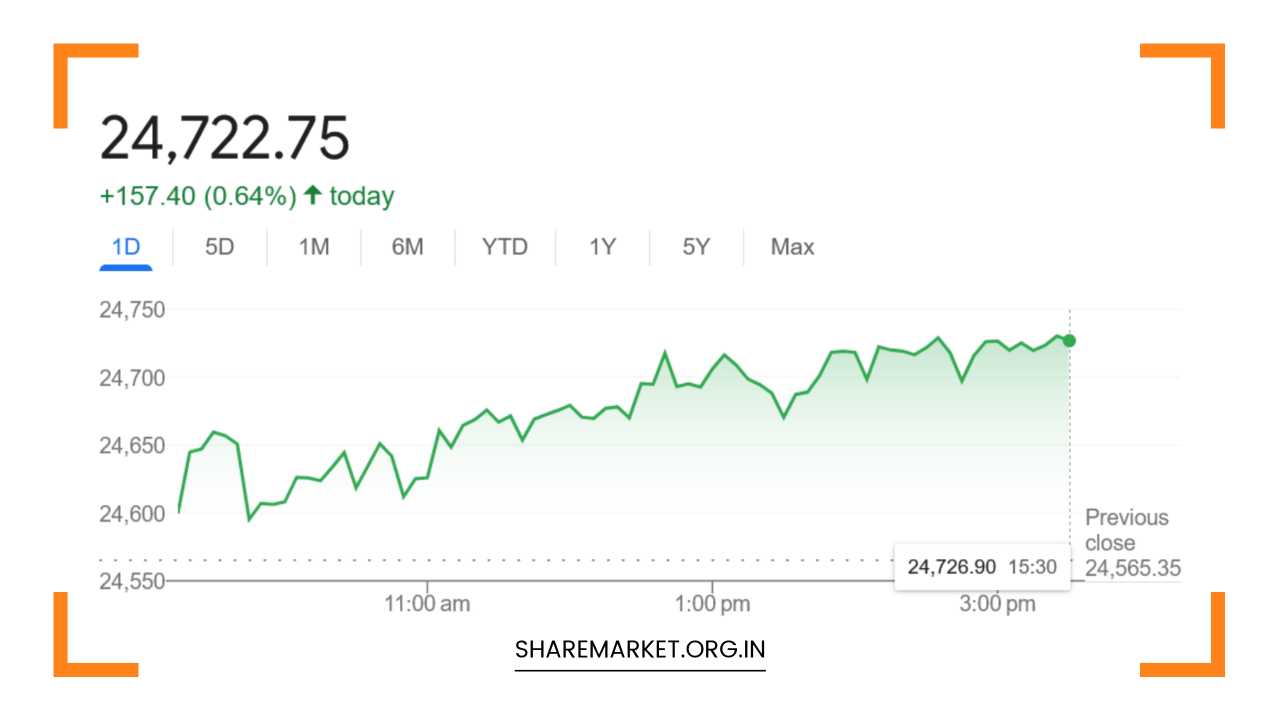
On August 4, the Indian equity markets showcased a strong performance, with Nifty surpassing the significant 24,700 level, signaling investor confidence.
While the broader trend has been positive, technical indicators suggest that the market is nearing oversold levels, potentially setting the stage for a pullback.
Here’s an in-depth look at how the market moved on August 4 and what investors can expect as we head into August 5.
Market Overview: Strong Sectoral Performance
The Nifty 50 ended the day on a high note, driven by strong performances in several key sectors, particularly auto and metal, as well as robust earnings from large-cap companies.
Among the top gainers on the Nifty were Hero MotoCorp, Tata Steel, Bharat Electronics, Adani Ports, and JSW Steel.
These stocks benefited from a combination of sector-specific growth drivers, such as robust demand, strong quarterly earnings, and positive global trends.
Meanwhile, Power Grid Corporation, HDFC Bank, ONGC, ICICI Bank, and Apollo Hospitals were the biggest laggards of the day, as they faced profit-taking and a slight pullback in their prices.
Despite the mixed bag of individual stock performances, the overall sentiment in the market remained positive, with most sectoral indices closing in the green.
Sectoral indices such as PSU Banks, Pharma, Realty, IT, Metal, Telecom, Media, Consumer Durables, and Auto all witnessed gains, ranging between 0.5% to 2.5%.
The BSE Midcap Index rose by 1%, while the Smallcap Index gained 0.7%, signaling broad-based strength in the market.
This reflects that the positive momentum was not limited to large-cap stocks alone, as mid and small-cap stocks also saw significant buying interest.
Key Sectors Driving Market Strength
The performance of the metal and auto sectors has been a significant contributor to the market’s recent strength. Vinod Nair, the Head of Research at Geojit Investments, attributed the bullish trend in the domestic market to strong performances in these two sectors.
The auto sector has been particularly strong, driven by a combination of weak US dollar, strong monthly auto sales, and positive quarterly results from leading auto companies.
This has ignited a wave of investor interest in the sector, as better-than-expected sales and improving consumer sentiment bode well for future growth.
Meanwhile, the metal sector has also benefited from rising commodity prices and a pick-up in global infrastructure activities. As steel and other metals become more expensive globally,
Indian companies with exposure to these materials are well-positioned to gain. Both the auto and metal sectors are seen as key beneficiaries of improving domestic consumption and global recovery trends.
Q1 Earnings: Consumption-Based Stocks in the Spotlight
As the first-quarter earnings season draws to a close, it has become evident that consumption-driven companies are experiencing a significant uptick in demand.
With the return of normalcy following the pandemic, sectors related to consumer goods, automobiles, and retail are seeing strong earnings growth.
Strong demand for automobiles, along with increased spending on consumer goods, reflects growing confidence in the Indian economy.
For instance, many auto majors have reported stellar quarterly earnings, driven by both higher sales and improved margins.
This is a clear indication of the revival of consumer spending, which had been impacted during the pandemic years.
Analysts remain optimistic about the outlook for consumption-based stocks, particularly in the automotive and consumer durables segments, which are seeing high demand post-pandemic.
Pharma and real estate stocks also reported solid performances, benefiting from increased demand in healthcare and housing.
With favorable government policies and initiatives like PMAY (Pradhan Mantri Awas Yojana), real estate stocks are set to benefit in the medium to long term.
Global Economic Influences on the Indian Market
The Indian stock market is not operating in a vacuum. Global economic trends continue to shape investor sentiment, especially in the context of US monetary policy and the global economic recovery.
A key theme over the past few months has been the weakening of the US dollar, which is favorable for emerging markets like India.
When the dollar weakens, it typically results in stronger inflows into risk assets such as equities, as investors seek higher returns in emerging markets.
Global interest rate policy is another critical factor influencing investor behavior. Rising unemployment and the sluggish pace of job creation in the US have fueled speculation that the Federal Reserve may cut interest rates to stimulate economic activity.
Lower interest rates could encourage foreign investors to pour money into Indian equities, boosting the market’s upward trajectory.
Moreover, this would be a positive development for Indian companies, particularly those with significant export exposure, as a weaker dollar would enhance their earnings in rupee terms.
However, there are still risks associated with high US tariffs and the ongoing global trade tensions, which could dampen the outlook for global markets.
The resolution of these issues remains uncertain, adding a layer of caution to investor sentiment.
Technical Outlook: Market Approaching Oversold Levels
From a technical perspective, the market is signaling that it may be approaching oversold conditions. According to Anand James,
Chief Market Analyst at Geojit Financial Services, more than 30% of Nifty 500 stocks closed below their respective lower Bollinger Bands on August 4, indicating that the market is nearing oversold territory.
Bollinger Bands are often used to assess whether an asset is overbought or oversold, and when stocks close below the lower band, it typically suggests that the market is due for a correction or pullback.
James suggests that a pullback is now likely, especially given the strength of the rally over the past few sessions. However, he also cautions that if the market fails to sustain the pullback and falls below the critical level of 24,670, it could extend its decline toward the 24,450-24,000 range.
The coming days will be crucial in determining whether the market can find support and stage a recovery, or whether it will face further pressure.
What to Expect on August 5: A Cautious Approach
Looking ahead to August 5, investors should remain cautious but vigilant. The broader market trend is still positive, but technical indicators suggest that a short-term correction could be on the horizon.
If the Nifty index holds above 24,670, it could potentially continue its upward movement, but a failure to maintain this level could lead to further declines.
Key things to watch on August 5:
- Global cues: Pay close attention to US economic data, particularly any updates on employment or interest rate expectations. These factors could have a significant impact on market sentiment.
- Sector performance: While auto and metal sectors remain strong, sectors like financials and IT could face volatility. Watch for any developments or earnings reports that could sway sentiment.
- Technical levels: Keep an eye on critical support levels for the Nifty, particularly around 24,670, 24,450, and 24,000. A break below these levels could signal a deeper correction.
Final Thoughts: A Mixed Yet Optimistic Outlook
In conclusion, the Indian stock market is currently in a bullish phase, driven by strong sectoral performances, particularly in the auto and metal industries.
The positive earnings results from consumption-driven sectors and the global economic recovery have bolstered investor sentiment.
However, technical indicators suggest that the market is approaching oversold levels, which could signal a near-term correction.
Investors should stay alert, keeping an eye on global economic developments, particularly in the US, and be mindful of key support levels in the coming days.
A cautious yet optimistic approach is recommended, with an eye on both potential upside and downside risks.