Share Market Today: Sensex Slips, Nifty Flat; Investors Gain Rs 1.08 Lakh Cr
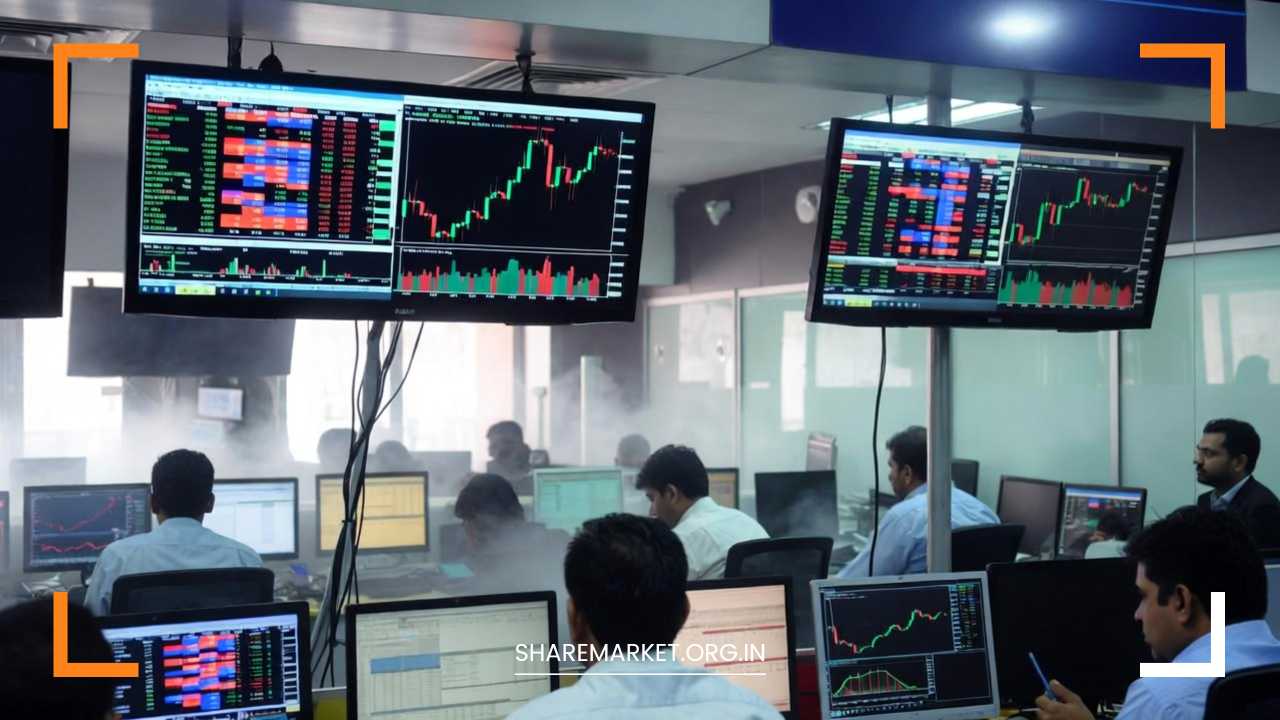
Market Wrap: Sensex and Nifty Stumble at the Finish Line, Yet Investor Wealth Grows by ₹1.08 Lakh Crore
The Indian equity markets navigated a turbulent session on Thursday, February 26, 2026, characterized by high volatility and a tug-of-war between optimistic bulls and cautious bears. While the headline indices—the BSE Sensex and the NSE Nifty 50—failed to sustain their early momentum and closed with marginal losses or near-flat performance, the broader market story was surprisingly positive. Despite the “red” finish for the Sensex, the total market capitalization of listed firms saw a significant uptick, adding over ₹1 lakh crore to investor portfolios.
A Day of Intra-day Drama and Narrow Ranges
The trading day began on a promising note, with domestic indices tracking positive cues from global peers. However, the optimism was short-lived. As the session progressed, the market encountered stiff resistance at higher levels, leading to a “sell on rise” mentality among institutional investors.
The Nifty 50 found it difficult to maintain its position above the psychological 25,500 mark. At its lowest point during the day, intermittent selling pressure dragged the index down to a low of 25,400. However, the story wasn’t all gloom; a resilient recovery in the final hour, fueled by targeted buying in defensive and value-oriented sectors, helped the indices claw back most of their intraday losses.
The Final Scorecard:
-
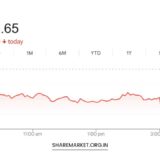
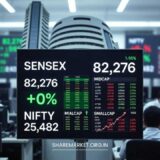
BSE Sensex: Closed at 82,248.61, down 27.46 points (0.03%).
-
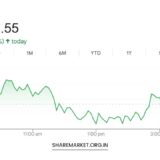
NSE Nifty: Ended at 25,496.55, gaining a marginal 14.05 points (0.06%).
While the Sensex officially “closed in the red,” the microscopic nature of the decline suggests a market in a consolidation phase rather than a bearish reversal.
The ₹1.08 Lakh Crore Paradox: Why Wealth Rose as Indices Fell
One might wonder how investors got richer on a day when the primary index fell. The answer lies in the Broader Market Participation. While the 30 heavyweights of the Sensex struggled, the mid-cap and small-cap segments showed greater resilience.
The total market capitalization of all BSE-listed companies climbed from ₹467.38 lakh crore in the previous session to ₹468.46 lakh crore by today’s close. This ₹1.08 lakh crore jump reflects the underlying strength in the “rest of the market.” When mid-sized companies and niche sectoral players perform well, they lift the total valuation of the exchange, even if the “big names” like HDFC Bank or Asian Paints are dragging the main index down.
Sectoral Performance: PSU Banks and Auto Lead the Charge
The recovery from the day’s lows was largely scripted by a handful of sectors that attracted “dip-buyers.”
-
Gainers: The Auto, Pharma, and Oil & Gas sectors were the stars of the day, with gains ranging between 0.4% and 1%. PSU Banks also saw a renewed interest as investors bet on improving credit growth figures. The Telecom and Metal indices provided additional support, acting as a cushion against the selling pressure in other pockets.
-
Laggards: On the flip side, the Media index was the biggest loser, shedding 0.7%. Large-cap banking and consumer discretionary stocks also faced heat, preventing the Sensex from turning green.
-
The Midcap Edge: The Nifty Midcap index outperformed the blue chips by rising 0.6%, proving that the “smart money” is currently finding better value in mid-sized enterprises.
Stock Highlights: The Winners and Losers
The breadth of the market was reflected in the individual performance of the Sensex constituents. Out of the 30 stocks in the basket, 13 closed with gains, while 17 ended in the red.
Top Sensex Gainers
| Stock | Gain (%) | Key Driver |
| Bharat Electronics (BEL) | 2.21% | Strong order book projections in the defense sector. |
| Adani Ports | 1.45% | Positive volume growth data from major hubs. |
| Sun Pharma | 1.10% | Defensive buying amid market volatility. |
| Maruti Suzuki | 0.95% | Optimism regarding cooling raw material costs. |
| Bharti Airtel | 0.78% | Steady ARPU growth expectations. |
Top Sensex Losers
| Stock | Loss (%) | Context |
| Trent | 1.61% | Profit booking after a recent sustained rally. |
| HDFC Bank | 1.15% | Continued FII selling pressure in the heavyweight lender. |
| Power Grid | 1.05% | Technical correction following overbought conditions. |
| Asian Paints | 0.82% | Concerns over rising crude oil prices affecting margins. |
Market Breadth: A Bullish Undercurrent
The “Advance-Decline Ratio” provides perhaps the most accurate picture of the market’s health today. Despite the flat indices, the number of stocks advancing was higher than those declining.
Of the 4,356 shares traded on the BSE:
-
2,170 shares advanced (closed in green).
-
2,030 shares declined (closed in red).
-
156 shares remained unchanged.
Furthermore, the market saw a tale of two extremes: 109 stocks hit their 52-week highs, signaling momentum in specific niches, while 258 stocks touched their 52-week lows, highlighting the ongoing pain in underperforming sectors and weak-fundamental small caps.
The Road Ahead: What Should Investors Expect?
The current market behavior suggests a “Stock-Picker’s Market.” With the Nifty hovering around the 25,500 level, the index is searching for a fresh trigger—potentially from upcoming GDP data or global central bank commentary.
The fact that investor wealth increased by over ₹1 lakh crore despite a flat index is a testament to the diversification of the Indian retail investor. Money is moving away from just the “Top 10” companies and flowing into the broader ecosystem. However, the high number of 52-week lows (258) serves as a warning: quality matters.
Key Levels to Watch:
-
Resistance: 25,650 – A break above this could trigger a fresh rally toward 26,000.
-
Support: 25,350 – If Nifty breaks this level, we might see a deeper correction toward the 25,000 mark.
As we head into the next trading session, the focus will remain on the movement of FIIs (Foreign Institutional Investors) and the stability of the Rupee. For now, the Indian markets remain in a “wait and watch” mode, balancing domestic industrial strength against global macro uncertainties.