Yes Bank Shares Jump 3% on Bank Nifty Inclusion; HDFC/ICICI Face $680M Outflows

Major Overhaul for Bank Nifty: Yes Bank and Union Bank Included, Weightage Cap Rocks Sector
The Indian banking sector, and specifically the widely-followed Bank Nifty index, is set for a significant transformation following a major announcement from the National Stock Exchange (NSE). In a move that has already sent ripples through the market, the NSE has decided to include Yes Bank and Union Bank of India in the Bank Nifty index, effective from December 31st, 2025. This news was met with immediate enthusiasm by investors in the newly included stocks, with shares of both banks rising by nearly 3% on December 2nd, the day the announcement was made public.
Expanding the Index: From 12 to 14 Stocks
This inclusion marks a fundamental shift in the composition of the Bank Nifty. For the first time, the number of constituent stocks will be increased from the current 12 to 14. This expansion is intended to enhance the index’s representativeness of the broader banking landscape in India, incorporating a wider variety of players, including those undergoing restructuring or representing the public sector more prominently. The decision to select Yes Bank and Union Bank of India is a testament to their increasing market capitalization and liquidity, meeting the necessary criteria for inclusion in such a pivotal benchmark. The anticipation leading up to this change has already fueled market activity, underscoring the importance of index inclusion for stock performance.
New Rules for Index Weighting: A Constraint on Giants
More impactful than the stock additions is the NSE’s decision to implement new, stricter rules regarding the weightage of stocks within the index. This change is fundamentally aimed at reducing the index’s over-reliance and concentration risk on the top-tier private banks that have historically dominated the index’s performance.
The new structure introduces a maximum weightage limit for the top three stocks. Specifically, the weightage of the top three banks will now be capped at 19%, 14%, and 10%, respectively. This is a significant deviation from earlier discussions and proposals. The previous proposal, which had been under consideration, called for a slightly looser structure, limiting the weighting of the largest stock to 20% and the total weighting of the top three stocks to 45%. The final, more conservative caps announced by the NSE suggest a firm commitment to diversifying the index risk.
The Impact on Banking Behemoths: HDFC Bank and ICICI Bank to See Outflows
This re-weighting exercise is set to have a profound effect, particularly on the largest private sector lenders, primarily HDFC Bank and ICICI Bank, which currently command substantial weight in the index. The change will directly impact investments made into these stocks via passive mutual funds and Exchange Traded Funds (ETFs) that track the Bank Nifty. As their weightage in the index is reduced to comply with the new caps, index funds will be necessitated to sell their holdings to rebalance their portfolios.
According to analysis and estimates from the IIFL Alt Desk, the capital reallocation could be substantial. ICICI Bank shares are predicted to see significant outflows totaling approximately $351 million. This figure represents about 1.9 times the bank’s average daily trading volume (ADV), suggesting a concentrated period of selling pressure. Similarly, HDFC Bank shares are estimated to face outflows of around $331 million, which is approximately 1.5 times its average daily volume (ADV). Such large-scale selling, while passive in nature, can temporarily exert downward pressure on the stock prices of these banking giants.
The New Entrants’ Gain: Expected Inflows and Liquidity Boost
Conversely, the two banks being included in the index—Yes Bank and Union Bank of India—are poised to be the major beneficiaries of this rebalancing. Index-tracking funds will be mandated to purchase their shares to bring their portfolios in line with the new Bank Nifty composition, resulting in substantial inflows into these stocks.
The brokerage estimates that Yes Bank shares could attract significant inflows, potentially reaching $115 million. This inflow is particularly noteworthy as it represents a massive 4.9 times the bank’s average daily volume, signaling a massive surge in demand relative to its typical trading activity. Union Bank of India is also projected to see robust inflows of around $100 million, which translates to an impressive 5 times its average daily volume. These massive multiples relative to their ADV highlight the significant liquidity and pricing impact expected for these stocks in the short to medium term. The increased institutional interest and liquidity from index funds is often viewed as a positive long-term development for the newly included companies.
Beyond the two main additions, other banks might also attract inflows as fund managers reallocate capital away from the capped stocks. For instance, Federal Bank and AU Small Finance Bank are also anticipated to attract inflows that could exceed their respective average daily volumes, further diversifying the distribution of capital within the sector.
A Look at Nuvama Research Estimates
Corroborating the overall market view, separate estimates from Nuvama Alternative & Quantitative Research largely align with the expected shift. Their report estimates that Yes Bank shares could attract an even higher inflow of approximately $140 million, while Union Bank of India is projected to receive approximately $109 million in inflows. On the outflow side, Nuvama’s figures also project significant selling pressure for the heavyweights: HDFC Bank is estimated to see outflows of approximately $322 million, and ICICI Bank is expected to face outflows of $348 million. The consistency across brokerage reports reinforces the expected magnitude of the capital reallocation.
Implementation Strategy: A Phased Approach
Recognizing the potential for volatility and sharp price movements from such a massive index rebalancing, the NSE has adopted a cautious and structured approach to implementation. These substantial changes, both the stock additions and the weightage adjustments, will not be executed instantaneously. Instead, they will be rolled out in a structured manner over several months.
According to the NSE’s notification, the changes will be implemented in four monthly installments, staggered until March 2026. This phased implementation is a critical measure designed to mitigate sudden fluctuations and large-scale market dislocation, providing fund managers and the market at large with sufficient time to adjust their portfolios in a controlled manner. This strategy aims to ensure that the transition is smooth, minimizing unnecessary volatility for index-tracking instruments and the underlying stocks.
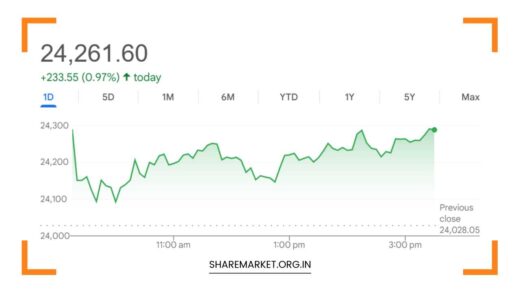
The immediate market reaction on Tuesday, the day of the announcement, provided an early glimpse of the impact. Shares of banking heavyweights HDFC Bank, ICICI Bank, and Axis Bank all fell between 0.8% and 1.3% during the day’s trading, reflecting the anticipated selling pressure. Conversely, the excitement around the inclusions was also palpable. Interestingly, Indian Bank shares saw a decline of 2.5% to ₹865.65 after it was not included in the Bank Nifty index, despite some market expectations suggesting its inclusion.
The overhaul of the Bank Nifty is more than just a technical adjustment; it represents a major structural change in one of India’s most important sectoral indices. It aims to diversify risk, reflect a broader segment of the market, and will undoubtedly reshape investment strategies for index-tracking funds and alter the market dynamics for the major and minor constituents of the new-look Bank Nifty.