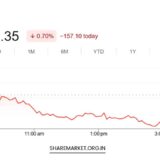
Sensex Down 872 Points, Nifty at 24,683; Tomorrow Nifty Prediction

Markets Close Deep in Red: What Lies Ahead for May 21?
Indian equity markets ended sharply lower on the weekly expiry day, weighed down by widespread selling across major sectors.
Key indices such as the Sensex, Nifty, and Bank Nifty faced heavy losses, reflecting investor caution amid global uncertainty and weak domestic cues.
As investors look to the trading session on May 21, market experts offer mixed outlooks, pointing to key domestic and international developments that could influence direction in the near term.
Market Recap: A Day of Broad-Based Selloff
Thursday’s trading session witnessed significant profit booking and negative sentiment across the board:
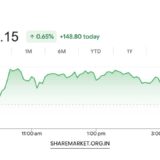
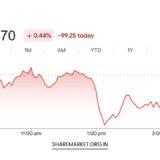
- The Sensex plunged 873 points, closing at 81,186
- The Nifty 50 declined 262 points, ending at 24,684
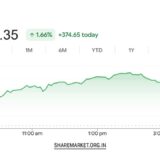
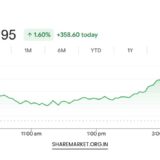
- The Bank Nifty shed 543 points, finishing at 54,877
- The Nifty Midcap 100 fell 923 points to 56,183
The selloff was broad-based:
- 42 of the 50 Nifty stocks closed in the red
- 27 of the 30 Sensex components ended lower
- 11 of the 12 Bank Nifty stocks registered declines
Sectoral Pressure
Heavy selling was seen in key sectors such as:
- Real Estate
- Information Technology
- Oil & Gas
- Metals
- Banking and Auto
Additionally, defense-related stocks saw declines for the second consecutive day, indicating profit booking after recent rallies. Investors appeared to be repositioning their portfolios amid macroeconomic uncertainty.
Key Factors Behind the Market Decline
1. Uncertainty Around India-US Trade Deal
Investor sentiment has been dented by a lack of clarity regarding an expected trade agreement between India and the United States.
While recent breakthroughs in trade negotiations between the US and other countries—such as China and the UK—have lifted sentiment in those markets, India has yet to reach a concrete agreement.
According to a Bloomberg report, India is in the process of discussing a trade deal with the US in three phases, with hopes of finalizing an interim agreement before July.
However, until there is formal confirmation or significant progress, markets may remain in a consolidation or sideways phase, as investors await clarity on trade policies and tariffs.
2. China Gaining Favor in Global Capital Flows
Market analysts note that recent interest rate cuts by the People’s Bank of China, along with the successful US-China trade deal, have improved the near-term outlook for the Chinese equity market. This development could lead to a temporary diversion of foreign capital away from Indian equities.
Although India remains a long-term growth story, the near-term could see foreign institutional investors (FIIs) allocating a greater portion of capital to Chinese markets, seeking short-term gains from anticipated stimulus and policy support in China.
This shift could exert pressure on Indian markets, especially in sectors with heavy FII holdings like IT, banking, and large-cap FMCG.
3. High Valuations and Limited Upside Potential
Valuation concerns continue to loom over the Indian market. According to several analysts, stock prices in the mid-cap and small-cap segments, and even in some large-cap stocks, have risen to levels that no longer justify their current fundamentals.
V.K. Vijayakumar, Chief Investment Strategist at Geojit Financial Services, noted:
“We are entering a phase of consolidation. High valuations will limit the upside, and increased institutional selling could drag the market further. Additionally, the recent downgrade in the US credit rating has created a layer of global uncertainty, which could impact emerging markets like India.”
As a result, many investors are now turning cautious on deploying fresh capital, especially in riskier segments, unless supported by strong earnings growth or favorable policy announcements.
4. Global Economic Headwinds
In addition to domestic factors, global developments continue to influence sentiment. The downgrade of the US credit rating, ongoing inflation concerns, and the possibility of delayed interest rate cuts by the Federal Reserve are keeping global investors on edge.
Moreover, as the US negotiates trade terms with multiple countries, including India, investors are waiting to assess how these deals will affect global trade flows and capital markets. The risk of geopolitical tension, including in the Middle East and Eastern Europe, also remains a concern.
What to Expect on May 21 and Beyond?
1. Range-Bound Trading Likely
Given the prevailing uncertainty on both domestic and global fronts, markets may continue to trade in a narrow range in the short term.
Without a significant catalyst—such as a breakthrough in the India-US trade talks or fresh domestic policy support—markets are unlikely to see a strong directional move.
2. Earnings and Macro Data in Focus
Investors will closely track:
- Corporate earnings, especially from heavyweights in banking, IT, and manufacturing
- Macro indicators, including inflation trends, GDP projections, and industrial production
These data points could offer clues about the health of the economy and the sustainability of corporate profits.
3. Institutional Flows Will Be Key
FIIs have been net sellers in recent sessions, and their behavior will be a critical indicator of market sentiment in the coming weeks. Meanwhile, domestic institutional investors (DIIs) have largely supported the market, but even their participation may waver if global outflows intensify.
Investment Strategy: Caution Advised
Market experts suggest adopting a cautious, stock-specific approach in the current environment. While long-term fundamentals of the Indian economy remain robust, the near-term may be characterized by:
- Volatility
- Profit booking
- Limited upside
Investors are advised to avoid chasing momentum, especially in overheated sectors or stocks with stretched valuations. A focus on quality companies with strong earnings visibility, low debt, and sound management is preferred during uncertain phases.
Final Thoughts
The Indian stock market’s recent slide reflects a mix of global uncertainty, cautious investor sentiment, and elevated valuations.
As we approach the next trading session on May 21, the focus will remain on geopolitical developments, trade negotiations, and global capital flows.
Until a clear trigger emerges—such as a finalized India-US trade deal or supportive domestic policy announcements—the market is likely to stay in a consolidation phase, marked by range-bound movements and sectoral churn.
Investors would do well to tread carefully, maintain adequate liquidity, and selectively accumulate quality stocks on dips, while staying alert to global cues.