MR Maniveni Foods IPO Listing: Stock Lists at 18.17% Discount on BSE SME

MR Maniveni Foods IPO Listing: Shares Debut at 18% Discount; Investors Stare at Losses Despite Intraday Recovery Efforts
Market Debut Disappoints Dal Processor’s Backers
The domestic small and medium enterprise (SME) primary market witnessed a muted debut today as the shares of MR Maniveni Foods Limited—a prominent player in the processing and distribution of Urad Dal (black gram) and Toor Dal (pigeon pea)—made a weak landing on the BSE SME platform.
Despite operating in a resilient fast-moving consumer goods (FMCG) and staples sector, the company’s stock listed at a steep 18.17% discount to its issue price of ₹52 per share. The lackluster debut left initial public offering (IPO) investors facing immediate capital depreciation, defying the broader trends of high-premium SME listings seen earlier in the market cycle.
Price Action Analysis: A Volatile First Day of Trading
The trading session for MR Maniveni Foods was marked by high volatility and a brief, unsuccessful attempt at an intraday recovery.
The Opening Bell and Intraday Movements
-
Issue Price: ₹52.00
-
Listing Price: ₹42.55 (An immediate loss of 18.17% for allottees)
-
Intraday High: ₹44.66
-
Intraday Low: ₹40.52
-
Closing Price: ₹40.65
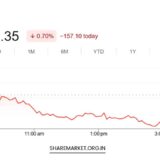
Immediately after the opening bell, value seekers and institutional backers attempted to support the counter, pushing the stock up to an intraday high of ₹44.66. However, this recovery proved short-lived. Sustained selling pressure from disappointed retail investors and short-term traders overwhelmed the buying momentum, dragging the stock down to an intraday low of ₹40.52.
By the end of the first trading day, the stock staged a marginal recovery from its absolute lows to close at ₹40.65. Consequently, investors who held onto their allotments through the day saw their initial capital erode by 21.83% from the IPO issue price, flashing a cautionary signal for the SME primary market segment.
IPO Subscription Metrics and Capital Structure
The ₹27.04 crore public issue was open for public bidding from May 22 to May 26. While many contemporary SME IPOs have enjoyed massive, triple-digit oversubscriptions, MR Maniveni Foods saw a relatively modest response from the investing community. The public issue concluded with an overall subscription outfit of 1.74 times.
Breakdown of Category-Wise Subscriptions
| Investor Category | Subscription Multiplier | Details & Sentiment |
| Qualified Institutional Buyers (QIBs) | 1.00x | Subscribed exactly to its reservation limits (excluding the anchor portion), indicating a cautious institutional stance. |
| Non-Institutional Investors (NIIs) | 1.88x | High-net-worth individuals exhibited muted interest compared to historical SME averages. |
| Retail Individual Investors (RIIs) | 2.09x | The most active segment, showing mild optimism for the consumer staples brand. |
| Overall Subscription | 1.74x | A fully subscribed book, though lacking the aggressive bidding that drives bumper listings. |
Under the structure of the IPO, the company issued 52,00,000 fresh equity shares with a face value of ₹10 each. The modest subscription rates ultimately foreshadowed the weak demand and subsequent liquidity crunch on listing day.
Strategic Allocation of IPO Proceeds
Despite the disappointing market debut, the capital raised via the fresh issue is slated to fundamentally alter the company’s operational capacity. Management has outlined a clear blueprint to utilize the ₹27.04 crore total proceeds to fuel its next phase of physical expansion and infrastructure development.
1. Capital Expenditure: Factory Construction (₹12.69 Crore)
The lion’s share of the proceeds, amounting to ₹12.69 crore, will be deployed directly into the civil construction of new processing facilities. This infrastructure setup is designed to optimize supply chain dynamics, increase storage capabilities, and house high-volume processing lines to meet growing semi-urban and urban demand.
2. Technological Advancement: Plant and Machinery (₹13.61 Crore)
To complement the new factory space, ₹13.61 crore is allocated toward purchasing state-of-the-art agricultural processing, sorting, grading, and packaging machinery. Modernizing these components is expected to improve yield ratios, reduce wastage in Urad and Toor dal processing, and maintain stringent quality controls required for large-scale distribution.
3. General Corporate Purposes
The remaining balance from the fundraise will be diverted toward general corporate expenses, including working capital management, brand building, regulatory compliance costs, and addressing unforeseen operational overheads.
Corporate Profile and Financial Health Matrix
Incorporated in June 2010, MR Maniveni Foods has spent well over a decade establishing its presence in the essential commodities market. the company operates across the processing, packaging, and distribution verticals of staple Indian pulses, primarily focusing on Urad Dal and Toor Dal—two high-consumption staples across Indian households.
Upward Trajectory in Financial Performance
An analysis of the company’s financial statements reveals solid operational scaling and compounding profitability over the last three fiscal periods.
-
Fiscal Year 2023 (FY23): The company posted a net profit of ₹1.56 crore.
-
Fiscal Year 2024 (FY24): Net profit grew to ₹2.18 crore.
-
Fiscal Year 2025 (FY25): Profitability surged significantly to ₹4.13 crore.
During this three-year window, total income scaled up remarkably, registering a Compound Annual Growth Rate (CAGR) of over 30% to finish at ₹203.52 crore in FY25.
Recent Fiscal Performance (9M-FY2026)
For the nine-month period spanning April to December 2025, MR Maniveni Foods has maintained its momentum:
-
Total Income: Generated ₹116.19 crore.
-
Net Profit: Logged ₹3.34 crore, putting it on track to approach or match the previous year’s annualized run rate.
Financial Year Performance (Net Profit in ₹ Crores)
--------------------------------------------------
FY 2023: ■■■ 1.56
FY 2024: ■■■■ 2.18
FY 2025: ■■■■■■■■ 4.13
9M-FY26: ■■■■■■ 3.34 (April - December 2025)
Balance Sheet Leverage Concerns
While the top-line and bottom-line growth tell a story of consistent operational expansion, the balance sheet reveals why institutional investors may have exercised caution. As of December 31, 2025, the company carried a total debt load of ₹22.40 crore.
In contrast, its reserves and surplus stood at a lower ₹7.55 crore. This relatively high leverage and debt-to-equity ratio likely served as a primary headwind, cooling investor sentiment during the pricing and listing phases, as macro-tightening environments typically penalize highly leveraged small-cap companies.
Key Takeaways for Market Observers
The listing day performance of MR Maniveni Foods serves as a case study for SME IPO dynamics:
Valuation and Leverage Matter: Solid revenue growth (30% plus CAGR) and consistent profitability cannot completely offset concerns regarding high balance sheet debt (₹22.40 crore versus ₹7.55 crore in reserves), which frequently prompts conservative pricing models from institutional buyers.
Subscription Correlates with Listing Gains: Mild oversubscription rates (such as 1.74x) often signal weak institutional underwriting and a lack of post-listing market makers, increasing the likelihood of listing-day capital depreciation.
Long-Term Fundamentals vs. Short-Term Action: While the listing day results present immediate losses for IPO subscribers, the actual long-term value of the stock will depend on how efficiently management utilizes the fresh capital infusion to clear operational friction and scale up margins.