Sensex Gain 315 Points. Nifty at 23,140; Monday Nifty Prediction
Comprehensive Market Outlook: Post-Recovery Analysis and Strategic Positioning
Following a brutal wave of selling pressure that shook investor confidence, Indian benchmark indices staged a modest relief recovery. The market closed out the week on a positive note, though overarching macroeconomic headwinds and fragile technical structures continue to dictate a cautious stance for upcoming sessions.
This deep-dive analysis examines the session’s closing dynamics, sector rotations, critical technical boundaries, and actionable portfolio management strategies to help you navigate market behavior.
1. Detailed Session Recap and Closing Dynamics
The benchmark indices managed to claw back some of their recent losses, driven primarily by selective value buying and a brief cooling of crude oil prices.
-
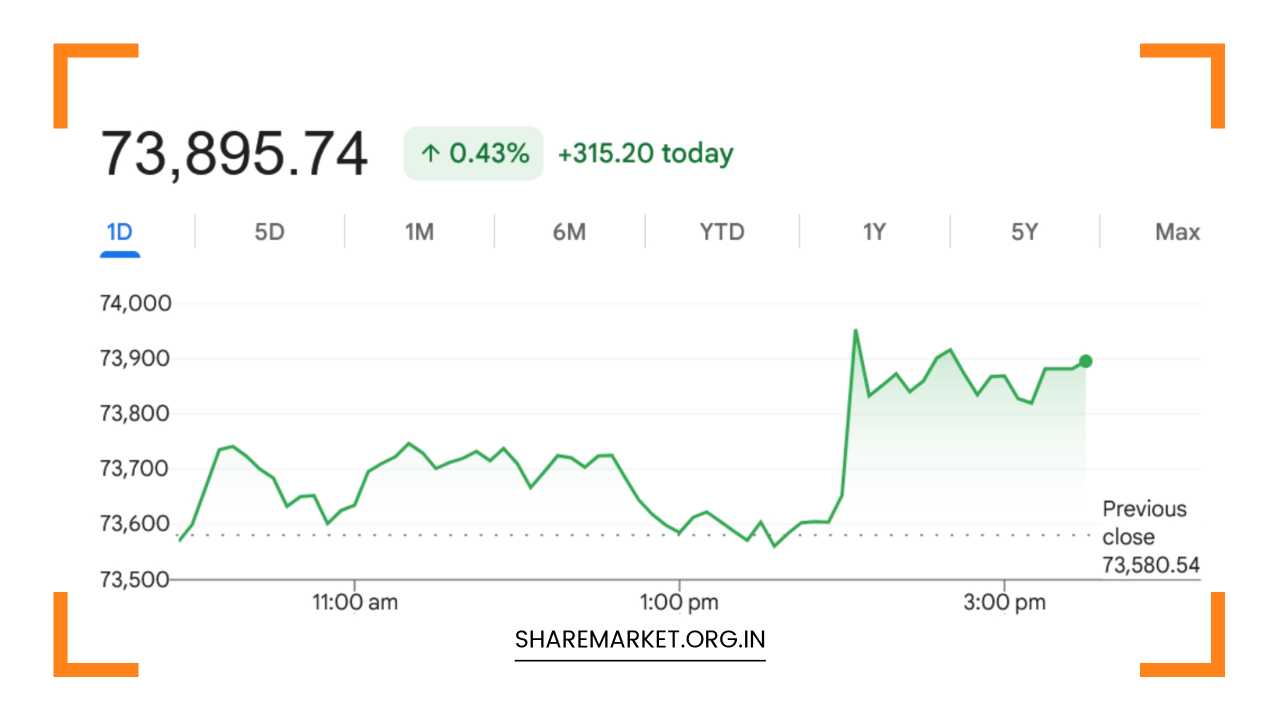
The Headline Figures: The BSE Sensex advanced 315.20 points (0.43%) to close at 73,895.74, while the NSE Nifty 50 added 77.40 points (0.34%) to settle at 23,140.50.
-
Closing Auction Session (CAS) Impact: During the CAS window, the Sensex experienced an incremental lift of roughly 14 points, while the Nifty inched higher by about 12 points, illustrating localized institutional rebalancing at the final bell.
-
Market Breadth: Unlike sessions characterized by wholesale market participation, breadth remained relatively balanced (approximately 2,181 advances against 1,961 declines). This indicates that the day’s green finish was a targeted rebound rather than a broad-based structural accumulation.
2. Sectoral Divergence and Underlying Breadth
A close inspection of sectoral indices reveals a distinct preference for defensive positioning and select cyclical recovery, contrasted against persistent weakness in technology and broader mid-tier segments.
-
Outperformers:
-
Nifty Auto led the charge with a 0.89% gain, supported by stable domestic demand outlooks.
-
Consumer Durables rose 0.88%, reflecting pockets of retail resilience.
-
Realty advanced 0.76%, while Private Banks and Metals ticked higher by 0.45% and 0.35% respectively, aided by bargain-hunting in financial heavyweights like Axis Bank and Bajaj Finance. The Bank Nifty gained 142 points to close at 55,580.40.
-
-
Underperformers:
-
Technology and export-oriented sectors faced renewed headwinds, with Nifty IT slipping 0.17% and Pharma shedding 0.15%.
-
Oil & Gas (-0.18%) and Media (-0.23%) also closed in the red.
-
Broader Market Lag: The broader indices continued to lag behind benchmarks. The Nifty Midcap 100 index fell 84 points to close at 60,906, underlining ongoing investor anxiety regarding elevated mid-cap valuations and liquidity outflows.
-
3. Macroeconomic Overhangs: The External Equation
The sustainability of any recovery remains tightly bound to external macroeconomic triggers that have dominated institutional sentiment:
-
Crude Oil Volatility: Brent crude hovering near elevated levels ($102–$106 per barrel range) continues to exert pressure on India’s import bill, fiscal deficit parameters, and domestic inflation expectations.
-
Global Yield Dynamics: US Treasury yields remaining stubbornly elevated above 5% have significantly reduced the relative risk-adjusted attractiveness of emerging market equities, triggering consistent foreign institutional investor (FII) outflows.
-
Currency Pressures: Persistent FII selling alongside high commodity prices has kept the Indian Rupee under a tight trading range, limiting aggressive domestic liquidity expansion.
4. Technical Architecture and Key Levels to Watch
Prominent market analysts emphasize that despite the single-day bounce, the broader chart structure remains vulnerable.
-
Resistance Overheads:
-
The immediate hurdle lies between 23,200 and 23,300.
-
A sustained, high-volume daily close above 23,300 is mandatory to trigger a relief rally toward 23,400–23,500. Until this barrier is decisively cleared, any intraday spike is expected to encounter heavy overhead selling.
-
-
Support Floors:
-
The psychological 23,000 mark represents the most critical short-term structural floor, strongly backed by heavy Put Open Interest (OI) accumulation.
-
A decisive breakdown below 23,000 would invalidate near-term stabilization models, potentially opening a swift corridor toward 22,800–22,500.
-
5. Structured Action Plan for Portfolio Management
To manage risk effectively under current market conditions, consider implementing this structured asset allocation and risk-mitigation framework:
-
Enforce Strict Stop-Losses: Maintain tight stop-loss boundaries on active short-term swing trades, using the 23,000 Nifty handle as your absolute threshold for risk reduction.
-
Deploy Defensive Capital Allocation: Shift a higher percentage of fresh capital deployment toward defensive sectors (such as FMCG and Pharma) or high-quality large-cap balance sheets rather than aggressive mid- and small-cap exposure.
-
Hedge Against Volatility: Utilize derivatives strictly for hedging existing portfolio allocations if you hold concentrated long equity positions exposed to systemic FII outflows.
-
Monitor Global Cues Daily: Prioritize tracking overnight US market closures, US 10-year yield prints, and early-morning Brent crude fluctuations prior to executing fresh trades.
Disclaimer: The financial insights, technical evaluations, and market frameworks provided above are strictly for educational and informational purposes and do not constitute formal, individualized investment advice. Evaluate your unique risk profile, investment horizon, and liquidity requirements, or consult a SEBI-registered financial advisor before executing any trades or portfolio adjustments.