Sensex Down 318 Points, Nifty at 25,144; Monday Nifty Prediction
Market Outlook: Indian Benchmark Indices End in the Red; Here is How Sensex and Nifty May Perform on November 16
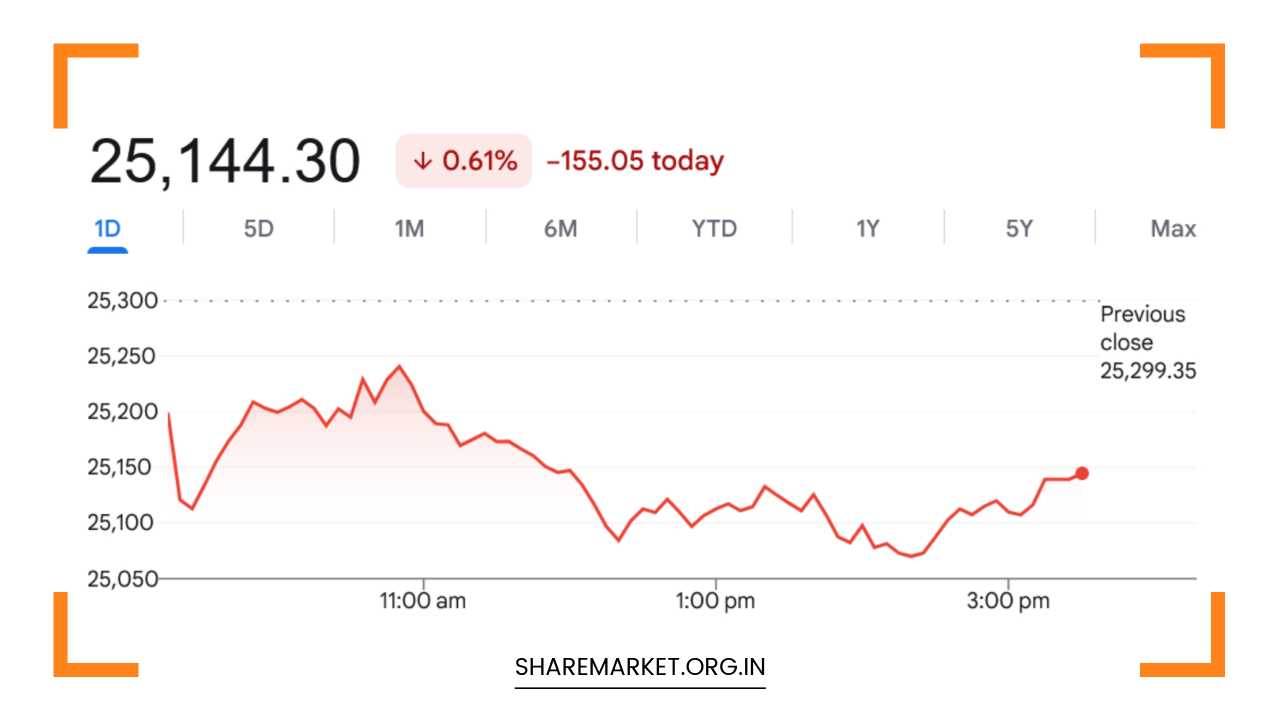
Domestic equity markets snapped their recent winning momentum on Friday, November 13, 2026, closing lower amid heightened macroeconomic headwinds and cautious global cues. After a volatile trading session marked by broad-based profit booking, the benchmark Nifty 50 slipped below the psychologically crucial 25,150 mark.
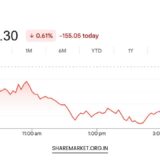
By the closing bell, the 30-share BSE Sensex shed 318.56 points, or 0.39 percent, to settle at 81,592.45. Similarly, the broader NSE Nifty 50 declined by 155.05 points, or 0.61 percent, ending the day at 25,144.30. Market breadth leaned distinctly toward the bears, reflecting widespread selling pressure across the broader exchanges: approximately 1,763 shares advanced, while 2,328 declined, and 167 remained unchanged.
Key Movers: Top Gainers and Losers
Selling pressure was concentrated in heavyweight financial, metal, and automotive names, which dragged the headline indices down throughout the afternoon session. On the Nifty 50, the steepest laggards included:
-
Shriram Finance
-
Grasim Industries
-
Tata Motors Passenger Vehicles
-
Hindalco Industries
-
Adani Enterprises
Conversely, selective buying in defensive counters, telecom, and energy majors helped cushion the overall fall. The top index gainers were:
-
Bharti Airtel
-
Eicher Motors
-
ONGC
-
Nestle India
-
Asian Paints
Sectoral Performance and Broader Market Trends
Across the sectoral landscape, risk aversion was clearly visible. With the sole exception of Fast-Moving Consumer Goods (FMCG)—which eked out modest gains as investors rotated into defensive plays—every other sectoral gauge finished in negative territory. Rate-sensitive and cyclical pockets bore the brunt of the sell-off, with the Nifty Auto, Nifty Realty, and Nifty Metal indices each dropping by roughly 1 percent.
The broader market indices demonstrated relative resilience compared to the frontline benchmarks, though they were not immune to the downward drift. Both the Nifty Midcap 100 and Nifty Smallcap 100 indices ended the session marginally lower, slipping by 0.2 percent each.
Weekly Market Recap: Third Consecutive Week of Gains
Despite Friday’s pullback, the Indian equity market managed to salvage a positive finish for the week, marking its third consecutive weekly advance—a milestone achieved for the first time since June 2026. Over the course of the week, both the Sensex and the Nifty recorded modest net gains of 0.4 percent each.
Underneath the surface, sectoral divergence defined the weekly performance:
-
Outperformers: Public sector lenders stole the spotlight, with the Nifty PSU Bank index surging by an impressive 8 percent on the back of strong balance sheet health and credit growth expectations. The broader Nifty Bank index followed suit with a solid 3 percent weekly gain, while the Nifty Midcap index climbed 2 percent.
-
Laggards: Information Technology stocks faced sustained headwinds from global growth anxieties and elevated US bond yields, making the Nifty IT index the worst-performing sector of the week with a decline of more than 3 percent.
Macroeconomic Headwinds and Expert Outlook
As traders look ahead to the next trading session on Monday, November 16, market sentiment remains delicately balanced between strong domestic corporate fundamentals and mounting macroeconomic pressures.
Vikram Kasat, Chief Business Officer, Advisory and Dealing at PL Capital, notes that Friday’s retreat signals growing market unease over three interconnected macro risks: sticky inflation, domestic currency depreciation, and surging crude oil prices. While global geopolitical and economic uncertainties have fostered a defensive mood, Kasat emphasizes that elevated crude oil prices pose the most immediate threat to India Inc. Sustained high energy costs threaten to compress corporate operating margins, dampen discretionary consumer spending, and widen India’s Current Account Deficit (CAD).
Furthermore, with retail inflation breaching the Reserve Bank of India’s (RBI) upper tolerance band, hopes for near-term monetary policy easing have steadily faded. According to Kasat, this “higher-for-longer” interest rate reality naturally caps the market’s upside potential. In such a complex environment, he advises against a purely defensive posture, advocating instead for rigorous, bottom-up stock selection. Specifically, heavyweight sectors such as banking, capital goods, and domestic consumption will need to deliver robust, visible earnings growth to justify valuations and attract fresh institutional inflows. Looking ahead, crude oil trajectories, rupee stability, and foreign portfolio flows will dictate whether Friday’s dip is merely a healthy consolidation or the onset of a deeper earnings-driven correction.
Echoing this cautious tone, Vinod Nair, Head of Research at Geojit Investments, points out that renewed anxieties surrounding interest rate trajectories are actively testing the durability of the market’s recent rally. With domestic inflation running above the RBI’s comfort zone, investors are pricing in prolonged monetary tightness. Simultaneously, the dual spike in global crude oil prices alongside rising Indian and US benchmark bond yields has prompted global asset allocators to dial back exposure to riskier emerging market assets.
While Nair acknowledges that these macro variables will likely cap near-term gains and trigger bouts of intraday volatility, he maintains a constructive medium-to-long-term outlook. Resilient quarterly earnings from domestic-focused companies and steady support from institutional investors continue to provide a structural floor for Indian equities.
Technical Analysis: Crucial Support and Resistance Levels for November 16
From a technical standpoint, the Nifty’s inability to hold above 25,150 warrants close monitoring of key inflection zones when trading resumes on November 16.
Sudeep Shah, Head of Technical and Derivatives Research at SBI Securities, identifies the 24,900–24,850 zone as the immediate and most critical support band for the Nifty 50. As long as the index holds above this cushion, the broader positional trend remains intact. However, Shah warns that a decisive breakdown and close below the 24,850 mark could accelerate technical selling pressure, potentially dragging the index down toward the 24,600 level in the short term.
On the flip side, for bulls to regain command, the index must overcome immediate overhead supply. Shah highlights the recent swing high of 25,424 as the primary resistance hurdle. A sustained breakout above 25,424 would invalidate the near-term bearishness, signal the resumption of upward momentum, and open the doors for a fresh leg of the broader uptrend.
Summary Strategy for Traders
Heading into November 16, market participants should brace for heightened volatility driven by global bond yields, crude oil fluctuations, and currency movements. Traders are advised to keep a close eye on the 24,850 support threshold on the Nifty for risk management, while focusing capital allocation on fundamentally sound, earnings-backed businesses in banking, FMCG, and capital goods rather than chasing high-beta momentum plays.