RVNL Bags Rs 201 Crore Wagon Workshop Project, Shares in Spotlight
Stock in Focus: RVNL Secures ₹201 Crore Workshop Project Amidst Massive Order Book Expansion
Rail Vikas Nigam Limited (RVNL), the specialized infrastructure arm of the Indian Ministry of Railways, continues to dominate the sectoral spotlight. In a recent exchange filing on December 29, 2025, the Navratna PSU announced it has emerged as the lowest bidder (L1) for a significant infrastructure project from East Coast Railway. This win further diversifies its domestic portfolio and reinforces its role in the modernization of India’s rolling stock maintenance.
Strategic Infrastructure: The Kantabanji Wagon Workshop
The newly bagged contract centers on the establishment of a Wagon Periodical Overhaul (POH) Workshop located at Kantabanji. With a projected capacity to handle 200 wagons, this facility is poised to become a critical node in the East Coast Railway’s logistical chain.
Key Financial and Operational Details:
-
Contract Value: ₹201.23 Crore (excluding GST).
-
Project Timeline: The execution period is strictly set at 18 months.
-
Bidding Process: Notably, RVNL emerged as the L1 bidder in a competitive process where it was the sole bidder, underscoring its unique technical competency in high-value railway engineering.
The establishment of this workshop is a strategic necessity. As Indian Railways increases its freight carrying capacity, the demand for periodical overhauling—which ensures the safety and longevity of freight wagons—is skyrocketing.
Recent Order Momentum: Traction Power and SCADA Systems
This latest win follows a string of successful bids that have kept RVNL in the news throughout December. Earlier this month, the company secured a Letter of Acceptance (LOA) from Southern Railway for a traction power project valued at ₹145.35 crore.
This project, situated in the Jolarpettai-Salem section of the Salem division, involves a sophisticated technical scope:
-
Design & Supply: Development of Scott-connected traction substations and 2×25 kV feeding systems.
-
Digital Integration: Implementation of SCADA (Supervisory Control and Data Acquisition) and automatic fault locator systems to enhance operational reliability.
-
Execution Window: This project is scheduled for completion within 540 days (approximately 18 months).
RVNL Market Performance (As of December 29, 2025)
To provide a clearer view of the stock’s current standing, the following table summarizes the key market metrics following the recent announcement:
| Metric | Current Value | Performance Detail |
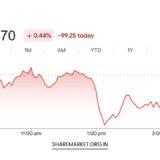
| Closing Price (BSE) | ₹366.90 | Down 5.43% in a single session |
| 5-Day Return | +13.49% | Significant short-term recovery |
| 1-Year Return | -10.14% | Year-on-year correction from previous highs |
| 52-Week High / Low | ₹501.80 / ₹301.20 | Trading in the mid-to-lower range of the year |
| Market Capitalization | ₹76,680 Crore | Remains a heavyweight in the PSU space |
| P/E Ratio | ~67.3 | Higher than industry median, reflecting growth expectations |
Supporting ‘Mission 3000 MT’: The Macro Picture
RVNL’s project wins are intrinsically linked to the central government’s ambitious ‘Mission 3000 MT’. This policy aims to double the freight loading capacity of Indian Railways to 3,000 million tonnes by 2027.
To achieve this, the Ministry of Railways is focusing on “S-T-E-M” (Speed, Throughput, Efficiency, and Modernization). RVNL’s role in creating maintenance workshops and upgrading traction power systems directly facilitates this mission by:
-
Reducing Maintenance Downtime: Localized POH workshops like the one in Kantabanji ensure wagons are returned to service faster, increasing the availability of rolling stock.
-
Enhancing Power Reliability: Upgraded traction systems allow for heavier freight trains and higher speeds, which is essential for competing with road transport.
-
Domestic Growth: As a domestic entity, RVNL’s projects align with the Atmanirbhar Bharat initiative, ensuring that the capital expenditure (CAPEX) for railway modernization stays within the Indian economy.
Technical Analysis and Investor Sentiment
Despite the steady flow of orders, RVNL’s stock has witnessed significant volatility. The 5.43% dip observed on Monday, December 29, reflects a broader “profit-booking” sentiment seen in PSU stocks as the year closes. However, the 13.49% recovery over the prior five sessions suggests that institutional buyers are entering at lower valuations.
The divergence between the company’s operational success (growing order book) and its one-year stock performance (-10.14%) indicates a “valuation reset.” After the meteoric rise of railway stocks in 2023 and 2024, the market is now prioritizing execution timelines and margin sustainability over mere order announcements.
The Road Ahead: Execution is the Key Metric
For RVNL, the challenge for 2026 will be the timely execution of its massive order backlog, which is currently estimated to exceed ₹75,000 crore. The company operates primarily on a Project Management Consultancy (PMC) model, which allows it to maintain lean operations while managing multi-billion dollar projects.
Why RVNL remains a ‘Stock in Focus’:
-
Order Book Visibility: With continuous wins from East Coast and Southern Railways, revenue visibility for the next 3–4 years remains exceptionally high.
-
Navratna Autonomy: Its Navratna status provides the board with greater financial independence to invest in joint ventures and international projects, potentially opening new revenue streams outside of Indian Railways.
-
Record Budgetary Support: The Union Budget continues to allocate record-breaking capital to the railways, ensuring that the “pipeline” of future tenders remains full.
Final Thoughts
While the short-term price action may be volatile, RVNL’s fundamental narrative is tied to the physical transformation of India’s infrastructure. The recent ₹201.23 crore workshop order and the ₹145 crore traction project are small but vital pieces of a much larger puzzle. Investors should monitor the company’s quarterly “Execution-to-Order” ratio to ensure that these contract wins are successfully translating into bottom-line profitability.