Sensex Down 609 Points, Nifty at 25,960; Nifty Prediction for Tomorrow

Markets Closed with a Sharp Decline: Analyzing the Factors and Forecasting December 9th
The Indian stock market witnessed a severe downturn on Monday, December 8th, ending the trading session with a significant loss. The broad-based selling, fueled by a combination of mixed global signals and mounting domestic concerns, led to substantial erosion of investor wealth.
The session served as a stark reminder of the market’s sensitivity to global monetary policy shifts and geopolitical uncertainties. Investors are now keenly looking at the potential trajectory for Tuesday, December 9th, as key technical levels come into sharp focus.
Monday’s Market Mayhem: A Deep Dive into the Sell-off
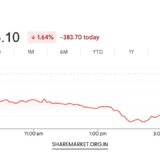
The selling pressure was palpable across the board, affecting indices of all sizes. The benchmark S&P BSE Sensex plummeted by 610 points, or 0.71%, to settle at 85,102.69. Simultaneously, the broader Nifty 50 index experienced an even steeper drop, falling by 226 points, or 0.86%, to close decisively below the critical psychological level of 26,000 at 25,960.55.
The pain was not confined to the large-cap space. The selling intensity was amplified in the broader markets, indicating a flight-to-safety mentality among investors. The BSE Midcap index corrected by 1.73%, while the BSE Smallcap index suffered an even sharper cut of 2.20%. This disproportionate decline in mid and small-cap stocks suggests that risk aversion has escalated, with traders booking profits aggressively in previously high-flying segments.
The cumulative impact of this market correction was staggering. Investors in BSE-listed companies saw their wealth shrink by over ₹7 lakh crore in a single session. The total market capitalization of all BSE-listed companies decreased to approximately ₹463.6 lakh crore, down from ₹471 lakh crore recorded in the preceding session.
Sectoral and Stock Performance Analysis
The market correction was comprehensive, with all sectoral indices closing in the red. The biggest casualties were cyclicals and interest rate-sensitive sectors. BSE Realty was the hardest hit, declining by nearly 3.5%. Other sectors that bore the brunt of the sell-off included Media, PSU Banks, and Telecom, each witnessing a drop of more than 2.5%. This sectoral weakness underlines the market’s reaction to global monetary tightening fears, which typically affect sectors dependent on credit and consumption.
The list of top losers on the Nifty 50 included InterGlobe Aviation, Bharat Electronics, JSW Steel, Eternal, and Shriram Finance, reflecting weakness in aviation, defense, metals, and non-banking financial companies (NBFCs). On the flip side, the list of limited gainers was dominated by defensive IT stocks and a major private bank: Tech Mahindra, Wipro, HDFC Life, HCL Technologies, and HDFC Bank. The outperformance of IT stocks, despite the overall gloom, can be attributed to the weakening currency, which boosts their export-driven revenues, and their perceived defensive nature in a volatile environment.
Expert Analysis: Understanding the Underlying Weakness
Vinod Nair, Head of Research at Geojit Investments Ltd., articulated the core reasons for the broad market decline. He emphasized that the Nifty’s breach of the crucial 26,000 level was a key psychological blow, driven primarily by investor caution ahead of the US Federal Reserve’s policy decision later this week.
He noted that even strong domestic tailwinds, such as robust economic growth data and the Reserve Bank of India’s (RBI) recent interest rate cut, have been overshadowed by global headwinds. The combination of sustained Foreign Institutional Investor (FII) selling, ongoing concerns about global monetary policy tightening, and a depreciating currency has severely dampened short-term sentiment. An additional layer of complexity has been the sharp rise in Japanese bond yields to multi-year highs, which has increased global volatility and sparked fears about the potential unwinding of the highly popular “yen carry trade,” a situation that often leads to capital repatriation and selling in emerging markets.
Market Prediction : How Could the Market Move on December 9th?
Technical analysts suggest that the market’s trajectory on Tuesday will be highly dependent on the defense of key support levels established during Monday’s sharp fall.
Technical Outlook for Nifty 50
Sudip Shah, Head of Technical and Derivatives Research at SBI Securities, provided a crucial technical map for the Nifty 50.
-
Key Support: The most immediate and critical support zone is pegged between 25,850 and 25,800, which coincides with a previous swing low. A successful defense of this area could stabilize the market.
-
Downside Potential: Should the Nifty fail to hold the 25,800 mark, it could trigger a deeper correction, with the index potentially sliding towards 25,650 and then even 25,500.
-
Key Resistance: On the recovery side, a formidable resistance area is identified between 26,150 and 26,200. Sustained buying volume would be required to breach this zone and signal a shift in momentum.
Rupak Dey, Senior Technical Analyst at LKP Securities, corroborated the bearish technical picture. He highlighted that the Nifty’s close below the 26,000 support level, coupled with its first close below the 21-day Exponential Moving Average (EMA) in several sessions, is a clear indication of a weakening trend. Further negative reinforcement comes from the Relative Strength Index (RSI), which has turned bearish, and the fact that the Nifty recorded its lowest closing in nine days. Simultaneously, an increase in the India VIX (Volatility Index) suggests rising market fear.
-
Bearish Target: Based on this weak setup, Dey suggests the index could slide further towards 25,730.
-
Resistance: Resistance for any potential bounce-back is seen in the 26,000–26,100 band, which has now turned into a supply zone.
Technical Outlook for Bank Nifty
For the Bank Nifty, which reflects the sentiment in financial stocks, Sudip Shah provided the following key levels:
-
Key Support: The previous swing low in the 59,000–58,900 zone is expected to act as a significant support base.
-
Downside Potential: A break below 58,900 would be a major bearish sign, likely forcing the index to breach its 20-day EMA and potentially move lower towards 58,700 and then 58,500.
-
Key Resistance: On the upside, the 59,400–59,500 area is marked as strong resistance.
Final Thoughts and Investor Takeaway
The sharp decline on December 8th was a confluence of global monetary policy anxiety and aggressive profit-booking. The market is now at a critical juncture, with technical support levels under intense scrutiny. The immediate outlook for December 9th appears cautious and negative, with the possibility of further downside if key supports are broken.
Investors should maintain a high degree of caution, focusing on the defense of the 25,800 level for Nifty 50. Any potential recovery must first contend with the strong resistance near 26,100. The overall sentiment will likely remain volatile until clarity emerges from the Federal Reserve’s policy decision later in the week.