Sensex Gain 185 Points, Nifty at 73,319; Tomorrow Nifty Prediction
Sensex and Nifty Close with Gains; Here’s What to Expect from the Market on April 6
The Indian equity markets navigated a turbulent landscape on April 2, 2026, managing to eke out marginal gains despite a backdrop of global uncertainty and local volatility. While the session was characterized by a tug-of-war between bulls and bears, the Nifty 50 successfully defended the psychologically significant 22,700 mark, providing a glimmer of hope for investors as they look toward the upcoming trading week starting April 6.
Market Performance Breakdown: April 2 Closing
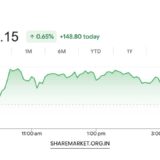
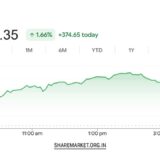
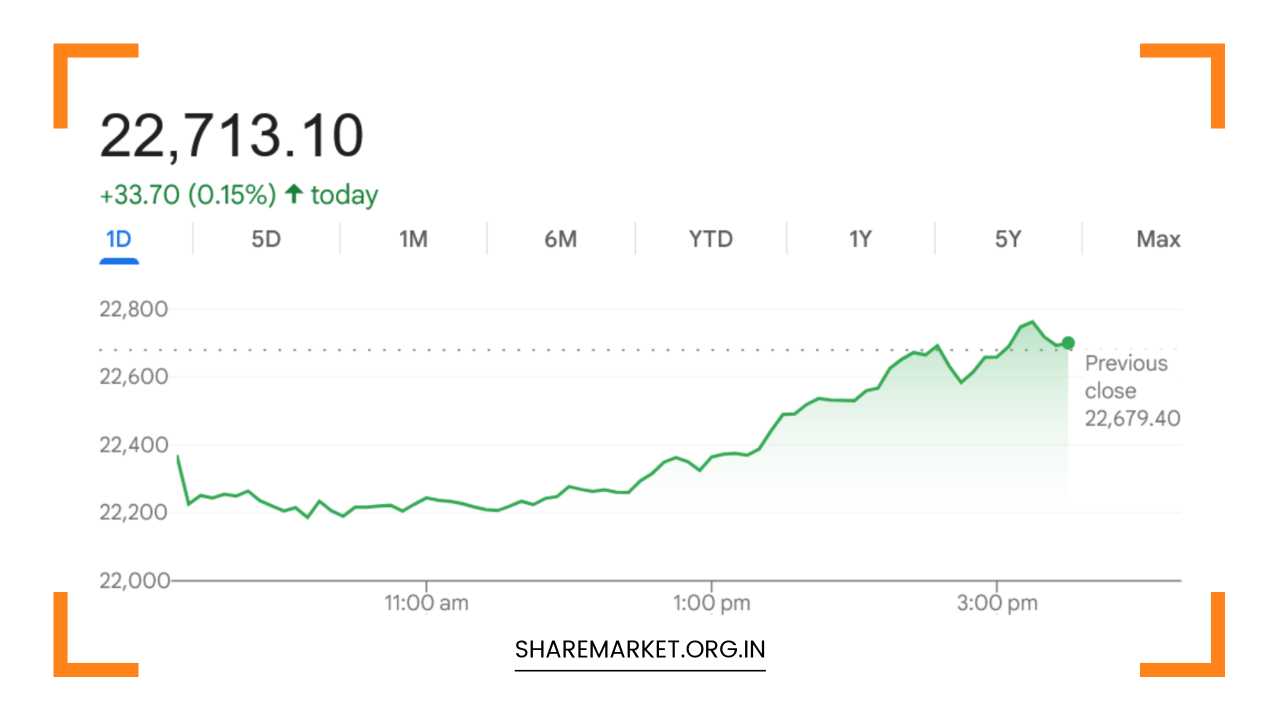
The benchmark BSE Sensex concluded the session at 73,319.55, marking an ascent of 185.23 points (0.25%). Simultaneously, the NSE Nifty 50 finished at 22,713.10, up 33.70 points (0.15%). The underlying market breadth remained largely positive, with approximately 2,548 shares recording gains against 1,505 declines, while 147 shares remained unchanged.
The day’s performance was significantly bolstered by a resurgence in the Information Technology (IT) sector. Investors pivoted toward large-cap tech stocks as a defensive play against broader market fluctuations.
-
Top Nifty Gainers: HCL Technologies, Tech Mahindra, TCS, Tata Consumer, and Wipro.
-
Top Nifty Losers: Eicher Motors, Asian Paints, Bajaj Auto, Sun Pharma, and UltraTech Cement.
While the benchmarks stayed green, the broader market indices—Midcap and Smallcap—diverged, falling by 0.3% and 0.4% respectively, suggesting that the recovery was concentrated in select heavyweights rather than a broad-based rally.
Sectoral Deep Dive: IT Leads, Auto Lags
The divergence in sectoral performance highlighted the current “risk-off” sentiment in certain pockets of the economy.
-
The IT Index surged 2.6%, leading the charge as value buying emerged following a period of underperformance.
-
Realty followed with a 1% gain, buoyed by strong pre-sales data from major developers.
-
Conversely, Auto, PSU Bank, Oil & Gas, Pharma, and Consumer Durables sectors each faced selling pressure, declining by roughly 1%.
The weakness in the Auto and Pharma sectors reflects investor concerns over rising input costs and a cautious outlook on discretionary spending amid persistent inflation.
Weekly Overview: A Sixth Consecutive Decline
Despite the positive close on Thursday, the broader picture for the week remains somber. The Indian market has now closed in the red for six consecutive weeks. While the recovery on April 2 helped recoup a fraction of these losses, the fundamental trend remains bearish.
For the week, both the Sensex and Nifty declined by 0.2%, but the Nifty Bank underperformed significantly, sliding by more than 1%. This weakness in the banking sector is a critical headwind, as financials carry the highest weightage in the Nifty 50 index.
The Road Ahead: What to Expect on April 6
As traders prepare for the market reopening on April 6, several factors will dictate the trajectory. Analysts warn that the volatility seen in recent sessions is likely to persist.
1. Geopolitical and Macroeconomic Triggers
The elephant in the room remains the heightened geopolitical tension in the Middle East, specifically the evolving situation between the US and Iran. Ajay Menon, MD and CEO of Wealth Management at Motilal Oswal Financial Services, notes that the market is currently “headline-driven.”
“Given the shortened trading week due to holidays and heightened sensitivity to global signals, near-term market sentiment is expected to remain volatile. The future trajectory will hinge on developments in the US-Iran conflict and subsequent fluctuations in global energy prices,” Menon observed.
2. Technical Support and Resistance Levels
From a technical standpoint, the Nifty is at a crossroads. According to Bajaj Broking, the 22,100–21,800 band serves as a “fortress” support zone. This area is reinforced by:
-
A long-term trendline connecting the lows of the past two years.
-
The 200-week Exponential Moving Average (EMA).
If the Nifty sustains above 22,300, we may see a period of consolidation between 22,300 and 22,900. However, for a true trend reversal, the index must consistently form “higher highs” and “higher lows” on the daily chart and close decisively above the previous week’s high of 23,465.
3. Chart Patterns: The ‘Bullish Counter-Attack’
Nagaraj Shetty, Senior Technical Research Analyst at HDFC Securities, highlighted the formation of a long green candle on the daily chart. While the overarching pattern of ‘lower tops and bottoms’ remains intact, Thursday’s low of 22,182 could be the new ‘lower bottom’ from which a recovery might spring.
“Buying has commenced around the 22,200 support level,” Shetty noted. “However, for this to be validated as a ‘bottom reversal pattern,’ the Nifty must sustain itself above the resistance level of 23,000.”
Strategies for Investors
Abhinav Tiwari, a Research Analyst at Bonanza, suggests that while external risks (crude oil, Rupee stability, and geopolitical events) are high, there is a silver lining. As we move further into April, corporate earnings reports will begin to influence individual stock movements.
Key takeaways for the upcoming week:
-
Watch the 22,400 Level: This acts as immediate support; a break below this could see the Nifty testing 22,100 quickly.
-
Focus on Domestic Growth: Provided external shocks are contained, selective buying in domestic-focused sectors like Infrastructure and Cement may offer opportunities.
-
IT as a Hedge: If global volatility increases, the IT sector may continue to act as a defensive buffer for the indices.
Final Thoughts
The market’s ability to hold the 22,700 level on April 2 is a psychological victory for the bulls, but the war is far from over. Investors should expect a “gap-up” or “gap-down” opening on April 6 based on how global markets react to weekend news. Until the Nifty clears the 23,000–23,400 hurdle, the prevailing strategy remains “cautious optimism” with a focus on high-quality stocks that show resilience during dips.