Sensex Plummets 1,300 Points: Rs 5.6 Lakh Cr Wiped Out as Oil Surges
Market Meltdown: Sensex and Nifty Crumble as Geopolitical Tensions Ignite Global Sell-Off
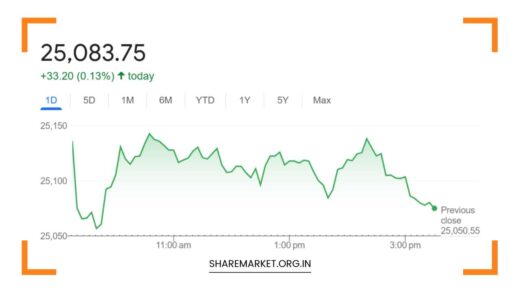
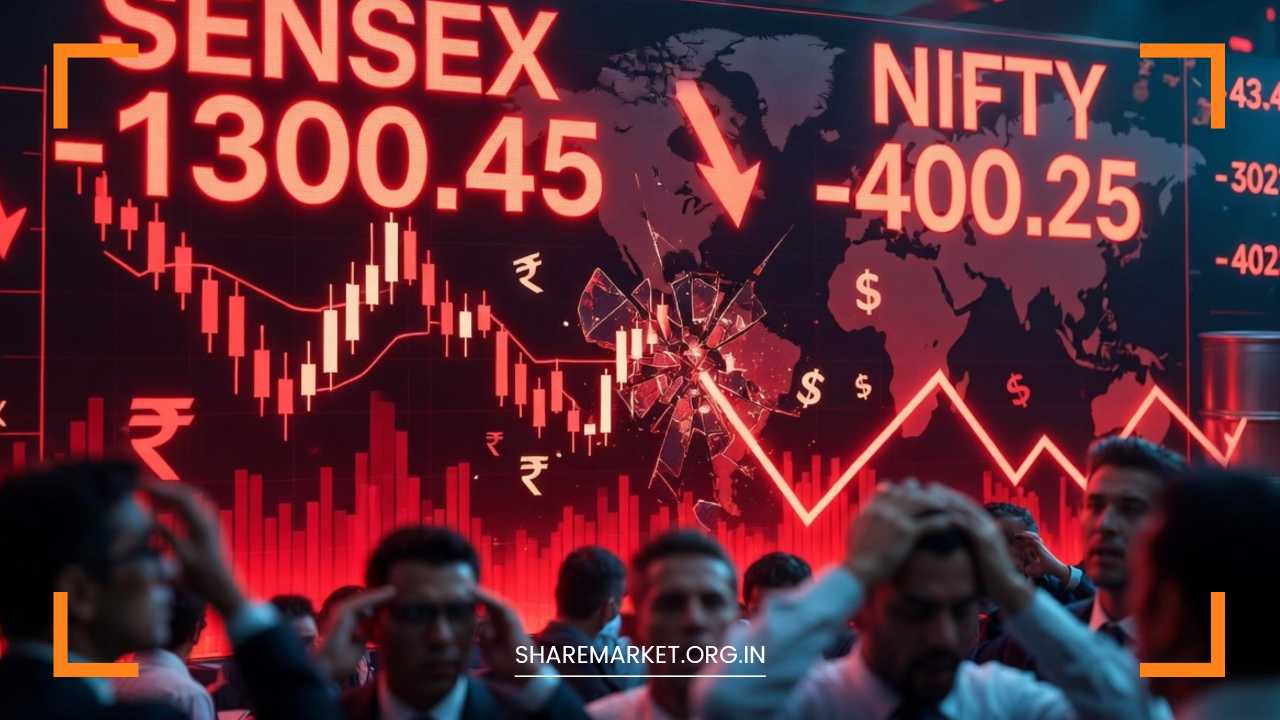
The Indian equity markets witnessed a “Black Monday” on May 11, 2026, as the benchmark indices suffered one of their most significant single-day retreats in recent months. A toxic cocktail of escalating Middle Eastern tensions, surging crude oil prices, and a volatile domestic currency triggered a mass exodus from riskier assets. By the closing bell, the BSE Sensex had surrendered over 1,300 points, leaving investors grappling with a staggering ₹5.67 lakh crore erosion in paper wealth.
The Catalyst: A Geopolitical Spark in the Oil Barrel
The primary trigger for the day’s bloodbath originated far from Dalal Street. Global sentiment soured instantly following reports that U.S. President Donald Trump had rejected a new peace proposal from Iran. The breakdown in diplomatic negotiations immediately reignited fears of a supply disruption in the Strait of Hormuz, causing Brent crude prices to spike sharply.
For an import-dependent economy like India, rising oil prices are a double-edged sword. They not only widen the current account deficit but also fuel inflationary pressures, potentially forcing the Reserve Bank of India (RBI) to maintain a hawkish stance on interest rates. This macro-economic anxiety was reflected in the Indian Rupee, which weakened against the Greenback, further dampening the spirit of Foreign Institutional Investors (FIIs).
The Final Scorecard: Benchmarks in the Deep Red
The carnage was broad-based, sparing very few segments of the market. The domestic benchmarks opened with a downward gap and failed to find any meaningful support levels throughout the session.
-
BSE Sensex: The 30-stock index plummeted 1,312.91 points (1.70%), eventually settling at 76,015.28. At its intraday nadir, the index had crashed by 1,370.79 points, threatening to break the psychological support level of 75,900.
-
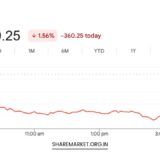
NSE Nifty 50: The broader 50-share index mirrored this weakness, sliding 360.30 points (1.49%) to finish at 23,815.85. During the heat of the sell-off, it slipped below the 23,800 mark, hitting an intraday low of 23,799.10.
The pain wasn’t restricted to the heavyweights. The Nifty Midcap 100 and Nifty Smallcap 100 indices both tumbled by more than 1%, indicating that retail investors and high-net-worth individuals were also offloading positions in anticipation of further volatility.
Sectoral Analysis: Real Estate and Banks Lead the Retreat
The sectoral heat map was bathed in red for the majority of the day. Interest-rate-sensitive sectors were the hardest hit, as the prospect of “higher-for-longer” inflation weighed on sentiment.
-
Realty & Construction: The Nifty Realty index was the day’s worst performer, crashing by over 3%. Investors feared that rising input costs (fuel and transport) combined with the potential for higher mortgage rates would stall the ongoing housing boom.
-
Banking & Finance: Public Sector Undertakings (PSUs) bore the brunt of the selling pressure. The Nifty PSU Bank index slid by 2.5%, led by heavyweights like SBI. Private banks weren’t far behind, as the overall financial ecosystem braced for tightening liquidity.
-
Auto & Metal: The Nifty Auto index fell by 1.5%, hampered by concerns over rising raw material costs. Similarly, the Nifty Metal index weakened by nearly 1%, reflecting a cooling global demand outlook amidst geopolitical uncertainty.
The “Defensive” Silver Lining
Amidst the wreckage, a few “safe haven” sectors managed to keep their heads above water. The Nifty FMCG and Nifty Pharma indices were the only major sectoral indices to close in the green. As investors fled growth stocks, they sought refuge in defensive names like Hindustan Unilever (HUL) and Sun Pharma, which are traditionally less sensitive to economic cycles.
Wealth Erosion: ₹5.67 Lakh Crore Wiped Out
The sheer scale of today’s decline is best captured by the evaporation of market capitalization. Just one trading session prior, on May 8, 2026, the total market value of all BSE-listed companies stood at a robust ₹4,73,10,919.39 crore.
By the end of today’s session, that figure had shriveled to ₹4,67,43,027.64 crore. In a span of just six trading hours, the “notional wealth” of Indian investors was reduced by ₹5,67,891.75 crore. This massive erosion highlights the fragility of current market valuations in the face of sudden global shocks.
Stock-Specific Action: Winners and Losers
The breadth of the market was overwhelmingly negative. Out of the 30 elite stocks that comprise the Sensex, only 6 managed to survive the onslaught in positive territory.
| Top Gainers (Sensex) | Top Losers (Sensex) |
| Sun Pharma | Titan Company |
| Hindustan Unilever (HUL) | IndiGo (InterGlobe Aviation) |
| Nestle India | State Bank of India (SBI) |
| Tata Consumer Products | Larsen & Toubro (L&T) |
Titan faced selling pressure due to concerns over discretionary spending, while IndiGo felt the immediate heat of rising Aviation Turbine Fuel (ATF) prices, which are directly linked to international crude benchmarks.
Market Breadth: Bearish Dominance
A deeper look at the BSE statistics reveals a grim picture of market participation. Trading occurred in 4,538 stocks, and the bears held a decisive upper hand:
-
Advancers: 1,457 stocks
-
Decliners: 2,892 stocks
-
Unchanged: 189 stocks
While 198 stocks did manage to touch their one-year highs (mostly in the niche pharma and specialized chemical spaces), 27 stocks plummeted to one-year lows. The volatility was so intense that 15 stocks were locked in their lower circuit limits, meaning there were only sellers and no buyers for those specific scripts.
Outlook: What Should Investors Expect?
Analysts suggest that the immediate future of the Indian markets remains tethered to the “3 C’s”: Crude, Currency, and Conflict.
-
Crude Oil: If Brent stays above $95–$100 per barrel, the pressure on Indian equities will persist.
-
The Dollar Index: A strengthening U.S. Dollar could lead to further FII outflows as they seek the safety of U.S. Treasuries.
-
Earnings Season: With the quarterly earnings season in full swing, individual stock performance will depend heavily on management commentary regarding margin pressures and future guidance.
For the average retail investor, today’s crash serves as a reminder of the inherent risks in equity markets. While the long-term structural story of India remains intact, the short-term path is likely to be riddled with “geopolitical potholes.” Financial advisors are currently recommending a “wait and watch” approach, urging investors not to catch a falling knife until the benchmarks show signs of consolidation around key support levels near 23,500 (Nifty) and 75,000 (Sensex).