Tata Capital IPO Listing: Stock Lists at 1.35% Premium on BSE

Tata Capital IPO Listing: Modest Debut with 1.35% Gain Despite Zero GMP; Shares List at ₹330
Tata Capital, the financial services arm of Tata Sons, made its stock market debut today, October 13, with a modest listing gain of 1.35%, despite a gray market premium (GMP) of zero leading up to the listing. The IPO, one of the most awaited offerings in recent months, saw its shares list at ₹329.30 on the BSE and ₹330.00 on the NSE, compared to the issue price of ₹326 per share.
While many IPO investors were anticipating a stronger debut, the actual listing reflected a cautious market sentiment. Tata Capital’s IPO had received a decent, though not overwhelming, subscription response, and the stock’s first-day performance mirrored that trend.
First-Day Performance: Volatile But Closed in Green
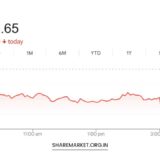
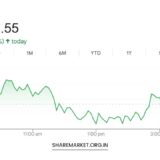
Soon after listing, Tata Capital’s stock experienced some turbulence. It briefly dipped to ₹326.15 on the BSE—nearly touching its issue price—before rebounding to an intraday high of ₹332.80. The stock eventually stabilized and closed the day at ₹330.40, translating to a 1.35% gain over the IPO price. While this may seem underwhelming compared to high-profile IPOs with double-digit listing gains, the positive close indicates investor confidence in the company’s long-term potential.
The zero GMP (Gray Market Premium) in the run-up to the listing likely signaled that the listing pop would be minimal. A zero GMP essentially indicates that there was no unofficial premium being paid for the IPO shares in the gray market, reflecting subdued excitement or cautious optimism among traders.
IPO Subscription Details: Subdued Retail Interest, Strong QIB Response
The ₹15,511.87 crore IPO, open from October 6 to 8, received an overall subscription of 1.96 times. Here’s a breakdown of how different investor categories responded:
- Qualified Institutional Buyers (QIBs): Subscribed 3.42 times (excluding anchor portion)
- Non-Institutional Investors (NIIs): Subscribed 1.98 times
- Retail Individual Investors (RIIs): Subscribed 1.10 times
- Employee Portion: Subscribed 2.92 times
The highest enthusiasm came from institutional investors, suggesting that long-term professional investors are bullish on Tata Capital’s prospects. However, the relatively tepid response from retail investors may have contributed to the conservative listing.
Use of IPO Proceeds: Strengthening Capital Base
The IPO involved a fresh issue of equity shares worth ₹6,846 crore, while the remaining was an Offer for Sale (OFS) involving 26.58 crore shares with a face value of ₹10 each. The OFS proceeds will go to existing shareholders, not the company.
The company plans to utilize the fresh issue proceeds primarily to augment its Tier-I capital base, which will support its future business growth and help maintain healthy capital adequacy ratios. This capital infusion is crucial for non-banking financial companies (NBFCs) like Tata Capital that operate in a highly leveraged environment.
Tata Capital: A Financial Powerhouse in the Making
Tata Capital is a prominent non-banking financial company (NBFC) operating under the Tata Group umbrella. It offers a wide range of financial services, including:
- Consumer loans
- Commercial finance
- Investment banking
- Wealth management
- Private equity
- Cleantech finance
Its distribution network spans 1,516 branches across 1,109 locations in 27 states and union territories, giving it a robust physical presence across India.
Financial Snapshot: Strong Growth Trajectory
Tata Capital has demonstrated consistent financial growth over the past few years, both in terms of revenue and profitability:
Net Profit Growth
- FY 2023: ₹2,945.77 crore
- FY 2024: ₹3,326.96 crore
- FY 2025: ₹3,655.02 crore
Total Income Growth
- FY 2025: ₹13,637.49 crore (CAGR of over 44% since FY 2023)
- Q1 FY 2026 (Apr–Jun 2025): ₹7,691.65 crore
- Net Profit for Q1 FY 2026: ₹1,040.93 crore
These figures reflect not just strong topline growth, but also improving margins and operational efficiency. The company has been able to scale its operations while maintaining profitability—a positive sign for long-term investors.
Rising Debt, But Improved Reserves
As with most NBFCs, Tata Capital has seen a rise in its debt levels, which is natural considering the nature of its lending business. However, its financial cushion in the form of reserves and surplus has also improved significantly.
Total Debt:
- FY 2023: ₹1,13,335.91 crore
- FY 2024: ₹1,48,185.29 crore
- FY 2025: ₹2,08,414.93 crore
- Q1 FY 2026: ₹2,11,851.60 crore
Reserves and Surplus:
- FY 2023: ₹11,899.32 crore
- FY 2024: ₹18,121.83 crore
- FY 2025: ₹24,299.36 crore
- Q1 FY 2026: ₹29,260.88 crore
The company’s rising reserves and surplus suggest improved internal accruals, which can help offset the increasing leverage. While the rising debt is something investors should monitor, Tata Capital’s balance sheet appears well-managed for now.
Outlook: Cautious Start, But Long-Term Play
Although the listing gain of 1.35% may seem underwhelming for IPO investors expecting a bigger pop, the steady financial growth, diversified business model, and strong backing of the Tata Group make Tata Capital a stock to watch in the long run.
The NBFC space in India is undergoing significant transformation, with demand for credit rising across sectors such as infrastructure, housing, and consumer finance. Tata Capital, with its broad product portfolio and deep market reach, is well-positioned to tap into this demand.
Final Thoughts
Tata Capital’s IPO debut might not have set the markets on fire, but its fundamentals remain solid. With steady financial performance, a growing presence across India, and a clear focus on capital adequacy and growth, the company could offer value to long-term investors.
While the immediate listing gain was modest at ₹4.40 per share, or 1.35%, the bigger picture lies in Tata Capital’s growth trajectory. Backed by the Tata legacy, this NBFC could very well become a major player in India’s evolving financial services landscape.