Sensex Down 2,496 Points, Nifty at 23,002; Tomorrow Nifty Prediction
Market Turmoil as West Asia Crisis Deepens: What to Expect on March 20
The Indian equity markets witnessed one of their darkest sessions in recent history on March 19, 2026, as escalating geopolitical tensions in West Asia triggered a massive global sell-off. With the Sensex and Nifty 50 hemorrhaging value, investors are now bracing for extreme volatility as the opening bell approaches on March 20. The conflict, which has transitioned from localized skirmishes to a direct strike on energy infrastructure, has fundamentally altered the risk landscape for emerging markets.
A “Black Thursday” Recap: The Numbers Behind the Carnage
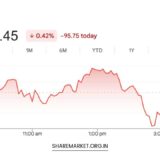
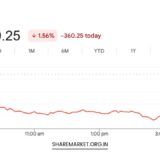
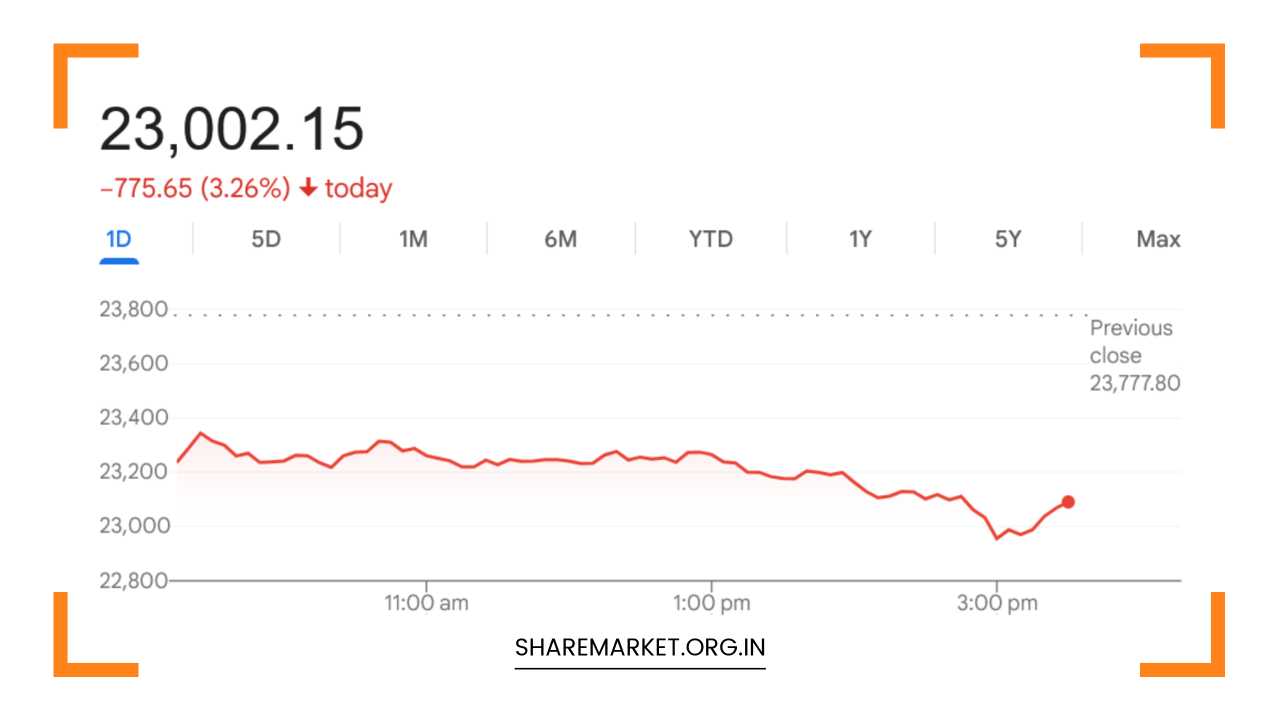
The scale of the decline was breathtaking, characterized by a lack of buying interest even at lower levels. The benchmark Nifty 50 plunged by 776 points to finish at 23,002, barely clinging to the psychological support of the 23,000 mark. Meanwhile, the BSE Sensex cratered by 2,497 points, settling at 74,207.
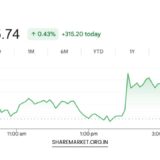
The pain was not restricted to the heavyweights. The Nifty Mid-cap 100 index slid by 1,798 points to end at 54,492, while the Bank Nifty—often considered the heartbeat of the Indian economy—dived by 1,875 points to close at 53,451.
The market breadth painted a dismal picture of the “sea of red”:
-
Declines: 3,072 stocks
-
Advances: 999 stocks
-
Volatility: The India VIX (Volatility Index) surged by over 21%, indicating that fear has firmly gripped the D-Street.
The Catalyst: Energy Infrastructure Under Fire
The primary driver of this panic was the confirmed report that Israel has targeted the world’s largest Liquefied Natural Gas (LNG) refinery in Iran. This strike represents a significant escalation, moving the conflict from the shadows into the heart of global energy supply chains.
V.K. Vijayakumar, Chief Investment Strategist at Geojit, emphasized the gravity of the situation:
“This development has exacerbated the uncertainty surrounding the conflict. If Brent crude remains above $110 for an extended period, it will have an adverse impact on India’s macro-economic fundamentals. This will inevitably weigh on India’s GDP growth and corporate earnings for FY27.”
As a net importer of crude oil, India is particularly vulnerable to “imported inflation.” A sustained rise in oil prices threatens to widen the current account deficit and could force the Reserve Bank of India (RBI) to maintain a hawkish stance on interest rates for longer than previously anticipated.
Sectoral Impact: No Safe Harbors
Every sectoral index on the BSE closed in the negative, but some sectors bore the brunt of the onslaught more than others.
-
Auto & Realty: These interest-rate-sensitive sectors were the worst hit. The Auto index plummeted by over 4%, fueled by fears of rising input costs (due to oil) and potential supply chain disruptions.
-
IT & Banking: Selling pressure in these heavyweights ensured that the indices had no floor. The Banking, IT, and Metal indices recorded declines ranging from 3% to 4%.
-
Metals: Global uncertainty usually favors gold, but industrial metals tumbled on fears of a global slowdown resulting from the energy shock.
Technical Outlook: The “Dead Cat Bounce” or Further Decline?
From a technical perspective, the market is currently in “no man’s land.” Anand James, Chief Market Strategist at Geojit Investments, noted that the recent 900-point rally was merely a relief move that exhausted itself near the 10-day Simple Moving Average (SMA).
“A breach below the 23,111 mark could trigger further weakness,” James warned. “For any recovery to be deemed sustainable, the Nifty must climb and hold above the 23,450 level.”
Adding to the bearish sentiment, Akshay Chinchalkar, Managing Partner at Wealth Co, highlighted a worrying trend in the Nifty 500. The index has fallen more than 10% from its September 2024 peak. Crucially, this marks the first time the 100-week moving average has been breached so significantly without an immediate “V-shaped” recovery—a pattern that held during previous corrections in 2022, 2023, and even early 2025.
Is This a New Bear Market?
The question on every investor’s mind is whether this is a correction or the start of a prolonged bear phase. Kranti Bathini, Director of Equity Strategy at Wealth Mills Securities, observed that while bull markets have become longer, bear phases have become shorter but significantly more intense.
“The markets are currently very close to a bear phase,” Bathini noted. “However, they are more likely to remain range-bound in the short term. As long as the Nifty remains below the 25,000 mark, the overall sentiment is likely to remain subdued.”
One metric analysts are watching closely is capitulation. Usually, a durable market bottom is formed when only 5% to 15% of stocks are trading above their 200-day moving averages. Currently, the market breadth has not yet reached these “extreme blood on the street” levels, suggesting there may still be more downside before a true floor is found.
What to Expect on March 20
As we look toward the final trading session of the week, three factors will dictate the direction:
-
Crude Oil Prices: If Brent crude continues its climb toward $120, expect a gap-down opening.
-
Global Cues: The reaction of the US and European markets to the LNG refinery strike will set the tone for the Asian open.
-
Institutional Flows: Watch for whether Foreign Institutional Investors (FIIs) continue their aggressive offloading or if Domestic Institutional Investors (DIIs) step in to provide a cushion.
The Bottom Line: Caution is the name of the game. Akshay Chinchalkar issued a stark warning: while the lows around 21,000 are currently holding as long-term support, a breach there could trigger a systemic rout. With geopolitical tensions unlikely to subside in the next 24 hours, March 20 is expected to be a day of high drama and defensive positioning.
Investors are advised to avoid “catching a falling knife” and should instead focus on high-quality stocks with strong balance sheets that can weather an inflationary storm.