Sensex Down 1,456 Points, Nifty at 23,379.; Tomorrow Nifty Prediction
Sensex and Nifty Close with Heavy Losses: A Deep Dive into the May 12 Meltdown and What to Expect on May 13
The Indian equity markets witnessed a “Black Tuesday” on May 12, 2026, as the benchmark indices, Sensex and Nifty, succumbed to an aggressive wave of selling pressure. What began as a cautious opening quickly devolved into a broad-based rout, wiping out trillions in investor wealth. By the closing bell, the Sensex had surrendered over 1,450 points, while the Nifty 50 breached critical support levels, leaving market participants questioning whether this is a temporary correction or the start of a more profound bearish cycle.
The Tuesday Carnage: Breaking Down the Numbers
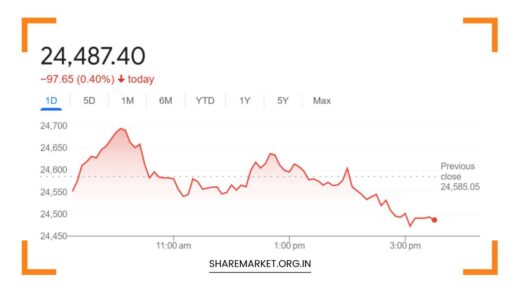
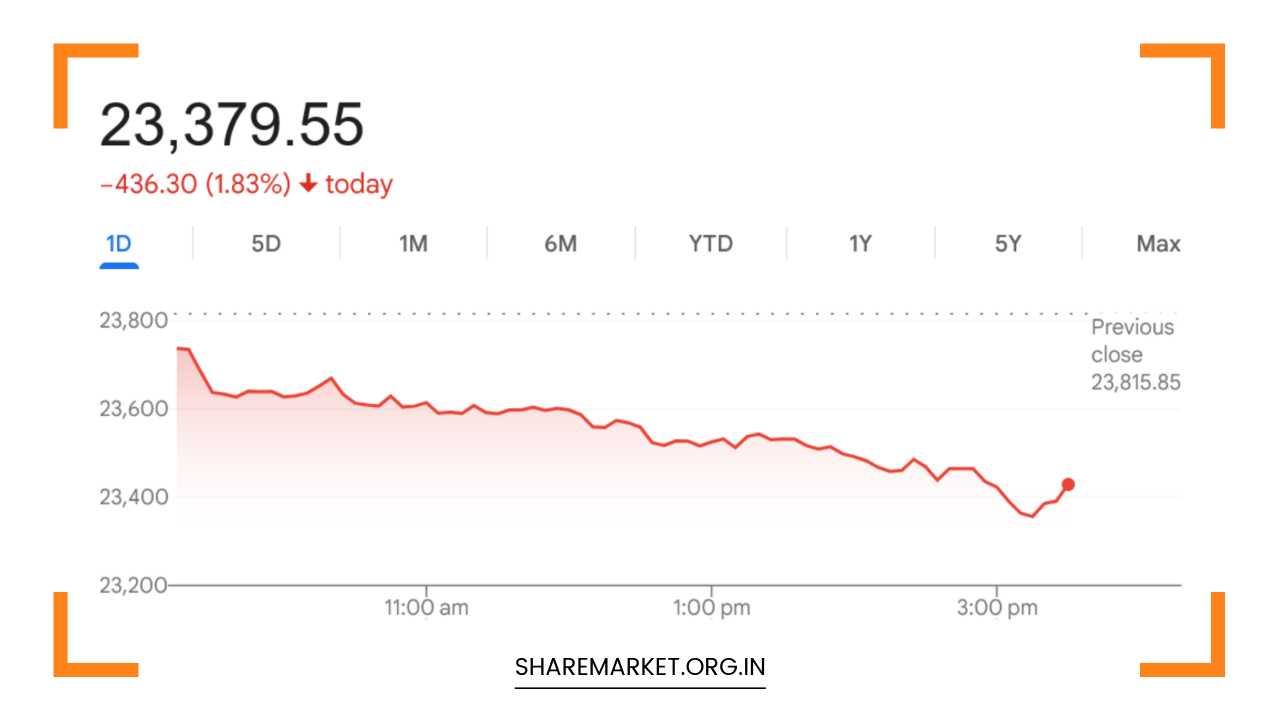
The sheer scale of the decline was staggering. The BSE Sensex plummeted 1,456.04 points, or 1.92%, to settle at 74,559.24. Simultaneously, the NSE Nifty 50 shed 436.30 points, or 1.83%, closing at 23,379.55.
The devastation was even more pronounced in the broader markets, which had been the darlings of retail investors over the past year.
-
Nifty Midcap 100: Dropped 1,554 points (2.54%) to close at 59,705.
-
Nifty Smallcap 100: Tumbled over 3.17%, reflecting a “risk-off” sentiment where speculative positions were liquidated rapidly.
-
Market Wealth: Investors saw over ₹10 lakh crore in paper wealth evaporate in a single session. The total market capitalization of BSE-listed firms, which stood at ₹467.3 lakh crore just a day prior, took a massive hit.
Market Breadth was overwhelmingly negative, a classic sign of a “sell-everything” mood. For every one stock that advanced, nearly four declined, with 3,219 stocks ending in the red against a meager 875 gainers.
Key Catalysts Behind the Sell-Off
Several factors converged to create this perfect storm. While global cues remained tepid, domestic triggers played a pivotal role:
1. The “Spending Cut” Shockwave
A significant catalyst for the day’s decline was the unexpected discourse regarding fiscal prudence. Prime Minister Narendra Modi’s recent appeal for “spending cuts” sent ripples through consumption-heavy sectors. Market veterans, including V.K. Vijayakumar of Geojit Investments, noted that this rhetoric directly impacted sectors like Jewelry, Travel, and Hospitality. The fear is that if the government or the public begins tightening belts, the high-flying valuations of discretionary consumption stocks will no longer be sustainable.
2. Sectoral Bleeding: IT and Realty Lead the Fall
The Nifty IT index was a major laggard, pressured by underwhelming guidance from global peers and fears of prolonged high-interest rates in the West. Tech Mahindra and other heavyweights saw significant trimming. Meanwhile, the Realty sector—usually sensitive to liquidity and interest rate outlooks—faced the brunt of the profit-booking, as investors feared the peak of the property cycle might be nearing.
3. The Volatility Spike (India VIX)
The India VIX, often referred to as the “fear gauge,” jumped by 3.77% to 19.25. Remaining above the 19 mark suggests that traders are bracing for wild swings in the coming sessions. When the VIX rises, it typically indicates that the cost of hedging via options has increased, signaling that professional traders are nervous.
4. Defensive and Financial Drags
Even the traditionally resilient Defense sector saw profit-booking after a stellar multi-month run. The Nifty Bank Index was not spared either, sliding 885 points to settle at 53,555. Heavyweights like Shriram Finance and Adani Ports featured prominently on the laggards’ list, indicating that institutional selling was widespread.
Technical Analysis: Nifty’s Path of Least Resistance
From a technical standpoint, the Nifty has entered a precarious zone. After weeks of consolidation, the index has decisively broken below its support levels.
-
Bearish Indicators: The Relative Strength Index (RSI) is currently in a bearish crossover. It is trending downward without showing signs of being “oversold” yet, suggesting that there is still room for further downside before a technical bounce occurs.
-
Crucial Support Levels: Rupak De of LKP Securities highlights that the Nifty could potentially slide toward the 23,200–23,150 range. If the selling intensifies, Sudeep Shah of SBI Securities warns that the index could even test the 23,050 mark.
-
Resistance Barriers: On the recovery front, the 23,550–23,600 zone now acts as a formidable ceiling. Unless the Nifty manages to close above 23,600 on a daily basis, the “sell-on-rise” strategy is likely to dominate the trading floors.
What to Expect on Wednesday, May 13
As we look toward the May 13 session, the market is expected to remain on edge. Here are the key themes to watch:
Global Sentiment and Crude Oil
Global markets will dictate the opening. If US futures or Asian markets show signs of stability, we might see a gap-up opening or a “dead cat bounce.” A critical factor will be Crude Oil prices. As V.K. Vijayakumar pointed out, a sharp drop in crude could offset the negative impact of domestic spending cuts, providing a lifeline to the aviation, paint, and logistics sectors.
Institutional Activity
All eyes will be on the FII (Foreign Institutional Investor) data. If FIIs were the primary sellers on Tuesday, the market might struggle to find a bottom quickly. Conversely, if DIIs (Domestic Institutional Investors) stepped in to buy the dip, it could provide a cushion around the 23,200 level.
The “Value” vs. “Growth” Debate
With high-growth sectors like IT and Realty taking a hit, money might rotate into “defensive” pockets like FMCG or Pharma, or perhaps high-dividend-yielding PSU stocks that have recently corrected.
Investor Strategy: Caution is the Keyword
For the retail investor, the current market environment requires a shift from aggression to preservation.
-
Avoid Catching a Falling Knife: While the 1,400-point drop in Sensex looks like a “discount,” the technical setup suggests the bottom may not be in yet. It is wiser to wait for signs of stabilization or a “base-building” process before deploying fresh capital.
-
Focus on Quality: Use this correction to scout for companies with strong balance sheets and consistent earnings. Stocks that fall the least during a market rout often lead the next rally.
-
Watch the VIX: If the India VIX starts to cool down toward the 16–17 range, it will be a signal that the panic is subsiding. Until then, keep positions light.
Final Thoughts
The May 12 crash serves as a reminder that markets do not move in a straight line. The combination of fiscal policy jitters, technical breakdowns, and rising volatility has shifted the short-term bias to bearish. While the long-term structural story of the Indian economy remains intact, the immediate outlook for May 13 and the rest of the week is one of “wait and watch.” Investors should keep a close eye on the 23,150 support level; a breach there could lead to a deeper correction, whereas a hold could set the stage for a healthy, albeit slow, recovery.