Sensex Down 1,124 Points. Nifty at 22,780; Tomorrow Nifty Prediction
Comprehensive Market Wrap and In-Depth Outlook: Navigating the Sharp Decline and Strategy for September 29
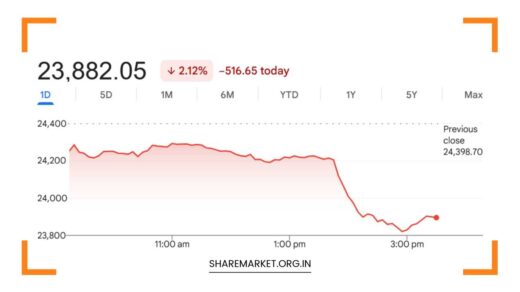
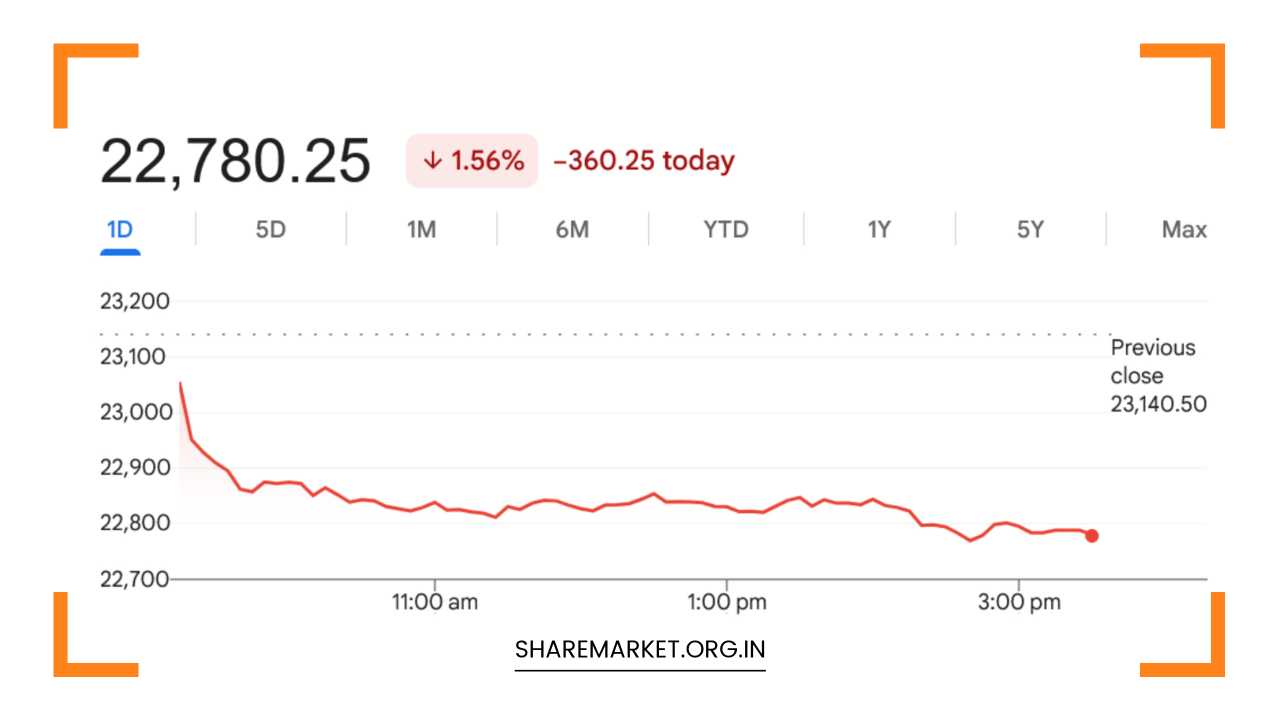
The Indian equity markets experienced a dramatic, broad-based sell-off during the trading session, characterized by aggressive institutional distribution and widespread panic selling. Benchmark indices tumbled significantly across the board, breaching crucial psychological and technical support levels. The Nifty 50 slipped below the critical 22,800 threshold, ultimately closing down 360.25 points (or 1.56%) to settle at 22,780.25. Simultaneously, the Sensex experienced a severe erosion of wealth, shedding 1,124.02 points (or 1.52%) to end the day at 72,771.72.
Market breadth was overwhelmingly skewed in favor of the bears, reflecting a deep-seated risk-off sentiment among both retail and institutional participants. Out of the total traded stocks:
-
Advances: 1,214 shares managed to close in positive territory, largely via counter-cyclical buying or company-specific news.
-
Declines: A staggering 2,905 shares faced heavy selling pressure, indicating widespread liquidation.
-
Unchanged: 166 shares remained static.
This stark disparity in market breadth underscores a pervasive lack of defensive safe havens during the session, driven by an unfortunate convergence of intensifying domestic pressures and deteriorating global macroeconomic headwinds.
Sectoral Performance & Movers and Shakers
In a rare manifestation of universal weakness, every single major sectoral index closed firmly in the red. There was no sector immune to the downward draft, signaling complete capitulation by momentum buyers.
-
Top Sectoral Laggards: The PSU Bank index led the structural downturn, plunging by over 3% (approx. 3.15%) as sentiment soured toward public sector lenders. The Telecom index closely followed with a sharp 2% drop.
-
Broad-Based Losses Across Sectors: Energy, Infrastructure, FMCG, Realty, Private Banks, Metals, and Oil & Gas indices each registered losses exceeding 1%, illustrating a generalized withdrawal of risk capital from the equity asset class.
-
Broader Market Contraction: The pain was not restricted to large-cap frontliners; it trickled down aggressively into the broader markets. The Nifty Midcap index fell by 1.7%, while the Smallcap index suffered a severe contraction of 1.8%, reflecting heightened retail distress.
-
Stock-Specific Action: Nifty top losers included high-beta and sentiment-sensitive counters such as Jio Financial, Tata Motors Passenger Vehicles, Tata Consumer Products, Adani Enterprises, and Adani Ports. Conversely, select defensive or export-oriented heavyweights like Dr. Reddy’s Laboratories and Infosys bucked the broader trend, closing in positive territory due to safe-haven buying and currency tailwinds.
Macroeconomic Catalysts & Global Drivers
According to leading market analysts and institutional research desks, this severe market correction is the cumulative result of multiple compounding geopolitical, monetary, and commodity-driven pressures:
-
Geopolitical Tensions & Crude Oil Surge: Geopolitical friction in West Asia escalated sharply after diplomatic proposals regarding critical regional transit chokepoints—such as the Strait of Hormuz—were formally rejected. This diplomatic impasse triggered an immediate upward spike in Brent crude oil prices. For an energy-importing nation like India, rising oil prices threaten widening fiscal deficits, higher domestic inflation, and compressed corporate profit margins.
-
Global Monetary Policy and Shifting Bond Yields: Rising US Treasury yields are aggressively narrowing the yield spread between emerging markets like India and developed safe havens. This dynamic elevates the persistent risk of Foreign Institutional Investor (FII) capital outflows. Furthermore, global market participants are increasingly pricing in an aggressive interest rate trajectory by the US Federal Reserve during its upcoming October meeting, dampening global risk appetite.
-
Domestic Banking Pressures & Pre-RBI Caution: Domestically, heavyweights within the banking sector are grappling with mounting bond yields, a softening rupee, and growing apprehensions regarding shrinking Net Interest Margins (NIMs). Combined with expectations of a defensive interest rate hike by the Reserve Bank of India (RBI), the Bank Nifty index slumped 1.99%.
-
Precious Metals Liquidation: Reflecting a broader flight from risk assets into high-yielding cash equivalents, precious metals faced severe liquidations. Gold and silver prices dropped by approximately 3.36% and 5.29% respectively, signaling widespread margin calls and liquidity management across asset classes.
Expert Technical Outlook for September 29
Prominent market strategists have mapped out critical technical parameters, support structures, and trading ranges for the upcoming session on September 29:
1. Shrikant Chouhan (Head of Equity Research, Kotak Securities)
-
Technical Structure: Chouhan highlights the formation of a decisive ‘bearish candle’ on the daily chart, supplemented by a classic ‘lower-top formation’ on intraday timeframes. This structure confirms that the path of least resistance remains skewed to the downside.
-
Trading Strategy & Levels: While the near-term trend is undeniably weak, extreme technical readings suggest that ‘oversold’ conditions could trigger a sharp ‘pullback rally’ from current levels. For day traders, 22,800 serves as the ultimate line in the sand. Sustaining below this level keeps the bias negative, with visible support pegged at the 22,650–22,550 zone. Conversely, if bulls manage to push the index back above 22,800, a recovery rally toward the 23,000–23,050 resistance range is possible.
2. Ponmudi R (CEO, Enrich Money)
-
Momentum & Indicator Analysis: Ponmudi notes that the market opened with a gap-down and witnessed relentless selling pressure that dragged the index well below crucial psychological levels. Momentum indicators have deteriorated significantly; the Relative Strength Index (RSI) is hovering near the 30 mark, indicating deeply oversold momentum and fragile technical health. The broader technical structure confirms the index is trading firmly below key moving averages.
-
Support & Resistance Bands: Immediate overhead resistance is stacked in the 23,100–23,200 band. Sustaining above 23,200 is mandatory to instigate any meaningful recovery toward 23,300–23,400. On the downside, failure to protect the 22,800–22,700 bracket will likely accelerate structural selling, driving the market toward deeper swing supports.
Comprehensive Strategic Action Plan for Market Participants
Given the delicate intersection of fragile technical configurations and high-impact macroeconomic variables, market participants must exercise extreme caution and maintain robust risk management protocols for the trading session on September 29:
-
Strictly Monitor Opening Pivot Levels: Keep a close watch on how the Nifty reacts around the 22,800 handle during the opening bell. Avoid initiating aggressive long positions unless the market demonstrates sustained price action and volume accumulation above this threshold.
-
Enforce Disciplined Risk Management: Intraday volatility is projected to remain elevated due to continuous global headline risks. Utilize strict trailing stop-losses on all open swing positions to protect capital against sudden gap openings.
-
Prioritize Fundamental Quality and Defensive Sectors: Shift capital focus toward fundamentally robust companies featuring low balance-sheet leverage, stable domestic cash flows, and pricing power. It is prudent to steer clear of high-beta sectors undergoing heavy institutional distribution—such as PSU banks and oil-linked industries—until market breadth demonstrates undeniable signs of stabilization and accumulation.
Disclaimer: This analysis is provided strictly for educational and informational purposes and does not constitute formal financial, investment, or trading advice. Always evaluate your personal risk tolerance, capital constraints, and financial objectives, and consult with a qualified financial advisor before executing trades.