Sensex Down 1,635 Points, Nifty at 22,331; Tomorrow Nifty Prediction
Market Ends FY on a Weak Note: Sharp Sell-Off Signals Caution Ahead of April 1
Indian equity markets closed the final trading session of the financial year on a deeply negative note, reflecting heightened global uncertainty and sustained selling pressure. On March 30, benchmark indices witnessed a broad-based decline, with almost all sectors ending in the red. The downturn highlights growing investor caution amid rising geopolitical tensions, elevated crude oil prices, and continued foreign institutional investor (FII) outflows.
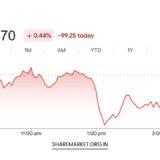
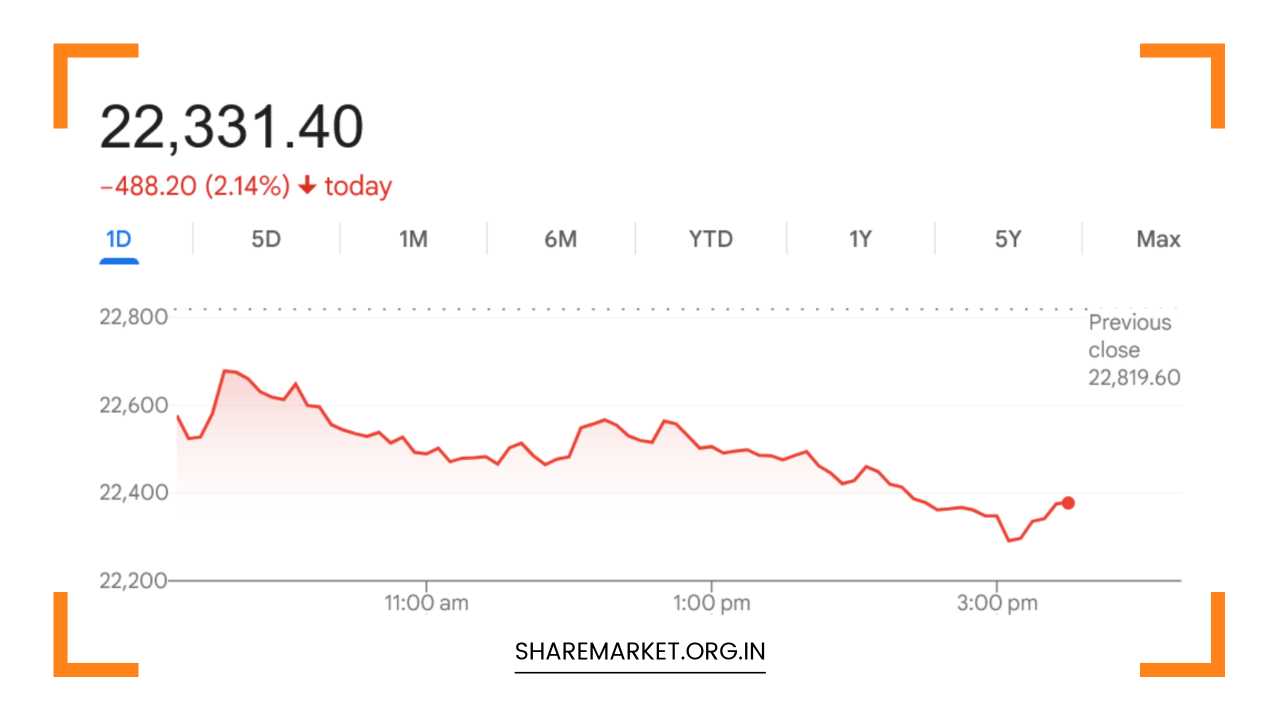
The Sensex plunged by 1,635.67 points, or 2.22%, to settle at 71,947.55. Similarly, the Nifty 50 dropped 488.20 points, or 2.14%, closing at 22,331.40. Market breadth remained extremely weak, underlining the intensity of the sell-off—only about 837 stocks advanced, while a staggering 3,419 declined, and 138 remained unchanged.
Broad-Based Selling Across Sectors
The decline was not limited to a handful of stocks or sectors; rather, it was a widespread correction across the board. Key sectors such as Auto, FMCG, Consumer Durables, Capital Goods, Telecom, Realty, and Banking (both private and PSU) recorded losses ranging between 2% and 4%. Banking stocks, in particular, faced heavy selling pressure and emerged as one of the worst-performing segments of the day.
Mid-cap and small-cap stocks, which had shown resilience in previous sessions, also succumbed to the broader market weakness. Both the Nifty Midcap and Smallcap indices declined by approximately 2.6%, indicating that risk-off sentiment dominated investor behavior across market capitalizations.
Among Nifty constituents, the top losers included Bajaj Finance, Axis Bank, Shriram Finance, State Bank of India, and InterGlobe Aviation. On the other hand, a handful of stocks managed to buck the trend. Hindalco Industries, Coal India, ONGC, and Power Grid Corporation of India were among the few gainers, supported largely by strength in commodity-linked themes.
Key Drivers Behind the Decline
Several factors contributed to the sharp fall in the markets:
1. Global Geopolitical Tensions
Ongoing conflict in the Middle East continues to escalate, creating uncertainty in global markets. The situation has intensified further with the involvement of additional factions, raising concerns about prolonged instability. This has had a direct impact on crude oil prices, which have surged significantly.
2. Rising Crude Oil Prices
Brent crude prices have climbed to around $116 per barrel, a level that raises serious concerns for an oil-import-dependent economy like India. Higher crude prices increase input costs across industries, fuel inflation, and put pressure on corporate margins.
3. FII Selling Pressure
Foreign institutional investors have continued to pull money out of Indian equities, adding to the downward pressure. Persistent outflows reflect global risk aversion and a shift toward safer assets amid uncertainty.
4. RBI Measures Impacting Banking Stocks
Recent regulatory measures by the Reserve Bank of India, particularly restrictions on banks’ foreign exchange positions aimed at stabilizing the rupee, have negatively impacted banking stocks. These restrictions triggered sharp declines in both private and public sector bank shares, amplifying the broader market fall.
Changing Macro Outlook
The macroeconomic outlook, which previously appeared favorable, is now facing potential headwinds. Earlier expectations of strong GDP growth, controlled inflation, and robust earnings growth are being reassessed in light of global developments.
Economists now warn that sustained high oil prices could lead to:
- Higher inflation
- Widening fiscal and current account deficits
- Slower GDP growth
- Pressure on corporate earnings
There are estimates suggesting that if current disruptions—particularly in critical trade routes like the Strait of Hormuz—persist, India’s GDP growth could decline by up to 50 basis points in FY2027. Corporate earnings may also see a reduction of 2–2.5%, with some sectors facing even sharper hits.
Industries most vulnerable to rising oil prices include:
- Oil marketing companies
- Airlines
- Cement manufacturers
- Paint, tiles, and adhesives companies
These sectors could witness earnings downgrades exceeding 10% if cost pressures persist.
Valuations and Market Positioning
Despite the sharp correction, market valuations are not yet considered cheap. The Nifty’s trailing price-to-earnings (PE) ratio has eased to around 19.9x, reflecting some moderation. However, analysts caution that further downside cannot be ruled out, especially if earnings estimates are revised downward.
That said, selective opportunities are emerging. The financial sector, in particular, is beginning to look attractive from a valuation standpoint, even though it remains under near-term pressure.
What to Expect on April 1 and Beyond
Looking ahead, market sentiment is expected to remain cautious in the near term. Several key factors will influence the direction of the market:
1. Q4 Earnings Season
The upcoming earnings season will be crucial. Strong results could provide support to the market and trigger selective buying, particularly in fundamentally strong companies.
2. Oil Price Movement
Crude oil will remain a key variable. Any further spike could deepen concerns, while stabilization may offer some राहत to markets.
3. Currency and RBI Policy Impact
Investors will closely monitor the impact of RBI’s recent measures on the rupee and banking system liquidity. Stability in the currency market could help restore confidence.
4. Global Developments
Geopolitical updates and global economic signals will continue to drive investor sentiment. Any escalation in conflicts could keep markets volatile.
Investment Strategy: Stay Selective and Disciplined
Given the current environment of uncertainty and volatility, experts advise investors to adopt a cautious and disciplined approach:
- Avoid chasing short-term rallies
- Focus on accumulating fundamentally strong stocks during dips
- Maintain a long-term perspective
- Be selective rather than broad-based in investments
Technical analysts suggest that a meaningful recovery in the market would require the Nifty to decisively breach and sustain above the 24,000 level. Until then, the trend is likely to remain fragile.
Final Thoughts
The sharp decline on March 30 underscores the fragile nature of the current market environment. While valuations have corrected to some extent, risks from global tensions, rising oil prices, and macroeconomic uncertainties continue to loom large.
As the market steps into the new financial year, caution is likely to dominate sentiment. However, periods of volatility also create opportunities for disciplined investors. The key lies in balancing risk with selective stock picking and staying aligned with long-term fundamentals rather than short-term market noise.