Stock Market Crash Today: Sensex Falls 1,700 Points, Rs 9 Lakh Crore Wiped Out
Market Meltdown: A Black Friday for D-Street as ₹9 Lakh Crore Vanishes
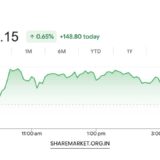
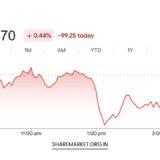
The Indian equity markets faced a brutal “Black Friday” on March 27, 2026, as a wave of panic selling swept through Dalal Street. What began as a cautious opening quickly spiraled into a full-blown rout, leaving investors poorer by nearly ₹9 lakh crore in a single trading session. The benchmark BSE Sensex crashed by a staggering 1,690.23 points, or 2.25%, to close at 73,583.22. Its counterpart, the NSE Nifty 50, didn’t fare any better, tumbling 486.85 points, or 2.09%, to settle at 22,819.60.
This dramatic erosion of wealth has sent shockwaves through the financial community, marking one of the most volatile sessions in recent memory.
The Anatomy of the Crash: Why Now?
The precipitous drop wasn’t triggered by a single event, but rather a “perfect storm” of geopolitical and macroeconomic headwinds.
1. Geopolitical Firestorm: US-Iran Tensions
The primary catalyst for the day’s mayhem was the deteriorating situation in the Middle East. Escalating tensions between the US and Iran have raised fears of a regional conflict that could disrupt global oil supplies. For an import-dependent economy like India, any threat to energy security translates immediately into market anxiety.
2. The Rupee’s Freefall
The Indian Rupee (INR) faced severe pressure against the US Dollar, slipping toward record lows. A weakening Rupee makes imports more expensive and triggers capital outflows as foreign institutional investors (FIIs) pull money out of emerging markets to seek the safety of the Dollar.
3. Global Cues and Yield Spikes
Weakness in Asian and European peers provided a dismal backdrop. Furthermore, rising US Treasury yields have made equities less attractive globally, prompting a massive rotation out of “risk-on” assets like Indian stocks.
Widespread Carnage: Midcaps and Smallcaps Bleed
While the headlines focused on the Sensex and Nifty, the real pain was felt in the broader markets. Historically, mid-cap and small-cap stocks are more sensitive to liquidity crunches and sentiment shifts.
-
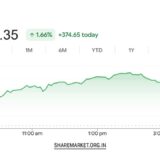
Nifty Midcap Index: Fell by 2.2%, as investors rushed to liquidate positions in growth-oriented companies.
-
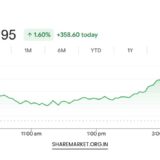
Nifty Smallcap Index: Dropped by 1.7%. While seemingly less than the Sensex, the impact on individual portfolios was severe, with many retail-favorite stocks hitting their lower circuits.
The breadth of the decline was particularly concerning. Out of 4,501 stocks traded on the BSE, a whopping 3,542 ended in the red, while only 822 managed to post gains. In a stark illustration of the bearish sentiment, 906 stocks hit their 52-week lows, vastly outnumbering the 67 that touched new highs.
Sectoral Heatmap: Nowhere to Hide
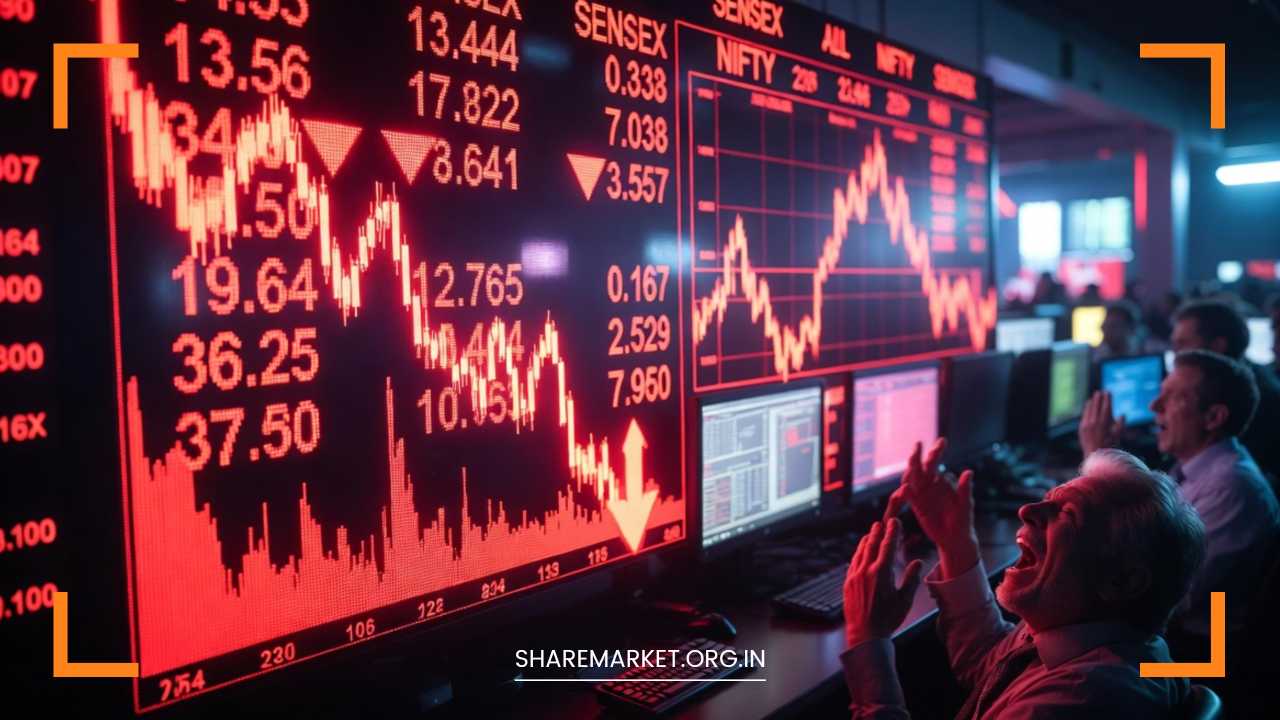
The selling pressure was indiscriminate, leaving no sector unscathed. The “sea of red” across the terminal screens reflected a total lack of buying conviction.
| Sector | Impact | Key Reasons |
| PSU Banks | -3.5% | Concerns over rising bond yields affecting treasury gains and credit growth. |
| Realty | -3.2% | Fears that sticky inflation will delay interest rate cuts by the RBI. |
| Auto | -2.1% | Rising input costs and potential supply chain disruptions due to global tensions. |
| Reliance (RIL) | -4.55% | Heavyweight selling in the energy conglomerate weighed heavily on the Sensex. |
Wealth Erosion: The Big Numbers
The scale of the financial hit is difficult to overstate. The total market capitalization of all BSE-listed companies plummeted from ₹431.01 lakh crore on Thursday to ₹422.12 lakh crore by the closing bell on Friday.
Loss Magnitude: In just over six hours of trading, approximately ₹8.89 lakh crore of investor wealth was incinerated.
To put this in perspective, this single-day loss is larger than the entire annual budget of several Indian states combined. For the week, the markets closed down 1.2%, erasing all gains made earlier in the month and suggesting that a “bottom” has yet to be established.
Winners and Losers: The Standout Performers
Even in a market crash, there are outliers. However, today the “winners’ circle” was incredibly small.
The Draggers
-
Reliance Industries (RIL): The biggest contributor to the Sensex’s fall, crashing 4.55%. As India’s most valuable company, its decline acted as a lead weight on the indices.
-
Financials: Bajaj Finance and SBI faced heavy offloading as investors feared a slowdown in consumption and rising NPAs if the geopolitical situation worsened.
-
Indigo: The aviation major faced turbulence as rising crude oil prices (fueled by the Iran crisis) threatened to spike Aviation Turbine Fuel (ATF) costs.
The Defensives
Only 3 out of 30 Sensex stocks stayed in the green:
-
TCS (+0.49%): IT majors often act as a “safe haven” during domestic crises due to their Dollar-linked earnings.
-
Power Grid (+1.10%): A defensive utility play that investors flock to when growth stocks become too risky.
-
Bharti Airtel (+0.37%): Benefited from its status as a non-cyclical, essential service provider.
Analyst Outlook: What Lies Ahead?
Market veterans are urging caution. The breach of key support levels—specifically the 23,000 mark for Nifty—indicates that the technical setup has turned bearish in the short term.
“The volatility index (India VIX) has surged, indicating that we are not out of the woods yet,” says a leading market strategist. “Until we see a cooling of rhetoric in the Middle East and a stabilization of the Rupee, every minor rally might be used by institutional players to sell on strength.”
For retail investors, the current scenario is a grueling test of patience. While the long-term India growth story remains intact, the immediate path is cluttered with macro-uncertainties. Financial advisors are recommending a “wait-and-watch” approach rather than “catching a falling knife.”
Final Thoughts
The events of March 27, 2026, serve as a stark reminder of the stock market’s inherent risks. With ₹9 lakh crore gone and the Sensex reeling from a 1,700-point blow, the focus now shifts to Monday’s opening. Will the weekend bring diplomatic cooling in the Middle East, or are we on the verge of a deeper correction?
For now, D-Street remains in a state of high alert, and “caution” is the watchword for the week to come.