Sensex Down 547 Points, Nifty at 22,363; Tomorrow Nifty Prediction
 Comprehensive Market Outlook & Post-Mortem: Navigating Indian Equities Heading Into October 13
The Indian equity markets experienced a sharp downturn on October 12, entirely erasing the recovery momentum gained late last week. Benchmark indices closed significantly lower as persistent macroeconomic headwinds, aggressive institutional selling, and rising domestic regulatory pressures weighed heavily on investor sentiment.
At the closing bell:
-
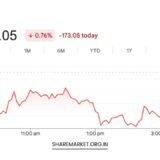
Sensex: Dropped 547.65 points (or 0.76%) to settle at 71,924.68, having plunged over 1,200 points from its intraday peak.
-
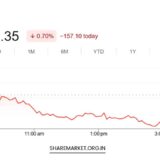
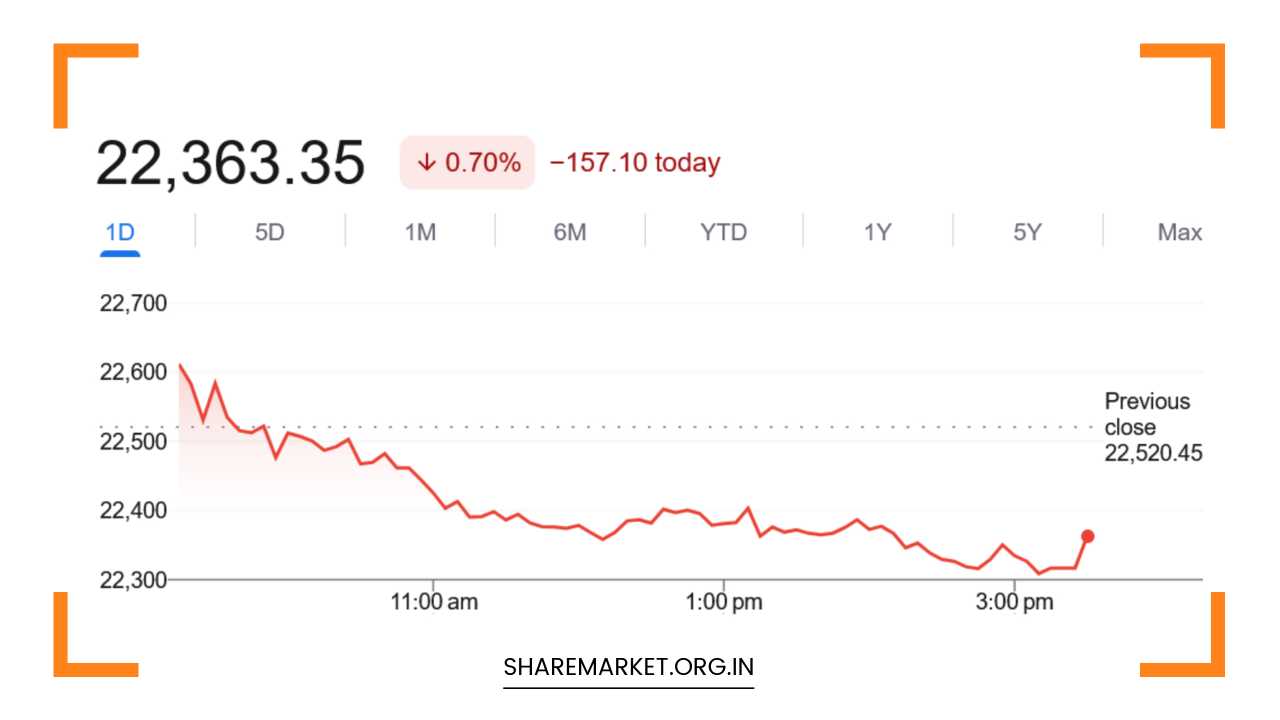
Nifty 50: Declined 157.10 points (or 0.70%) to close below the psychological threshold at 22,363.35.
-
Market Breadth: Despite the headline index crash, market breadth remained relatively balanced with 2,187 stocks advancing, 2,066 declining, and 235 remaining unchanged. This divergence highlights that while large-cap heavyweights faced severe selling pressure, select pockets of the broader market continued to attract retail and institutional capital.
Sectoral Performance & Divergence
Sectoral indices painted a fragmented picture of market health, dividing traditional defensive and cyclical plays against high-beta and interest-sensitive segments.
-
Outperformers: The Nifty Media index led the rally with a strong 4.6% gain, followed by the Smallcap index up 1.4%, Realty up 1%, and Auto up 0.9%. Mid-cap and small-cap segments showed surprising resilience, heavily driven by strong expectations for robust Q2FY27 corporate earnings reports.
-
Underperformers: Banking and financial services bore the brunt of the session’s losses. The Nifty Private Bank, PSU Bank, IT, Metal, and FMCG indices slumped between 0.4% and 1%. Heavyweights including Tech Mahindra, ITC, L&T, Hindalco, and HUL featured prominently among the top Nifty losers. Conversely, Dr. Reddy’s Laboratories, Bajaj Auto, Bharat Electronics, BSE Limited, and Tata Motors Passenger Vehicles managed to buck the trend.
Key Macroeconomic & Geopolitical Catalysts
Market analysts and institutional research heads have pointed to several overlapping pressures driving Monday’s heavy volatility:
-
Surging Bond Yields: The 10-year Indian government bond yield touched a three-year high. Elevated bond yields increase the cost of capital for corporations and make fixed-income instruments more attractive relative to equities, triggering equity outflows.
-
Continued FII Capital Outflows: Foreign Institutional Investors (FIIs) have maintained a steady pace of selling amid broader global uncertainties and shifting risk appetites across emerging markets.
-
Banking Liquidity Measures & CRR Adjustments: Banking stocks plummeted following the Reserve Bank of India’s (RBI) move to increase the daily Cash Reserve Ratio (CRR) requirement to absorb excess banking system liquidity. Furthermore, investors remain laser-focused on upcoming domestic Consumer Price Index (CPI) inflation prints to evaluate the likelihood of further monetary tightening.
-
Geopolitical Strains & Crude Oil Risks: Escalating tensions in the Middle East—specifically continued Houthi attacks targeting regional energy infrastructure—have reignited supply disruption anxieties. While crude oil prices have softened slightly, the underlying threat to energy security remains a persistent risk factor for India’s import-dependent economy.
-
Currency Dynamics: On a brighter note, the Indian Rupee demonstrated relative stability and mild recovery after the RBI intervened by opening a special forex window to address oil marketing companies’ dollar demands and tightened hedging guidelines to buffer against external volatility.
Expert Commentary & Institutional Insights
-
Vinod Nair (Geojit Investments): Highlighted that the domestic market’s inability to hold onto early morning gains reflects deep-seated fragility driven by macro worries, foreign capital flight, and multi-year high bond yields.
-
Vikram Kasat (PL Capital): Noted that heavy profit-booking accelerated intraday volatility. He advised investors to adopt a disciplined approach—focusing heavily on fundamentally sound enterprises and deploying capital via staggered installments (SIP-style or tranche-based investing) until directional clarity emerges.
-
Nagaraj Shetti (HDFC Securities): Highlighted a concerning technical development: the formation of a long bearish candle on the daily chart that entirely engulfing Friday’s bullish candle. This signals that the recent support-based rebound lacks underlying conviction.
Technical Outlook and Game Plan for October 13
From a chart analysis perspective, the path of least resistance for the benchmark indices leans to the downside.
-
Nifty Support & Resistance Zones:
-
Immediate support is placed at 22,180 to 22,200. A decisive daily close below 22,200 could invite a sharp downward extension toward the 21,700 mark.
-
On the upside, overhead resistance is heavily concentrated near 22,600, with broader weekly resistance capping out between 23,000 and 23,200.
-
-
Bank Nifty Outlook:
-
Expected to mimic the broader market’s choppy trajectory. Immediate support stands in the 53,800–54,300 range, while strong resistance is marked between 56,700 and 57,200.
-
Educational Framework: Strategic Risk Management for Volatile Markets
Disclaimer: The following structured framework is provided for educational purposes to assist in portfolio risk management. It does not constitute formal financial advice or specific asset recommendations.
When navigating high-volatility market phases driven by macro headwinds, geopolitical friction, and monetary policy shifts, retail and institutional participants alike must enforce strict capital preservation protocols.
Recommended Action Plan for Market Participants
-
Review and Rebalance Asset Allocation
-
Action: Audit your current equity-to-debt portfolio ratio. If equity exposure exceeds your targeted risk tolerance due to recent market swings, rebalance by trimming high-beta, debt-heavy holdings.
-
Target: Maintain a cash or liquid asset buffer of 15% to 20% to capitalize on potential market dips without liquidating core long-term holdings.
-
-
Deploy Capital in Staggered Tranches
-
Action: Instead of lump-sum deployment near volatile technical supports (such as Nifty’s 22,200 threshold), break intended capital allocations into three equal parts (e.g., 33% at current levels, 33% if support holds over a 3-session window, and 33% reserved for deeper market corrections).
-
Deadline: Execute this phased deployment strategy over the course of the current settlement week.
-
-
Filter for Balance Sheet Strength
-
Action: Prioritize companies boasting low debt-to-equity ratios, consistent operational cash flows, and robust pricing power. Avoid highly leveraged firms that are vulnerable to rising interest rates and elevated bond yields.
-