Sensex Gain 1,205 Points, Nifty at 23,306; Tomorrow Nifty Prediction
Market Closes with Strong Gains: Geopolitical Thaw and Value Buying Propel Nifty Above 23,300
The Indian equity markets witnessed a spectacular relief rally on March 25, 2026, as benchmark indices surged to reclaim critical psychological levels. Driven by a significant breakthrough in global diplomacy and a resurgence of domestic “value hunting,” the indices wiped out weeks of volatility in a single session. As the dust settles, investors are now looking toward March 27 (following the March 26 holiday) to see if this momentum has the legs to challenge all-time highs.
A Sea of Green: Market Performance Summary
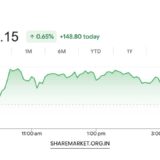
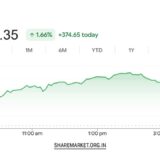
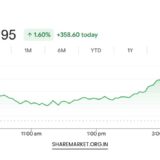
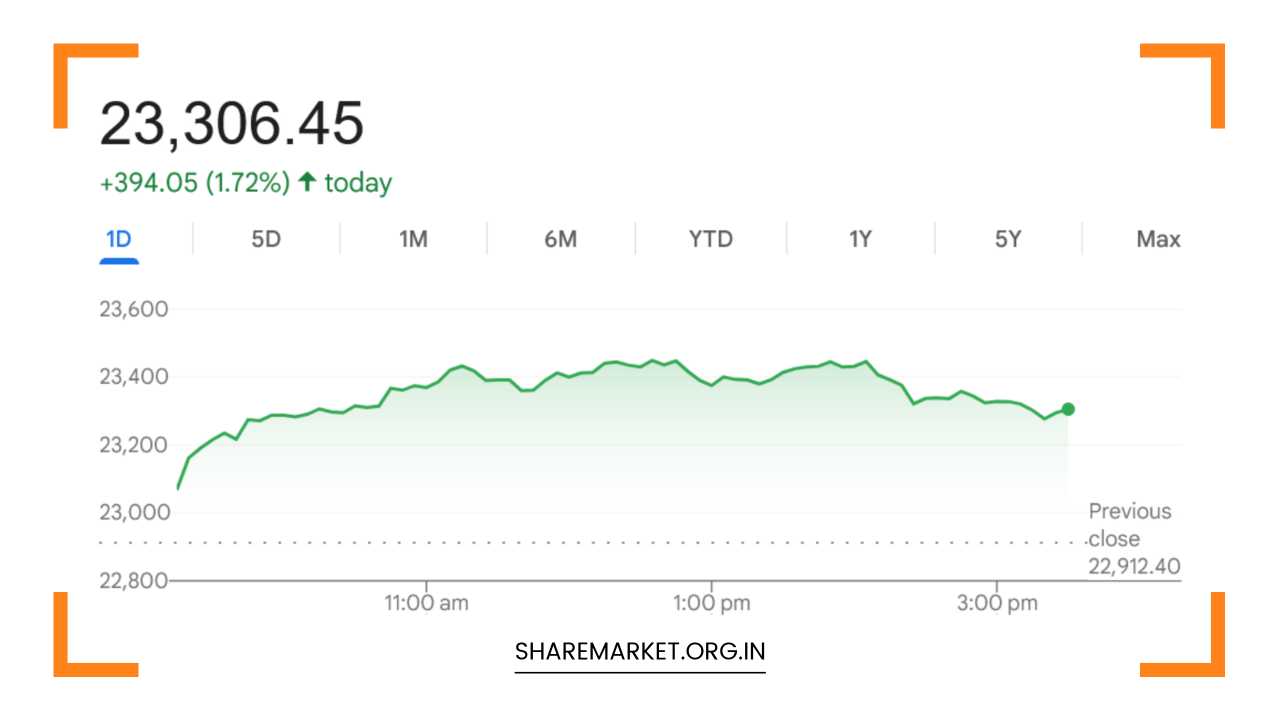
On Wednesday, the BSE Sensex surged by 1,205 points, or 1.63%, to settle at 75,273.45. Not to be outdone, the NSE Nifty 50 soared 394.05 points, or 1.72%, closing comfortably above the 23,300 mark at 23,306.45.
The breadth of the market was overwhelmingly positive, reflecting a broad-based appetite for risk. For every stock that declined, more than two advanced, with 2,841 stocks ending in the green against 1,309 laggards. This collective jump resulted in a massive wealth creation event, with the total market capitalization of BSE-listed firms skyrocketing by ₹8 lakh crore in just six hours of trading.
The Catalyst: “Peace Dividends” from the Middle East
The primary engine behind this rally was a sudden and dramatic de-escalation in tensions between the United States and Iran. Market sentiment shifted from “extreme fear” to “cautious optimism” following reports that key points of a diplomatic agreement between Washington D.C. and Tehran have been finalized.
US President Donald Trump’s announcement of a five-day suspension of strikes on Iranian energy infrastructure acted as the “green flag” for global markets. Furthermore, Tehran’s assurance that “non-hostile vessels” would have unhindered passage through the Strait of Hormuz provided a double dose of relief for India. As a major net importer of energy, any stabilization of this maritime artery directly reduces the “risk premium” on Indian equities.
V.K. Vijayakumar, Chief Investment Strategist at Geojit Investments, noted:
“The reiteration regarding the Strait of Hormuz is the ‘X-factor’ for the Indian economy. It alleviates immediate concerns regarding oil and gas supply chains, which had been weighing heavily on our fiscal outlook.”
Sectoral Highlights and Movers
Every single sectoral index closed in positive territory, a rare feat that underscores the conviction of Wednesday’s buyers.
-
Consumer Durables & Realty: Leading the charge, the Consumer Durables index jumped 3.5%, buoyed by hopes of cooling inflation. Realty followed closely, gaining over 2% as interest rate jitters began to fade.
-
Banking & Financials: The PSU Bank index saw a 2% rise, with Shriram Finance emerging as the top Nifty gainer.
-
Mid-caps and Small-caps: The “broader market” outperformed the benchmarks. The Nifty Midcap index rose 2.3%, while the Smallcap index climbed 2.6%, suggesting that retail investors are returning to high-growth pockets.
Top Nifty Gainers: Shriram Finance, UltraTech Cement, Grasim Industries, Bajaj Finance, and Adani Enterprises.
Top Nifty Losers: The IT sector saw some profit booking and defensive positioning, with Tech Mahindra and TCS ending marginally lower alongside Bharat Electronics and Power Grid.
Expert Perspectives: Normalizing Valuations
A critical internal driver for this rally has been the correction of India’s valuation premium. For much of early 2026, Indian stocks were trading at levels many analysts considered “expensive” compared to emerging market peers.
Vinod Nair, Head of Research at Geojit Investments, observed that the recent dip allowed valuations to return to more “rational” levels. This created a “margin of safety” that institutional investors were waiting for. With crude oil prices slipping back below the $100 mark due to the US-Iran truce, the macroeconomic backdrop has turned significantly more favorable for Indian corporate earnings.
Technical Outlook: What to Expect on March 27
Technically, the Nifty has formed a “long bullish candle” on the daily charts, a signal often associated with a trend reversal. Analysts believe a significant bottom was likely carved out around the 22,500 level on March 23.
The Bull Case:
Anand James, Chief Market Strategist at Geojit Investments, suggests that if the momentum sustains, the Nifty could move toward the 23,350–23,800 range. He maintains a bullish outlook as long as the index stays above the 22,640 support level.
The Resistance Zone:
Nagaraj Shetty of HDFC Securities points out that the Nifty is currently grappling with a “gap resistance” from mid-March, located between 23,400 and 23,600.
“While the trend is positive, the index failed to breach 23,400 in the final hour of Wednesday’s trade. A decisive move above this gap will be required to trigger the next leg of the rally toward 23,850,” Shetty explained.
The Bear Case / Consolidation:
If global news flows turn sour during the holiday break, a dip toward 23,000 is possible. However, market participants view the 23,000 mark as a “strong floor” where fresh buying is expected to emerge. Only a breach below 22,880 would suggest that the current bullish momentum is a “dead cat bounce.”
Strategy for Investors
As the market prepares to reopen on Friday, March 27, the strategy shifts from “capital preservation” to “selective accumulation.”
-
Focus on Quality: With valuations having corrected, investors should look at “Large-cap” leaders in the Cement, Auto, and Banking sectors that showed resilience during the recent volatility.
-
Monitor Crude Oil: Keep a close eye on Brent Crude prices. If they remain below $100, Indian OMCs (Oil Marketing Companies) and paint stocks may see further upside.
-
Watch the News Flow: Since the rally is heavily news-dependent (US-Iran relations), any deviation from the peace process could lead to intraday volatility.
Final Thoughts
The “rebound rally” of March 25 has injected much-needed confidence into the D-Street. While resistance levels remain overhead, the combination of easing geopolitical stress and attractive entry points for domestic stocks suggests that the path of least resistance for the Nifty is currently “up.”