Sensex Closed Flat, Nifty at 24,252; Tomorrow Nifty Prediction
Market Outlook for August 24: Key Levels & Nifty Trends
Indian equity benchmarks concluded a narrow, range-bound trading session on a flat note, demonstrating notable resilience following the previous day’s rebound. Investors displayed cautious sentiment heading into the weekend as external macro factors, including elevated global crude oil prices, fluctuating global bond yields, and persistent foreign institutional investor (FII) capital outflows, kept market participants from pushing aggressive directional bets.
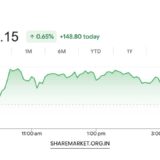
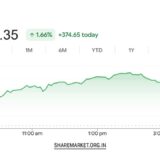
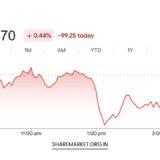
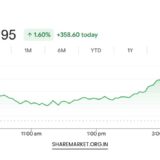
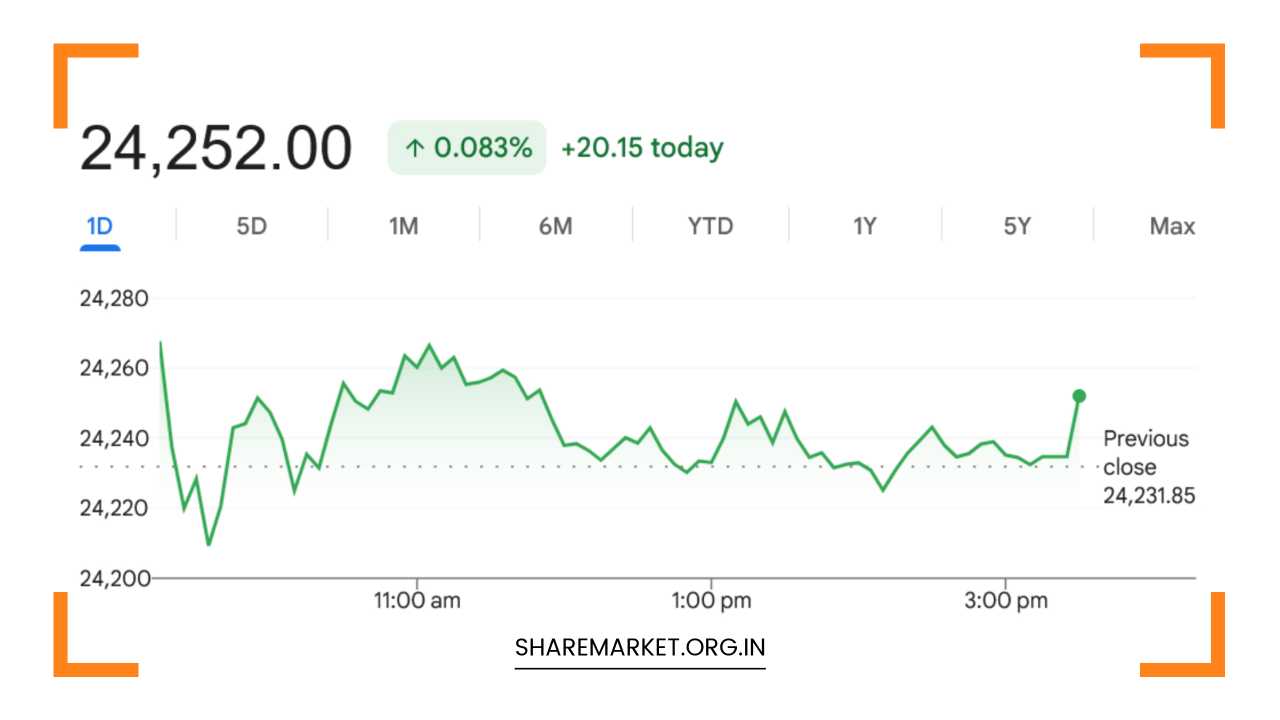
The 30-share BSE Sensex settled marginally higher by 3.11 points at 77,540.83, while the broader NSE Nifty rose 20.15 points, or 0.08%, to close at 24,252.00. Market breadth presented a mixed picture across sectors. Strong buying traction was concentrated in metal and realty counters, driven by value buying and domestic demand optimism, whereas persistent selling pressure pulled down auto, fast-moving consumer goods (FMCG), information technology (IT), media, and pharmaceutical indices. Broader market indicators reflected relative resilience in the small-cap segment, where the index gained 0.7%, while the mid-cap index remained largely unchanged.
Macroeconomic Drivers and Sectoral Performance
Understanding the macroeconomic backdrop is essential for interpreting why the market behaved in a range-bound manner. Domestic economic fundamentals remain robust, backed by stable corporate earnings, robust tax collections, and steady capital expenditure from both public and private sectors. However, global uncertainties continue to cast a shadow over Dalal Street.
Sectoral Winners and Losers
-
Metal and Realty Outperformance: Metal stocks benefited from firming global commodity prices and hopes of infrastructure stimulus, while realty stocks drew strength from strong residential sales numbers reported by top developers heading into the festive quarter.
-
Drag on Defensive and Tech Sectors: Information technology stocks faced pressure due to a cautious outlook on discretionary spending by US and European enterprises. Meanwhile, FMCG and auto counters saw profit-booking after their recent rallies, weighed down by valuation concerns and input cost pressures.
-
Broader Market Divergence: The small-cap outperformance indicates that retail and high-net-worth investors continue to scout for alpha in lower-cap counters, ignoring the headline index stagnation.
-
Banking Sector Stability: Private and public sector banks maintained a tight consolidation range, mirroring the subdued momentum of the headline indices as liquidity conditions balanced out ahead of credit growth updates.
Expert Technical Outlook for August 24th
As traders and investors prepare for the upcoming trading session, prominent market analysts have mapped out crucial technical thresholds, moving averages, and index behaviors.
1. Nifty 50: Consolidation and Key Boundaries
-
Rupak Dey (LKP Securities): Notes that the Nifty fluctuated within a confined band, sandwiched between its 20 Exponential Moving Average (EMA) and 50 EMA on both hourly and daily charts. With the Relative Strength Index (RSI) exhibiting a bearish crossover, the immediate bias tilts slightly positive-to-sideways. Immediate lower support is pinned at 24,200; a breakdown below this psychological barrier could trigger a correction toward 24,000. Conversely, immediate resistance is visible at 24,350, with a decisive breakout paving the way for a rally to 24,500.
-
Sudeep Shah (SBI Securities): Identifies the 24,370–24,400 zone as a major hurdle, noting that it closely aligns with the index’s 200-day EMA. Sustaining above this heavier resistance cluster could unlock an upward target toward 24,550 and subsequently 24,700 over the short term. On the downside, immediate support is established in the 24,130–24,100 territory.
-
Ajit Mishra (Religare Broking): Points out that the underlying momentum of the recent recovery is tapering off, signaling an impending phase of consolidation. The index is forecasted to find fundamental footing inside the 24,100–24,000 support bandwidth, while the 24,300–24,400 zone will likely serve as an effective ceiling.
2. Bank Nifty: Low Volatility and Indecisiveness
According to Sudeep Shah, the Bank Nifty restricted its movement within a tight 290-point range. Over the preceding 15 trading sessions, the index has printed small-bodied candles equipped with wicks on both extremes in eight instances—a classical technical indicator highlighting low volatility and pervasive indecisiveness among market participants. A flat Average Directional Index (ADX) corroborates the absence of a distinct directional trend.
-
Resistance Zone: 58,200 to 58,300. Sustained trade above this band could fuel a pullback toward 58,700 and 59,000.
-
Support Zone: 57,300 to 57,200. A breach of this support line could invite further downside momentum in banking heavyweights.
Actionable Strategy and Risk Management
Given the current market structure characterized by subdued momentum, choppy price action, and macroeconomic headwinds, market experts recommend adopting a selective, stock-specific approach. Traders should prioritize fundamentally sound companies and defensive or outperforming sectors while rigorously enforcing risk management and position-sizing discipline.
| Index | Immediate Support Zone | Immediate Resistance Zone | Short-Term Bias / Trend Outlook |
| Nifty 50 | 24,130 – 24,200 | 24,350 – 24,400 | Range-bound / Consolidating |
| Bank Nifty | 57,200 – 57,300 | 58,200 – 58,300 | Indecisive / Low Volatility |
Key Trading Rules
-
Avoid Overleveraging: Because the market is trapped between moving average bands, breakout failures are common. Do not chase morning momentum blindly.
-
Play the Range: Range-bound markets favor mean-reversion strategies. Look for buying opportunities near support levels and shorting opportunities near upper resistance boundaries with strict stop-losses.
-
Focus on Sector Rotation: Capital is shifting rapidly between sectors. Track institutional flows closely to catch early momentum in outperforming groups like metals and realty.
-
Maintain Capital Reserves: Keep a healthy cash buffer in your trading account to capitalize on sudden intraday shakes or unexpected gap openings.