Sensex Down 125 Points, Nifty at 22,600; Monday Nifty Prediction
Market Outlook: Sensex & Nifty Face Downward Pressure — What to Expect on October 24
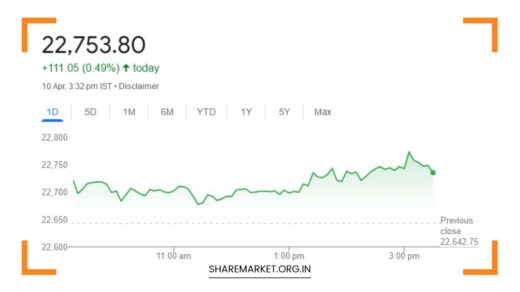
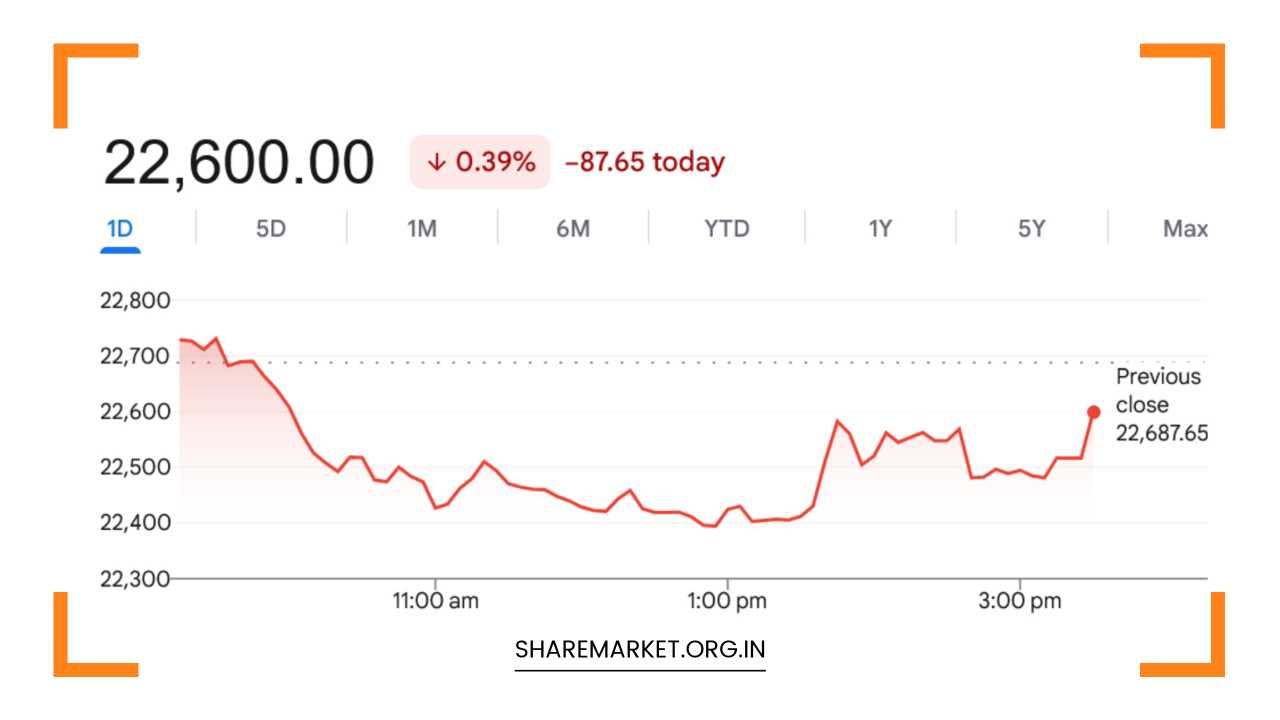
Indian equity benchmarks experienced a sharp sell-off on October 23rd, weighed down by escalating geopolitical tensions in the Middle East, surging global crude oil prices, relentless foreign fund outflows, and growing macroeconomic uncertainty. The benchmark S&P BSE Sensex dropped 125.56 points (0.17%) to close at 73,123.83, while the broader NSE Nifty 50 shed 87.65 points (0.39%) to finish at the 22,600 mark.
While heavyweights provided localized support, broad-market weakness was acute. The sell-off was especially intense across the mid-cap and small-cap segments, signaling widespread risk aversion among retail and institutional market participants. As investors look ahead to October 24th, volatility is expected to remain elevated, driven by technical breakdowns, crude oil movements, and key macroeconomic triggers.
1. Daily Market Recap: Sectoral & Stock-Specific Performance
A. Major Losers and Gainers
The session on October 23rd witnessed heavy selling pressure across cyclical and high-beta counters:
-
Top Nifty Losers: Shriram Finance, Tata Motors Passenger Vehicles, Adani Enterprises, Tata Steel, and Jio Financial lead the decline. Blue-chip counters including Apollo Hospitals, Infosys, TCS, and Maruti Suzuki also closed in the red.
-
Broad Market Meltdown: The damage was particularly pronounced outside the front-line indices. The Nifty Midcap Index slumped 2.5%, while the Nifty Smallcap Index plunged 2.9%, underscoring a swift unwinding of speculative and leveraged retail positions.
B. Sectoral Breakdown
Not a single sectoral index managed to end in positive territory:
-
Consumer Durables: Down 3%, leading the sectoral losses.
-
Realty, Energy, Metals & PSU Banks: All tumbled by over 2%, hit hard by inflation worries and profit-taking.
-
Defensives: IT and Pharmaceuticals showed relative resilience compared to domestic cyclical sectors, benefiting slightly from the weakening Indian Rupee.
2. Key Drivers Behind the Market Sell-Off
1. Surging Crude Oil & Middle East Tensions
The centerpiece of global angst remains the Middle East conflict. Brent crude prices soared toward $114 per barrel, marking levels not seen since early May. For an energy-importing nation like India, sustained triple-digit crude prices raise immediate alarm bells regarding imported inflation, expanding current account deficits, and margin compression for consumer-facing industries.
2. Currency & Yield Pressures
-
Rupee Under Pressure: The Indian Rupee weakened toward 95.15 per USD, driven by the strong US Dollar Index and continuous FII outflows. While the Reserve Bank of India (RBI) continues to intervene to curb extreme volatility, persistent capital flight keeps currency sentiment frail.
-
US Bond Yields & Safe-Havens: Higher US Treasury yields dragged down precious metals, causing gold prices to drop by ₹1,900 to ₹1.42 lakh per 10 grams.
3. FII Capital Flight vs. DII Cushion
Foreign Institutional Investors (FIIs) remain net sellers in the secondary market, redirecting funds toward high-yielding US debt and safer global harbors. Although Domestic Institutional Investors (DIIs) continue to absorb selling through systematic inflows, liquidity constraints in the secondary space are becoming apparent.
4. Secondary Market Liquidity Drain (Jio Platforms IPO)
The massive Jio Platforms IPO closed its subscription window on October 23rd (with allotment scheduled for October 26th and listing on October 28th). As one of India’s largest public issues, it absorbed substantial institutional and retail liquidity from the secondary market, exacerbating price drawdowns in mid- and small-cap counters.
3. Technical Analysis & Key Levels for October 24
Technical indicators suggest that the overall market structure has weakened significantly:
-
Moving Averages Breakdown: Nifty has breached its critical 20-day Daily Moving Average (20-DMA) on daily charts and broken below its 200-week Moving Average (200-WMA) on weekly charts. This dual breakdown invalidates short-term bullish momentum.
-
Pattern & Oscillators: The index continues to trade in a “lower-high, lower-low” sequence, confirming that recent upward moves were mere pullback/relief rallies rather than a structural trend reversal. Furthermore, a hidden bearish divergence on the Relative Strength Index (RSI) indicates underlying downside pressure.
-
India VIX: A sudden spike in the India Volatility Index (VIX) signals heightened option pricing and trader anxiety, pointing toward violent intraday swings on October 24th.
Critical Levels to Watch for Nifty 50:
-
Immediate Support: 22,500
-
Key Breakdown Support: 22,200 (A breach below 22,200 could trigger aggressive panic selling and unwinding).
-
Immediate Resistance: 22,700 – 22,800
4. Outlook & Strategy for October 24th
A. What to Expect at the Open
-
Global Cues & Crude Watch: Markets will track overnight cues from US equities, AI sector developments, and Brent crude movements. If crude trades above $110–$114, equity sentiment will stay severely constrained.
-
Earnings Sensitivity (Q2 FY2027): Second-quarter earnings announcements and management commentary regarding margin health, input costs, and festive demand outlook will trigger sharp stock-specific movements.
-
Pre-Fed Stance: Global investors are bracing for upcoming US Federal Reserve monetary policy cues. While rates are expected to stay unchanged, hawkish tone commentary regarding potential rate hikes in December could cap upside moves.
B. Sectoral Positioning
-
Sectors to Avoid / Underweight:
-
Oil Marketing Companies (OMCs): High crude squeezes marketing margins.
-
Paints, Plastics & Aviation: High raw material/fuel expenses directly threaten quarterly profitability.
-
High-Beta Mid & Small Caps: Unwinding of leverage makes this space vulnerable to further downside.
-
-
Sectors with Defensive Appeal:
-
IT & Exporters: Beneficiaries of Rupee depreciation near 95.15/USD.
-
Pharmaceuticals & FMCG: Defensive plays with steady cash flows during macro-economic turbulence.
-
Private Banks & Quality NBFCs: Focus will be strictly on asset quality trends and balance sheet strength.
-
5. Analyst Insights & Expert Commentary
-
Vinod Nair (Head of Research, Geojit Investments): Highlighted valuation concerns in mid/small-caps, surging crude oil, and AI-led global equity sell-offs as core headwinds. He emphasizes focusing strictly on stock-specific opportunities backed by clear earnings visibility and reasonable valuations.
-
Vatsal Bhuva (Technical Analyst, LKP Securities): Stressed that the breach of the 200-WMA and 20-DMA confirms structural weakness. Advises traders to stay light, adhere strictly to support/resistance bands, and watch $110 Brent crude as a key risk trigger.
-
Vikram Kasat (Chief Business Officer, PL Capital): Noted that the market’s risk-off mode is driven by elevated crude ($114/bbl) and persistent FII selling. Q2 earnings commentary will dictate individual stock trajectories.
-
Vineet Bolinjkar (Head of Research, Ventura): Identified crude and central bank rhetoric as primary trend setters. Highlighted that primary market liquidity absorption from mega IPOs like Jio Platforms is temporarily impacting secondary market depth.
Final Thoughts & Actionable Advice for Traders
Heading into trading on October 24th, caution is the paramount strategy.
-
For Short-Term Traders: Keep position sizing light, avoid carrying heavy overnight leverage, and strictly honor stop-losses around the 22,500 and 22,200 support thresholds.
-
For Long-Term Investors: Refrain from aggressive dip-buying in high-valuation mid- and small-cap stocks until crude stabilizes and foreign fund flows normalize. Use market corrections selectively to accumulate quality front-line names in defensive sectors with robust earnings visibility.